


Uniqlo RFID is widely recognized for enabling ultra-fast self-checkout, but the real story goes much deeper. Behind the scenes, RFID powers accurate inventory, faster replenishment, and seamless omnichannel execution across stores. By embedding RFID at the item level and redesigning store workflows around real-time data, Uniqlo turned RFID into a retail operating system rather than a simple technology upgrade. This case study reveals what retailers can learn from the Uniqlo RFID approach—and how to apply those lessons in their own operations.
1. The Challenge ユニクロ Faced Before RFID
Before Uniqlo RFID was rolled out at scale, Uniqlo struggled with the same operational friction most apparel retailers still face today.
Inventory records in the system often did not match what was actually on shelves. Staff had to perform manual barcode scans for cycle counts, which were time-consuming and therefore done infrequently. Replenishment from the backroom to the sales floor depended heavily on staff experience rather than real data. During peak hours, long checkout lines formed because each item had to be scanned individually.

These problems were not unique to Uniqlo. They are structural limitations of barcode-based retail operations. Barcodes can identify products, but only one at a time and only when directly scanned. They cannot provide a live, comprehensive view of inventory across the store.
Uniqlo realized that the root issue was not labor, training, or store layout—it was lack of real-time visibility. Without accurate data, even the best operational processes break down. This realization laid the foundation for the Uniqlo RFID strategy: fix inventory visibility first, then redesign store operations around that new capability.
2. How Uniqlo RFID Works Across Store Operations
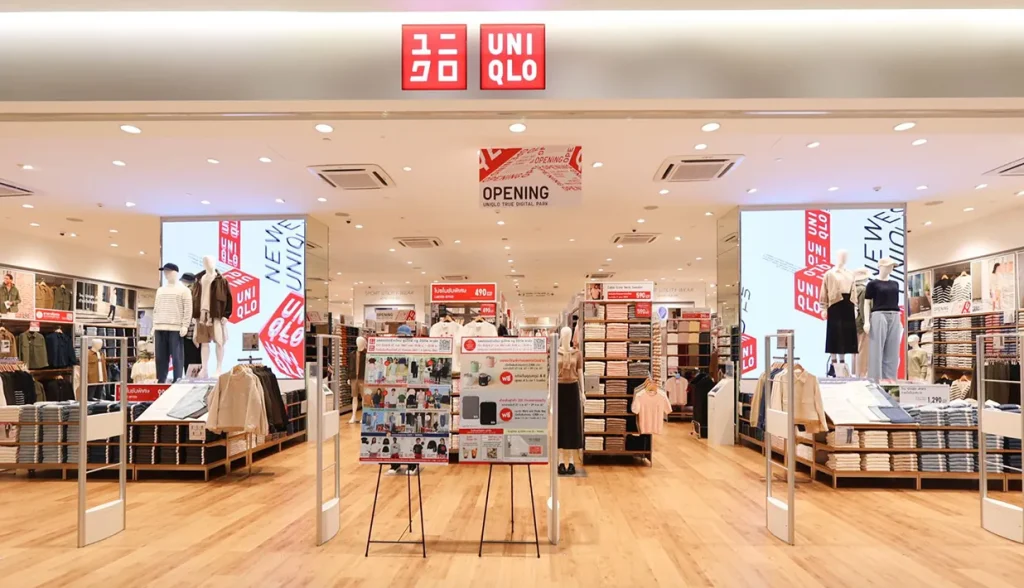
The turning point in the Uniqlo RFID story was not the installation of readers in stores. It was the decision to tag every garment at the manufacturing stage. Item-level tagging at the source ensured that each piece of apparel could be uniquely identified from factory to store shelf.

Once products arrived in stores, RFIDリーダー were integrated into multiple workflows. At self-checkout stations, baskets of clothing could be read instantly without line-of-sight scanning. On the sales floor, staff used handheld readers to scan entire racks within seconds, making frequent cycle counts practical. In backrooms, cartons could be verified quickly without opening and counting items one by one.
This is why Uniqlo RFID is better understood as an inventory intelligence system rather than a checkout solution. Checkout speed is simply a visible outcome of a deeper operational redesign built on reliable, item-level data.
3. The Hidden Engine: Inventory Accuracy Above 97%
For most apparel retailers, shelf inventory accuracy sits between 60% and 75%, and this gap creates daily operational problems:
- Items shown as “in stock” but nowhere to be found
- Full backrooms while shelves remain empty
- Online orders canceled due to inaccurate availability
This is where RFID makes a fundamental difference. With handheld RFID readers, store associates can scan entire racks within seconds. What previously required hours of barcode scanning can now be completed in minutes. Because the process is fast and effortless, cycle counts can be performed frequently—sometimes daily—rather than occasionally.
As a result, Uniqlo enables inventory accuracy reported to exceed 97%. When the system shows an item in stock, staff can trust it is actually on the shelf or in the backroom. Replenishment becomes faster, out-of-stocks are reduced, and overstock caused by misleading data is minimized.
Many observers focus on the fast checkout experience when discussing Uniqlo RFID, but the true operational advantage comes from this continuous and reliable inventory verification process happening quietly in the background.
4. Labor Efficiency and Store Experience
One of the most practical outcomes of Uniqlo RFID is how it changes the way store staff spend their time.

Before RFID, a significant portion of labor hours went into low-value tasks:
- Scanning barcodes for cycle counts
- Searching for misplaced items
- Checking backroom stock manually
- Managing long checkout lines during busy periods
With RFID, those time-consuming processes are dramatically reduced. Cycle counts that once took hours now take minutes. At checkout, multiple items are read instantly without individual scanning, reducing queues and freeing employees from register congestion.
Employees can now focus on higher-value activities such as assisting customers, maintaining visual merchandising standards, and ensuring shelves are replenished quickly. The store becomes more responsive because staff are no longer trapped in repetitive scanning tasks.
At the same time, customers experience a smoother visit. Faster checkout, better product availability, and more attentive staff are all visible outcomes of the invisible RFID infrastructure working in the background.
5. Omnichannel Readiness by Design
Many retailers try to build omnichannel services on top of unreliable inventory data. This is where execution often breaks down. ユニクロ solves this problem at the foundation—by making store inventory trustworthy in real time.

Because every item is uniquely identifiable and frequently counted, Uniqlo can confidently support:
- Buy Online, Pick Up In Store (BOPIS)
- Ship-from-store fulfillment
- Accurate online stock visibility by location
- Faster and more reliable returns processing
When an online system shows an item available in a specific store, staff can trust that it is physically there. This reduces canceled orders, improves fulfillment speed, and increases customer satisfaction.
More importantly, store teams do not need extra effort to support omnichannel. The same Uniqlo RFID process used for daily inventory accuracy automatically powers these services.
6. What Other Retailers Can Learn from ユニクロ’s RFID Strategy
The success of Uniqlo RFID is not just impressive—it is repeatable. But only if retailers understand what Uniqlo did differently.

Here are the key lessons other retailers can apply:
6.1 Start with item-level tagging at the source
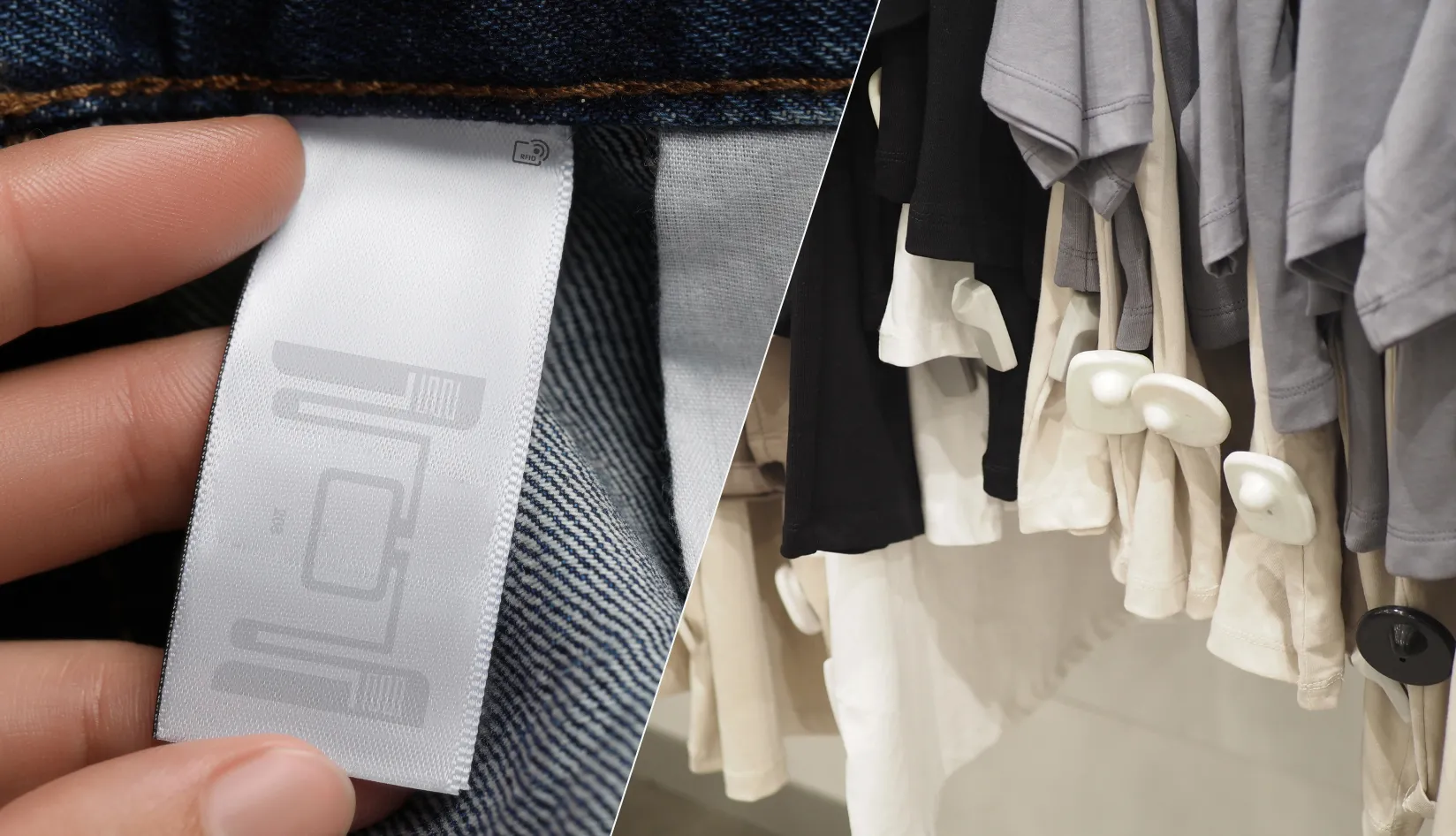
Every garment is tagged during manufacturing, often with the RFID chip embedded directly into the care label or hang tag. This integrated design eliminates the need for manual tagging in stores or warehouses, reducing labor costs and preventing tagging errors at scale.
6.2 Redesign workflows, not just install readers
Uniqlo changed how staff count inventory, replenish shelves, and manage checkout. Technology alone is not the solution.
6.3 Focus on inventory visibility before checkout speed
Fast checkout is the visible benefit. Accurate inventory is the real operational advantage behind Uniqlo RFID.
6.4 Make frequent cycle counts possible
RFID’s speed allows counting to happen daily, which keeps system data aligned with reality.
6.5 Use RFID as the foundation for omnichannel
Do not build BOPIS or ship-from-store services on top of inaccurate stock data. Retailers often try small RFID pilots and see limited results. Uniqlo treated RFID as infrastructure, not an experiment. That mindset is what turned Uniqlo RFID into a long-term competitive advantage rather than a short-term technology project.
7. Why Most RFID Projects Fail
Many retailers invest in RFID but never achieve results close to Uniqlo. The reason is rarely the technology itself. It is how the project is approached.

Common RFID failures usually look like this:
- Tags applied inconsistently or only on selected products
- RFID limited to small pilots without storewide integration
- Old barcode-based workflows kept unchanged
- RFID treated as a loss-prevention tool instead of a data system
In these cases, RFID becomes an add-on rather than a transformation tool.
Uniqlo took a very different path. From the beginning, Uniqlo RFID was designed as operational infrastructure. Every item was tagged. Every store process—from receiving to replenishment to checkout—was redesigned around RFID capability. Staff were trained to rely on RFID data rather than manual verification.
Retailers that “try RFID” often see marginal improvements. Uniqlo rebuilt store operations around RFID, which is why the results scaled across locations and delivered long-term value.
8. 結論
The real lesson behind Uniqlo RFID strategy is not faster checkout—it is operational clarity built on accurate, item-level data. By redesigning store workflows around RFID, Uniqlo turned inventory visibility into a competitive advantage that powers staffing efficiency and omnichannel execution.
If you are planning a similar deployment, RFIDTag provides apparel-optimized RFID tags and readers designed to support item-level tagging and reliable store performance—helping retailers implement RFID the right way from the start.
推奨製品

NXP UCODE® 9繊維RFIDランドリータグ
について UHF RFID ランドリータグ テキスタイル NXP UCODE® 9 は、超薄型のテキスタイルデザインと強力なUHF性能を兼ね備えており、200回以上の工業洗濯と60バールの圧力に耐えます。ヘルスケア、ホスピタリティ、リネンレンタルの集中的な洗濯環境に最適で、安定した再利用可能な環境適合性の高いテキスタイルトラッキングを実現します。

UHF RFIDハンドヘルドリーダー|ISO 18000-6C
The AZH-P1 UHF RFIDハンドヘルドリーダー 優れたモバイル性を実現 RFID スキャニング。Androidを搭載し、Impinj E710チップを統合することで、最大15メートル、1300タグ/秒以上の堅牢なパフォーマンスを実現します。大容量の8000mAhバッテリーは、小売、物流、車両追跡、倉庫管理に理想的で、長時間の稼働を保証します。


 JA
 EN
 ES