
Your One-Stop, Efficient, and Smart
Garment Management Solution
What are RFID Garment tags?
RFID garment tags are advanced smart solutions that seamlessly integrate Radio Frequency Identification (RFID) technology into apparel and fabric management. Made from high-quality, durable, and comfortable materials, these tags can be embedded into fabrics without affecting the wearing experience, offering businesses a more efficient management approach. Whether you are a clothing brand, retailer, or a business requiring uniform and textile management, RFID garment tags enhance inventory management, boost operational efficiency, provide anti-theft protection, and streamline overall management processes. We offer a range of high-frequency (HF) and ultra-high-frequency (UHF) RFID garment tags, each with unique functionalities like EAS (electronic article surveillance) providing tailored smart solutions for various application needs.

Different Types of RFID Garment Tags
The RFID Laundry Tag is specifically designed for industrial laundry and fabric management. It features excellent resistance to high temperatures, chemical corrosion, and bending, making it ideal for embedding into uniforms, bed linens, towels, and other textiles. This tag allows for efficient garment cleaning tracking, inventory management, and employee attendance monitoring.

RFID Sew-On Care Label Impinj® Monza® R6-P

Textile RFID Laundry Tag NXP UCODE® 9xe
Select options This product has multiple variants. The options may be chosen on the product page
Textile Anti-Gamma Ray UHF RFID Laundry Tag
Select options This product has multiple variants. The options may be chosen on the product page
NXP UCODE® 9 Textile RFID Laundry Tag
Select options This product has multiple variants. The options may be chosen on the product page
NXP UCODE® 9 Textile RFID Laundry Tag
Select options This product has multiple variants. The options may be chosen on the product page
NXP UCODE® 9 Textile RFID Laundry Tag
Select options This product has multiple variants. The options may be chosen on the product page
NXP UCODE® 9 Textile RFID Laundry Tag
Select options This product has multiple variants. The options may be chosen on the product page
Textile RFID Laundry Tag | UHF RFID UCODE® 9
Select options This product has multiple variants. The options may be chosen on the product page
NXP UCODE® 9 Textile RFID Laundry Tag
Select options This product has multiple variants. The options may be chosen on the product page
NXP UCODE® 9 Textile RFID Laundry Tag
Select options This product has multiple variants. The options may be chosen on the product page
NXP UCODE® 9 Textile RFID Laundry Tag
Select options This product has multiple variants. The options may be chosen on the product page
NXP UCODE® 7m PPS RFID Laundry Tag
Select options This product has multiple variants. The options may be chosen on the product page
NXP UCODE® 9 Textile RFID Laundry Tag
Select options This product has multiple variants. The options may be chosen on the product page
NXP UCODE® 7m PPS RFID Laundry Tag
Select options This product has multiple variants. The options may be chosen on the product page
Impinj® Monza® 4QT Silicone RFID Laundry Tag
Select options This product has multiple variants. The options may be chosen on the product page
Key Advantages:

High-temperature resistance & Wash and dry cycle durability

Long-lasting durability

Efficient tracking & management

Flexible installation options
Applications:
Ideal for hotels, hospitals, laundry facilities, and corporate uniform management, the RFID Laundry Tag offers smarter, more efficient fabric management, reduces loss, and optimizes operational costs.


Key Features of RFID Garment tags
RFID garment tags bring intelligence and efficiency to apparel management. From inventory tracking, apparel EAS anti-theft to enhancing customer experience, these tags offer multiple advantages tailored to different applications.


Advantages of RFID Garment Tags over Traditional Barcode Tags
RFID garment tags offer several key benefits when compared to traditional barcode labels, making them a superior choice for modern apparel management. Here are the main advantages

Faster and More Efficient Scanning
Unlike barcodes, which require a direct line of sight to be scanned, RFID tags can be read without being in the direct view of a scanner. This allows for faster, bulk scanning—ideal for large inventories or rapid stock counts. RFID can scan multiple items simultaneously, while barcodes require one-by-one scanning, significantly reducing time and labor costs.

Greater Accuracy and Reduced Human Error
RFID eliminates many of the manual errors associated with barcode scanning, such as misreads or missed items. With RFID, the system can automatically track and update inventory, improving accuracy and reducing the chances of human mistakes during stocktaking or checkout.

Enhanced Durability
RFID tags, especially those designed for high-wear environments like washable labels, are typically more durable than barcodes, which can easily become damaged or unreadable over time due to wear and tear. RFID tags can withstand harsh conditions such as washing, exposure to sunlight, and high temperatures without compromising performance.

Greater Data Storage and Security
RFID garment tags can store much more data than traditional barcodes, allowing for richer information to be encoded, such as product details, inventory levels, or customer interactions. Additionally, RFID offers enhanced security features like encryption and anti-counterfeiting, making the data harder to tamper with or duplicate. Some tags also integrate EAS (anti-theft) technology, adding an extra layer of protection that ideal for fashion retailers and high-value apparel brands aiming to reduce loss and improve store security.

Real-Time Tracking and Visibility
RFID technology enables real-time tracking of items throughout the supply chain, offering better visibility of product movements, inventory levels, and sales data. Barcodes, on the other hand, are typically only useful at the point of scan and do not provide the continuous, real-time data updates that RFID offers.

Improved Customer Experience
RFID technology can streamline processes like self-checkout and inventory management, enhancing the overall customer experience. With faster checkouts and reduced errors, customers are likely to experience more seamless interactions with brands, leading to increased satisfaction and loyalty. Barcodes, while functional, tend to be slower and prone to more scanning errors in high-traffic environments.
How to Install RFID Garment Tags
RFID garment tags are easy to apply and come with different installation methods depending on the tag type. Here’s how to use them

RFID Label
Adhesive: Peel and stick the RFID label onto the garment’s tag or packaging for quick and easy use.
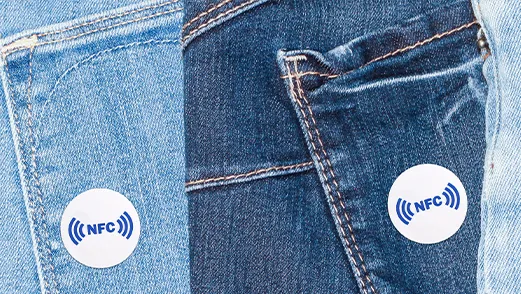
NFC Garment Badge
Heat Pressing: Press the NFC badge onto the garment for a secure and smooth attachment.

RFID Washable Textile Label
Sewing: Sew the tag directly into the garment, ensuring it stays in place even through washing.
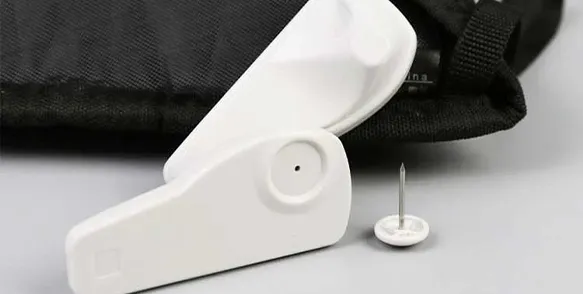
RFID EAS Tag
Pin buckle: Thread the fabric through the buckle’s slots, ensuring the pin aligns with the desired hole on the fabric. Secure the buckle by feeding the fabric back through the buckle’s slots and tightening.

RFID Hang Tag
Hanging: Simply attach the RFID tag to the garment using a string or fastener.
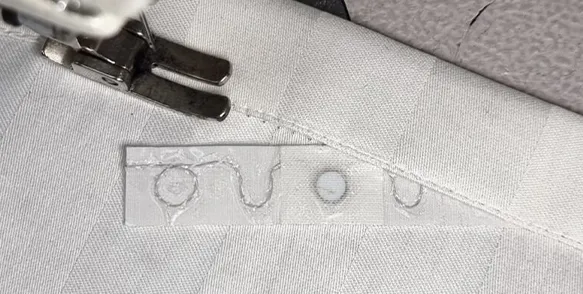
RFID Laundry Tag
Sewing: Sew the tag directly into the fabric for long-lasting use.
Heat Pressing: Press the tag onto the fabric for a seamless look.
Hanging: Attach the tag by hanging it from the garment.

Industries That Can Benefit from RFID Garment Badges
RFID garment badges are versatile and provide valuable solutions across a wide range of industries. Below are the key industries that can benefit from RFID garment badges


FAQs
When selecting RFID garment tags, the first consideration should be your business needs. Key factors include:
Application Scenarios: If your primary need is retail inventory management, RFID hang tags or RFID washable textile labels are ideal choices. For enhancing customer interaction, NFC garment badges are a great option.
Durability Requirements: If the tags will be frequently washed, RFID laundry tags are a more suitable option.
Installation Method: Choose the appropriate style based on the installation method (sewn, heat-pressed, or hung) to align with your production and operational processes.System Compatibility: Ensure that the RFID garment tags you select are compatible with your existing systems. For instance, if you already use inventory management or attendance systems, it’s important to choose tags that align with your system’s frequency (e.g., HF or UHF) and protocol.
 EN
EN  ES
ES  JA
JA