


Ultra High Frequency (UHF) RFID tags—operating between 860 MHz and 960 MHz (RAIN RFID)—are driving modern supply chain automation, item-level retail inventory, and industrial asset tracking. Utilizing EPCglobal Gen2 (ISO/IEC 18000-6C) protocols and backscatter technology, passive UHF tags deliver long-range identification up to 15+ meters and rapid bulk scanning speeds of hundreds of items per second. This guide breaks down UHF RFID working principles, tag memory structures, read-range optimization, and deployment strategies for enterprise applications.
1. How Ultra High Frequency RFID Tags Work
UHF RFID technology operates within a frequency range of 860–960 MHz, though specific allocations may vary by region to comply with local regulations. This frequency band is crucial for enabling the long read ranges and high data transfer rates that characterize UHF RFID systems.
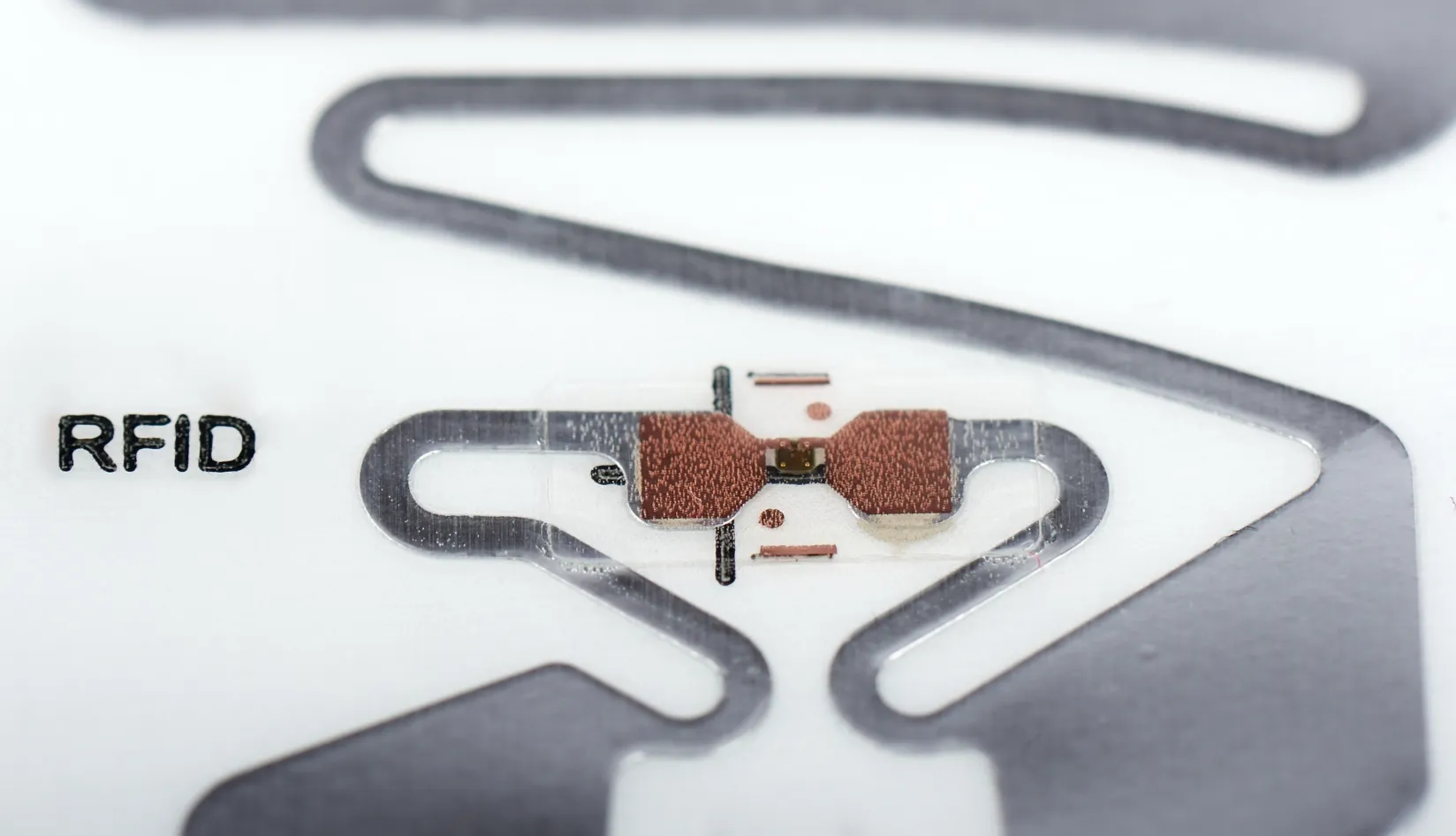
The communication between a UHF RFID reader and a tag primarily occurs through far-field communication and backscatter principles. Unlike Low Frequency (LF) and High Frequency (HF) RFID systems that rely on inductive coupling (near-field communication), UHF RFID utilizes electromagnetic waves that propagate over longer distances. When a UHF RFID reader emits radio waves, the tag’s antenna captures this energy. Passive UHF RFID tags, which do not have their own power source, use this captured energy to power their microchip.
Once powered, the tag modulates the reader’s continuous wave signal by reflecting a portion of it back to the reader. This process is known as backscatter. The tag doesn’t generate its own radio signal; instead, it modifies the incoming signal from the reader to encode its data. This modulated backscattered signal carries the tag’s unique identifier and any other stored information back to the reader.
Data Transmission: Storage Structure and Read/Write Process
UHF RFID tags typically have several memory banks:
- EPC Memory (Typically 96 to 496 bits): Stores the unique identifier of the tag, often a serialized Global Trade Item Number (SGTIN).
- TID Memory (Typically 64 to 96 bits): A factory-programmed, unique serial number that cannot be altered.
- User Memory (0 to 2,048 bits / 2Kb): Optional memory for storing additional data, such as manufacturing dates, batch numbers, or specific item attributes.
- Reserved Memory (64 bits): Contains kill and access passwords for security features.
The read process involves the reader sending out an interrogation signal. Tags in the reader’s field respond by backscattering their data. The reader then decodes these backscattered signals to identify the tags. The write process is similar, but the reader sends specific commands and data to be written into the tag’s user memory, provided the tag is configured for writing and the correct access password is provided.

Why UHF is Suitable for Long-Distance Identification
The higher frequency of UHF radio waves allows for longer read ranges compared to LF (125-134 kHz) and HF (13.56 MHz) RFID technologies. This is because higher frequencies enable the use of smaller antennas on both the reader and the tag, and the electromagnetic waves can travel further in open air. The backscatter communication method is also highly efficient for long-range data transfer, making UHF RFID ideal for applications requiring rapid identification of multiple items over significant distances, such as in warehouses, logistics, and retail environments where items are often in motion or not easily accessible for close-range scanning.
2. Key Features of Ultra High Frequency (UHF) RFID Tags
UHF RFID tags offer a unique combination of features that make them highly suitable for a wide range of applications. Their performance characteristics set them apart from other RFID technologies and traditional identification methods like barcodes.
High Reading Speed and Bulk Processing Capability
One of the most significant advantages of UHF RFID is its ability to read a large number of tags almost simultaneously. This high read speed allows for rapid inventory counts and efficient tracking of goods as they move through the supply chain. A single UHF RFID reader can identify hundreds of tags per second, a feat impossible with manual scanning or barcode technology. This capability is essential in environments like warehouses and distribution centers where large volumes of items need to be processed quickly.
Long Read Range
Under optimal conditions, passive UHF RFID tags can be read from several meters away, with some specialized tags and high-power readers achieving ranges of up to 15 meters or more. This long read range is a key enabler for applications like portal-based tracking, where items are automatically identified as they pass through a gate or doorway, and for inventory management in large spaces.
Multi-Tag Identification (Anti-Collision Capability)
UHF RFID systems are designed to handle the simultaneous presence of multiple tags within the reader’s field. This is achieved through sophisticated anti-collision algorithms, most notably the Q-algorithm defined in the EPC Gen2 standard. These algorithms allow the reader to efficiently manage communication with numerous tags, preventing data collisions that would otherwise occur if multiple tags responded at the same time. This multi-tag identification capability is crucial for applications where many items are grouped together, such as on a pallet or in a carton.
Low-Cost Passive Tags for Large-Scale Applications
The majority of UHF RFID tags are passive, meaning they do not have an internal power source. They are powered by the radio waves from the reader, which significantly reduces their cost and complexity. The low cost of passive UHF RFID tags makes them economically viable for large-scale deployments, such as tagging individual items in a retail inventory or tracking assets throughout a global supply chain. This affordability is a key driver of the widespread adoption of UHF RFID.
Flexibility in Various Environmental Conditions
UHF RFID technology has evolved to offer a wide variety of tag designs tailored for different environmental conditions. While standard UHF RFID tags can be affected by materials like metal and liquids, specialized tags have been developed to overcome these challenges. For example:
- On-metal tags are designed with a special layer that isolates the tag’s antenna from the metal surface, allowing them to be read reliably when attached to metallic assets.
- Liquid-resistant tags are encapsulated in materials that protect them from moisture and can be designed to be read even when attached to containers of liquids. This flexibility allows UHF RFID to be used in a diverse range of environments, from industrial manufacturing plants to healthcare facilities.
UHF RFID Form Factors & Encapsulations
Choosing the correct tag form factor is critical for mechanical durability and RF performance:
- Dry/Wet Inlays: The base chip-and-antenna structure on a PET substrate. Wet inlays feature adhesive backing for label conversion.
- Smart Labels: Printable paper or synthetic surface labels integrated with a UHF inlay, suitable for carton tagging and retail apparel.
- Industrial Hard Tags: Encapsulated in ABS, FR4, or silicone housing to resist extreme temperatures, chemical exposure, and mechanical impacts in industrial environments.
- Flexible On-Metal Labels: Feature a thin ferrite shielding layer that absorbs interference from metal substrates without adding significant bulk.
3. Applications of Ultra High Frequency (UHF) RFID Tags
Below are representative scenarios and outcomes of Ultra High Frequency (UHF) RFID Tags.
Logistics and Supply Chain
UHF RFID enables real-time visibility from inbound receiving to outbound shipping. Portal readers at dock doors automatically identify pallets and cases as they move through, while mobile readers support cycle counts and exception handling on the floor. Companies report accelerated receiving, fewer shipping errors, and improved inventory accuracy when replacing manual scans with UHF RFID portals and handhelds. In dense yard or cross-dock operations, rugged tags on returnable transport items and assets provide traceability without line-of-sight, which is critical when goods are shrink-wrapped or stacked.
Retail
Retailers use UHF RFID to perform rapid cycle counts, support item-level inventory visibility, and enable frictionless checkout. Compared with legacy methods, store associates can scan entire racks in seconds, improving on-shelf availability and omnichannel fulfillment accuracy. UHF RFID is also integrated with electronic article surveillance and self-checkout to balance loss prevention with customer experience. Leading inlays combine RFID and EAS to simplify deployment while maintaining security gates and POS workflows.
Healthcare
In hospitals, UHF RFID helps track high-value equipment, surgical instruments, linens, and medications. Studies show growing adoption of RFID across clinical and operational scenarios, citing improved asset utilization and reduced manual effort in documentation and compliance. LED-enabled or specialty healthcare tags support positive identification in sterile and liquid-rich environments.
Manufacturing and Industrial
Factories deploy UHF RFID to identify work-in-process (WIP), automate kanban replenishment, and manage tools and returnable containers. On-metal and high-temperature tags withstand harsh environments, enabling reliable identification on metallic assets, jigs, and fixtures. Real-time visibility into WIP locations and lot genealogy helps reduce bottlenecks and improve first-pass yield while aligning with traceability requirements in regulated industries.
4. Read Range and Influencing Factors of UHF RFID Tags
The read range of a UHF RFID system, which is the maximum distance at which a reader can reliably communicate with a tag, is a critical performance metric. Several factors significantly influence this range, making system design and environmental considerations paramount.
Tag Size and Antenna Design
The physical size and antenna design of the RFID tag are primary determinants of its read range. Larger tag antennas can capture more energy from the reader’s signal, allowing them to be activated and respond from greater distances. The antenna’s design, including its shape, material, and impedance matching to the tag chip, directly impacts its efficiency in receiving and transmitting radio waves. Specialized tag designs, such as those optimized for on-metal or in-liquid applications, often incorporate unique antenna structures to mitigate interference and maintain performance in challenging environments.
Reader Power and Antenna Gain
The power output of the RFID reader and the gain of its antenna also play a crucial role. A higher-power reader can emit a stronger electromagnetic field, extending the range at which tags can be energized and read. Similarly, an antenna with higher gain can focus the radio waves more effectively in a specific direction, increasing the effective radiated power and thus the read range in that direction. However, regulatory limits on transmit power and effective isotropic radiated power (EIRP) must be observed, which vary by region (e.g., FCC in the US, ETSI in Europe).
Environmental Factors: Metal Interference, Liquids, Temperature, and Humidity
The operating environment profoundly affects UHF RFID performance. UHF radio waves are susceptible to interference from certain materials:
- Metal: Metal surfaces can reflect RFID signals, creating dead spots or causing multipath interference, which can degrade read performance. Specialized on-metal tags are designed to overcome this by incorporating a metallic or foam spacer that separates the tag antenna from the metal surface.
- Liquids: Water and other liquids absorb UHF radio waves, significantly reducing the read range. This is a common challenge in applications involving items with high liquid content, such as beverages or pharmaceuticals. Specialized tags and careful placement are often required to ensure reliable reading in such scenarios.
- Temperature and Humidity: While less impactful than metal or liquids, extreme temperatures and high humidity can affect the electrical properties of tag components and reader performance, potentially leading to reduced read ranges or reliability issues over time.
Optimization Methods in Practical Applications
To optimize read range in real-world deployments, several strategies can be employed:
- Strategic Reader and Antenna Placement: Careful positioning of readers and antennas to maximize coverage and minimize signal interference is essential. This often involves site surveys and signal strength mapping.
- Tag Selection: Choosing the right tag for the specific application and environment is critical. This includes considering the tag’s form factor, antenna design, and material compatibility.
- Power Adjustment: Tuning the reader’s power output within regulatory limits to achieve the desired read range without causing excessive interference.
- Antenna Polarization: Using antennas with appropriate polarization (linear or circular) to match the orientation of the tags and minimize read gaps.
- Shielding and Isolation: Employing shielding materials or techniques to isolate RFID systems from external interference sources or to manage reflections in metallic environments.
By carefully considering and managing these factors, businesses can design and implement UHF RFID systems that achieve optimal read performance for their specific needs.
5. Anti-collision and Multi-tag Reading of UHF RFID Tags
One of the most powerful capabilities of UHF RFID systems is their ability to read multiple tags simultaneously, even when hundreds or thousands of tags are present within the reader’s field. This is achieved through sophisticated anti-collision protocols, which are essential for high-speed and high-volume applications.
Gen 2 Protocol and Tag Identification Algorithms
The cornerstone of multi-tag reading in UHF RFID is the EPCglobal Gen2 (ISO/IEC 18000-63) protocol. This standard defines the air interface communication between readers and tags, including robust anti-collision mechanisms. The most commonly used anti-collision algorithm within Gen2 is a variation of the slotted Aloha protocol, often referred to as the Q-algorithm or adaptive Q algorithm. This algorithm allows the reader to efficiently identify individual tags without data collisions, even when many tags respond at once.
Here’s a simplified overview of how it works:
- Query: The reader sends a query command, inviting tags to respond.
- Slot Allocation: Tags randomly select a time slot within a defined range (Q value) to respond.
- Collision Detection: If multiple tags respond in the same slot, a collision occurs. The reader detects this and instructs the colliding tags to re-randomize their slot selection for the next round.
- Successful Read: If a tag responds in an empty slot, its unique identifier is successfully read. The reader then acknowledges the tag and instructs it to stop responding in subsequent rounds.
- Adaptive Q: The reader dynamically adjusts the Q value (the number of available slots) based on the number of tags detected and the collision rate, optimizing the identification process for varying tag populations.
This adaptive process ensures that all tags in the field are eventually identified, even in dense tag environments, by systematically resolving collisions.
How Simultaneous Multi-tag Reading is Implemented
Simultaneous multi-tag reading is implemented through a combination of hardware and software capabilities:
- High-Speed Readers: Modern UHF RFID readers are equipped with powerful processors and advanced signal processing capabilities to rapidly send interrogation signals, receive backscattered responses, and execute anti-collision algorithms.
- Antenna Arrays: Multiple antennas connected to a single reader or a network of readers can create a larger interrogation zone, allowing for wider coverage and the ability to read tags from various orientations.
- Software Algorithms: The anti-collision algorithms are implemented in the reader’s firmware or in the RFID middleware, which manages the communication flow and data processing.
Application Examples in High-Speed Logistics and Retail Environments
- Warehouse Inbound/Outbound: In logistics, pallets loaded with hundreds of tagged items can pass through an RFID portal at high speed. The anti-collision capabilities ensure that every item on the pallet is accurately identified as it enters or leaves the warehouse, providing real-time inventory updates without manual scanning. This significantly reduces processing time and improves accuracy compared to barcode-based systems.
- Retail Inventory Management: Retail stores can perform full inventory counts of their sales floor and backroom in minutes or hours, rather than days, by using handheld UHF RFID readers. The ability to read hundreds of items on a rack or in a box simultaneously allows for frequent and accurate stock checks, leading to improved on-shelf availability and better omnichannel fulfillment.
- Manufacturing Production Lines: On a manufacturing line, components or products can be tagged with UHF RFID. As they move along the conveyor belt, readers can identify each item at various stages of production, enabling automated tracking, quality control, and process optimization. The anti-collision feature is vital here to ensure that all items are tracked accurately even when moving in close proximity.
The efficiency gained from multi-tag reading is a primary driver for the adoption of UHF RFID in these high-throughput environments, leading to significant operational cost savings and improved data accuracy.
6. Security Considerations of Ultra High Frequency RFID Tags
While UHF RFID technology offers significant operational advantages, it also introduces security considerations that need to be addressed during deployment. Ensuring the integrity, confidentiality, and authenticity of data is crucial for preventing unauthorized access, data manipulation, or counterfeiting.

Data Encryption and Access Control
UHF RFID tags, particularly those compliant with the EPC Gen2 V2 standard, incorporate features for enhanced security. Data encryption can be implemented at various levels:
- Air Interface Encryption: While basic Gen2 tags do not inherently encrypt data transmitted over the air, secure versions (Gen2 V2) can support cryptographic methods to protect communication between the reader and the tag from eavesdropping.
- Application-Level Encryption: Data stored in the tag’s user memory or transmitted to backend systems can be encrypted using standard cryptographic algorithms. This ensures that even if the raw RFID data is intercepted, it remains unreadable without the appropriate decryption keys.
- Access Passwords: Gen2 tags include access and kill passwords that can restrict read/write access to specific memory banks or permanently disable the tag. These passwords prevent unauthorized modification or deactivation of tags.
Anti-Cloning and Anti-Tampering Measures
Counterfeiting and unauthorized duplication of RFID tags pose significant threats, especially in supply chain and brand protection applications. Measures to combat these include:
- Serialization: Each tag has a unique serial number (TID) that is factory-programmed and cannot be altered. This provides a fundamental level of uniqueness.
- Cryptographic Authentication: Advanced Gen2 V2 tags support cryptographic authentication mechanisms. This involves the tag and reader engaging in a challenge-response protocol using shared secrets or public-key cryptography. This makes it extremely difficult to clone a tag, as a cloned tag would not possess the necessary cryptographic keys to respond correctly to the reader’s challenge.
- Physical Unclonable Functions (PUFs): Some high-security tags incorporate PUFs, which are physical characteristics of the chip that are unique and unpredictable, making them virtually impossible to clone or replicate. PUFs can be used to generate cryptographic keys or unique identifiers on demand.
- Tamper-Evident Tags: For physical security, tamper-evident tags are designed to show visible signs of alteration or removal, providing an immediate indication of tampering.
Industry Standards and Compliance Requirements
Adherence to industry standards and regulatory compliance is vital for secure UHF RFID deployments:
- EPCglobal Gen2V2: This standard is a significant step forward in RFID security, providing features like cryptographic authentication, privacy modes, and enhanced access control. Businesses should prioritize tags and readers that support this standard for applications requiring higher security.
- ISO/IEC 18000-63: This international standard defines the air interface for UHF RFID, ensuring interoperability between different manufacturers’ products.
- Data Privacy Regulations: Depending on the application and geographical location, data privacy regulations (e.g., GDPR, CCPA) may apply, especially if RFID tags are linked to personal information. Deployments must ensure that data collection and usage comply with these regulations.
Security Considerations for Enterprise Deployment
When deploying UHF RFID systems, enterprises should focus on:
- Risk Assessment: Conduct a thorough risk assessment to identify potential vulnerabilities and threats specific to their application.
- Secure System Architecture: Design the RFID system with security in mind, including secure communication channels, robust backend databases, and proper access controls for readers and middleware.
- Key Management: Implement strong key management practices for any cryptographic keys used in the system.
- Physical Security: Secure RFID readers and antennas to prevent unauthorized physical access or tampering.
- Regular Audits: Periodically audit the RFID system for security vulnerabilities and ensure compliance with relevant standards and regulations.
By proactively addressing these security considerations, businesses can leverage the benefits of UHF RFID while mitigating potential risks and ensuring the trustworthiness of their data and operations.
Conclusion
As industries continue to embrace digital transformation, UHF RFID technology will undoubtedly play an even more critical role in creating smarter, more connected, and more efficient ecosystems. For enterprises looking to unlock these benefits, partnering with experienced RFID professionals is key to designing and implementing tailored solutions that meet specific operational needs and security requirements.
Contact our RFID tag specialists today to explore how UHF RFID solutions can transform your business operations and provide a competitive edge.
FAQs
What is the difference between UHF RFID tags and HF RFID tags?
UHF (Ultra High Frequency) RFID tags operate in the 860-960 MHz range and are known for their long read ranges (up to several meters) and high read speeds, making them ideal for tracking many items simultaneously over larger areas. HF (High Frequency) RFID tags operate at 13.56 MHz and have shorter read ranges (typically a few centimeters to one meter). HF tags are often used for applications requiring closer proximity reads, such as access control, payment systems, and ticketing, where individual item identification is more critical than bulk reading.
Can UHF RFID tags be used in metal or liquid environments?
Standard UHF RFID tags can experience performance degradation when placed directly on or near metal surfaces or liquids, as these materials can reflect or absorb radio waves. However, specialized UHF RFID tags are designed to overcome these challenges. On-metal tags incorporate a protective layer that isolates the antenna from the metal, allowing for reliable performance. Similarly, liquid-resistant or liquid-tolerant tags are encapsulated or designed to minimize the impact of liquids, enabling their use in environments with high moisture content or on liquid-filled containers.
How is multi-tag reading accuracy ensured?
Multi-tag reading accuracy in UHF RFID systems is primarily ensured through advanced anti-collision protocols, such as the EPCglobal Gen2 standard’s Q-algorithm. This algorithm allows the RFID reader to communicate with and identify multiple tags simultaneously by assigning them different time slots for response, effectively preventing data collisions. The reader dynamically adjusts its interrogation strategy based on the number of tags in the field, optimizing the identification process to ensure that all tags are read accurately and efficiently, even in dense tag populations.




 EN
 ES
 JA