


Choosing the right UHF RFID chips is the most critical decision in any RFID system deployment. The chip determines read range, stability, memory capability, security, and overall tag cost. This guide provides a practical, step-by-step method to select the right RFID chip for your application. By learning the key technical settings and matching them to each use case, you can build an RFID solution. It will work well and stay cost-effective.
1. What Are UHF RFID Chips and Why They Matter

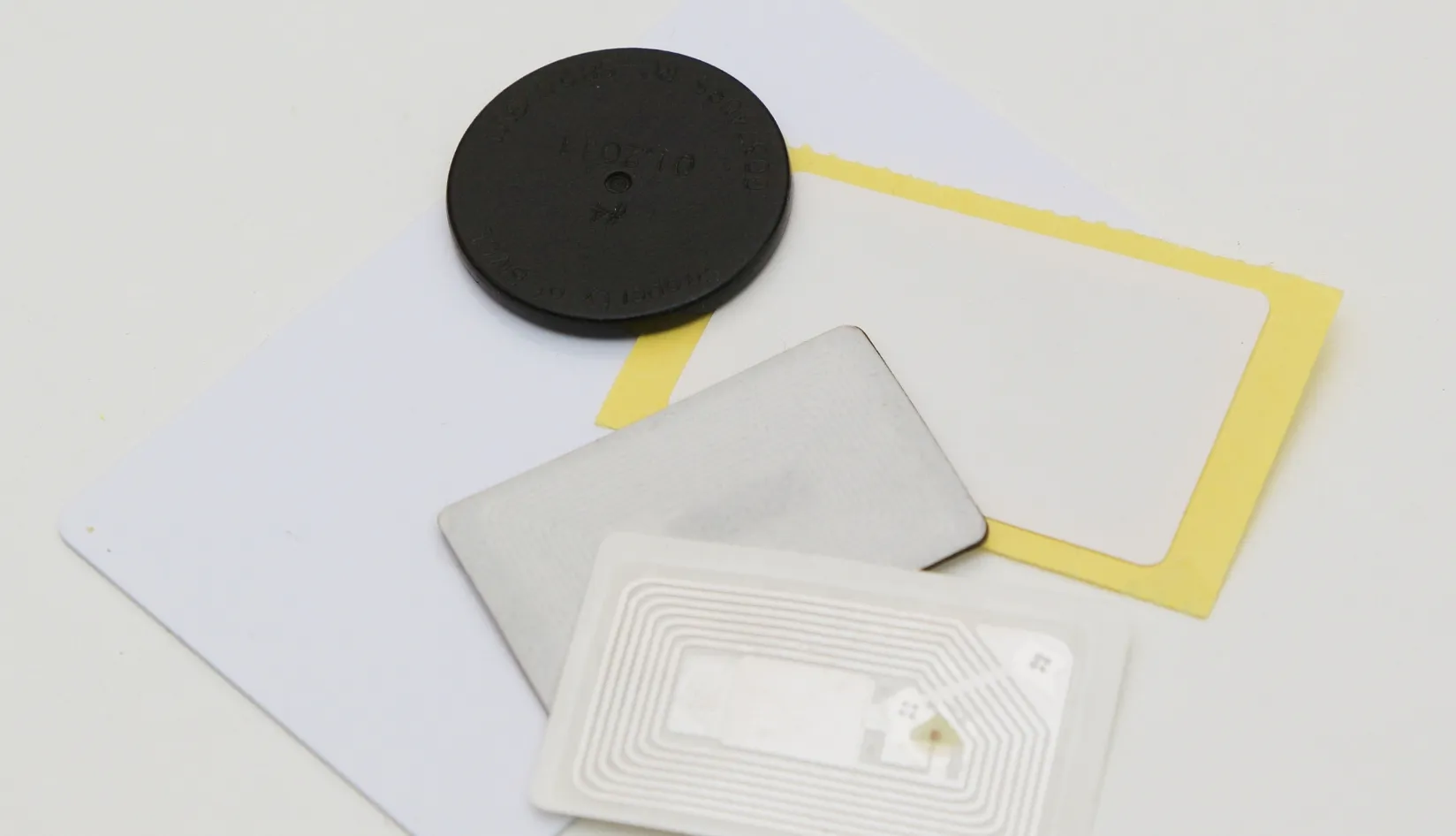
A UHF RFID tag is a combination of three elements: antenna, substrate, and chip. Among these, the chip is responsible for:
- Receiving RF energy from the reader via the antenna
- Converting RF energy into power (passive operation)
- Modulating and backscattering the signal to respond
- Storing EPC, TID, and optional user data
- Executing the EPC Gen2 protocol logic
Operating in the 860–960 MHz band (the RAIN RFID spectrum), UHF systems depend on how well the chip harvests energy. They must also respond at low power levels. This is why chip sensitivity is often the single most important factor behind read range and reliability.
If two tags use the same antenna but different chips, their real-world performance can differ dramatically. The silicon inside drives that difference.
2. Key Technical Parameters You Must Evaluate
Selecting among available UHF RFID chips is not about brand preference. It is about understanding four technical dimensions.
2.1 Chip Sensitivity (Read/Write Sensitivity)
Chip sensitivity is measured in decibel-milliwatts (dBm), and in the world of RFID, more negative numbers indicate better performance. For example, a chip with a sensitivity of -24 dBm is significantly more powerful than one with -18 dBm. This sensitivity directly impacts the read range—the maximum distance at which a reader can identify the tag.
| Parameter | Impact on Performance | Typical Range |
| Read Sensitivity | Determines maximum read distance and bulk reading speed. | -18 dBm to -25.5 dBm |
| Write Sensitivity | Affects the distance at which a reader can encode new data. | Usually 3-6 dB lower than read sensitivity |
High sensitivity is particularly crucial in “bulk reading” scenarios, such as scanning a portal full of boxed goods. In these environments, signals are often attenuated by packaging materials, and only the most sensitive UHF RFID chips will respond consistently.
2.2 Memory Structure: EPC, TID, and User Memory
The memory of a UHF RFID chip is divided into distinct banks, each serving a specific purpose. Understanding these divisions is essential for data management.
| Memory | Purpose | Can be changed? | Typical Use |
| EPC | Product identifier | Yes | Inventory & tracking |
| TID | Chip serial identity | No | Authentication & traceability |
| User | Optional storage | Yes | Extra data, sensors, encoding |
2.3 Protocol Compliance (EPC Gen2 / ISO 18000-63)
Interoperability is the backbone of the RFID industry. To ensure that your tags can be read by any standard hardware, the chip must comply with the EPC Gen2 (ISO 18000-63) protocol. This global standard ensures that a chip manufactured by one company can communicate seamlessly with a reader manufactured by another. Compliance also guarantees that the tags will work with mainstream RFID printers and encoders, simplifying the deployment process.
2.4 Security and Serialization Features
As RFID technology expands into luxury goods and pharmaceuticals, security has become a top priority. Many modern UHF RFID chips include advanced features like “Untraceable” modes, which allow a tag to hide parts of its memory until authorized by a specific reader. Additionally, unique serialization—where the manufacturer pre-programs a unique serial number into the EPC—helps prevent duplicate IDs in the supply chain.
3. Match UHF RFID Chips to Your Application Scenario
There is no “one-size-fits-all” chip. The best choice depends entirely on the environment and the operational goals of your project.

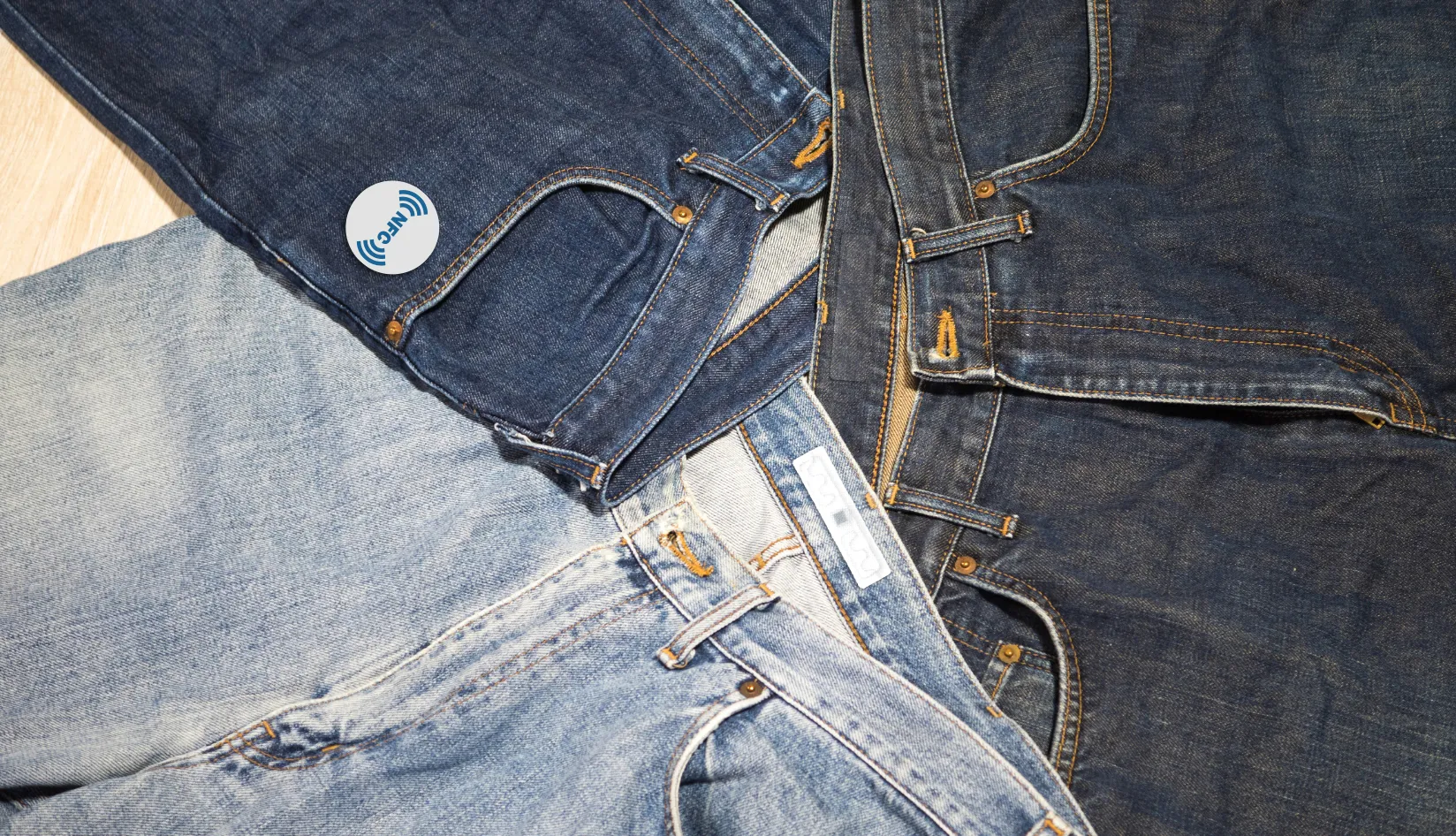
3.1 Retail & Apparel Inventory
In the retail sector, the primary goals are high inventory accuracy and fast multi-tag reading. Apparel tags are often small, meaning the antenna gain is limited. To compensate, chips like the Impinj Monza 4QT or NXP UCODE 9 are popular.
3.2 Warehouse & Logistics Tracking
Logistics applications prioritize long read distances and the ability to read tags moving at high speeds on conveyor belts. Here, the latest generation of chips, such as the Impinj M700 or M800 series, shines. Their exceptional sensitivity (down to -25.5 dBm) allows for reliable tracking even in dense warehouse environments where signals may be blocked by metal racking or other obstacles.
3.3 Industrial Asset Tracking
Industrial environments are notoriously difficult for UHF RFID. Metal surfaces and liquid containers interfere with radio signals, and physical conditions can be harsh. In these scenarios, reliable performance depends primarily on tag construction, including on-metal materials, isolation layers, and well-tuned antenna design rather than the chip itself.
Chips optimized for sensitivity and fast inventory, such as NXP UCODE 8, are widely used for robust asset identification in such conditions. When maintenance records or service data need to be stored directly on the tag, RFID ICs with dedicated user memory should be selected instead, while near-metal stability still relies mainly on the physical tag engineering.
3.4 Item-Level Serialization & Anti-Counterfeit
For high-value items, the chip’s unique TID and security features are the most important factors. Using a chip like the UCODE DNA, which supports AES-128 encryption, provides a cryptographic layer of protection that makes it nearly impossible for bad actors to clone or tamper with the tag’s identity.
4. Major UHF RFID Chip Families on the Market
The market for UHF RFID chips is dominated by a few key players, most notably Impinj and NXP Semiconductors. Both companies offer a wide range of products tailored to different needs.
| Chip Family | Key Features | Typical Use Case |
| Impinj Monza R6 | High speed, AutoTune technology, 96-bit EPC. | Retail, Apparel, High-volume logistics. |
| Impinj M700 Series | Small footprint, extreme sensitivity (-24 dBm), 128-bit EPC. | Global supply chain, diverse item-level tracking. |
| NXP UCODE 8/9 | Excellent bulk reading, high sensitivity, Self-Adjust feature. | Inventory management, omnichannel retail. |
| NXP UCODE DNA | AES-128 encryption, secure authentication. | Luxury goods, brand protection, secure access. |
| Impinj Monza 4QT | Large user memory (512 bits), True3D antenna support. | Industrial assets, complex data storage. |
5. Common Mistakes When Selecting UHF RFID Chips

Even experienced professionals can make errors when specifying chips. Avoiding these common pitfalls will save time and money.
- Choosing based on price only: Cheaper chips may reduce tag cost but increase read failures, which is far more expensive operationally.
- Ignoring the reading environment: Metal shelving, liquids, dense stacking—these change performance dramatically.
- Overlooking memory requirements: Extra memory adds cost without adding value in most cases.
- Poor chip–antenna matching: The antenna must be tuned for the chip’s impedance. Mismatch reduces performance even with a good chip.
- Skipping real-world testing: Lab performance and field performance can differ.
6. Step-by-Step UHF RFID Chip Selection Checklist

To ensure a successful selection process, follow this structured checklist:
- Define your application scenario: Is it retail, logistics, or industrial?
- Determine required read range: How far away will the reader be? (e.g., 3 meters vs. 10 meters).
- Specify memory needs: Do you need just an EPC, or is User Memory required for offline data?
- Evaluate environmental factors: Are there metal, liquids, or extreme temperatures involved?
- Set cost targets and test samples: Request sample tags with different chips and perform real-world testing before committing to a large order.
7. Why the Right UHF RFID Chip Determines Tag Quality
It is a common misconception that tag quality is solely a result of antenna design. In reality, the performance of an RFID tag is the product of the chip’s performance multiplied by the antenna’s efficiency. Even the most sophisticated antenna cannot “create” energy; it can only capture what is available. If the chip has poor sensitivity, the tag will struggle to activate regardless of how large the antenna is.

Furthermore, different chips interact differently with the same antenna design. The input impedance of a chip varies between manufacturers and even between chip generations. Therefore, an antenna designed for a Monza R6 might perform poorly if simply swapped with a UCODE 9 chip without re-tuning. High-quality tag manufacturers spend significant time optimizing this “chip-antenna” synergy to ensure that the final product meets the rigorous demands of modern industry.
8. Conclusion
Selecting the right UHF RFID chips is the foundation of RFID tag success. Before committing to mass production, always validate chip choices with real-world testing on your actual antenna design. That small step determines whether your RFID deployment becomes a success story or a troubleshooting project.
Work with RFIDTag to test and validate the right chip and tag design in real application scenarios, ensuring long-term performance and reliability.
Recommended Product

Heat Resistant Alien Higgs® 4 Heat Resistant Material UHF On-Metal Tag | 42x15mm
The heat resistant UHF on-metal tag features a robust construction with heat-resistant materials and IP68 rating for dependable use in harsh conditions. Powered by the Alien Higgs® 4 chip, it supports asset tracking, inventory management, and supply chain optimization across various industries.

Impinj® Monza® 4QT Silicone RFID Laundry Tag
The Impinj® Monza® 4QT Silicone RFID Laundry Tag combines flexible silicone material with robust UHF performance, ensuring excellent readability through harsh laundry processes. Trusted by hospitality and healthcare industries, it streamlines linen tracking, inventory control, and garment lifecycle management with long-lasting durability and consistent results.


 EN
 ES
 JA