
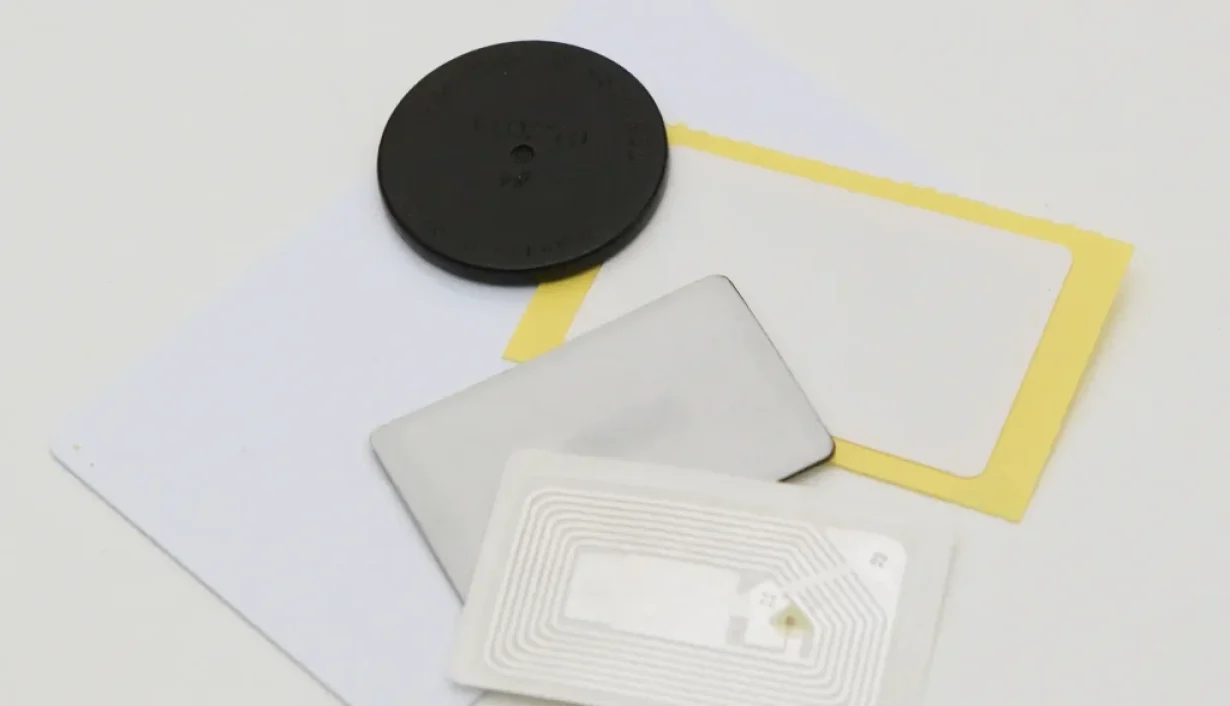

Choosing the right RFID tag materials is an important part of building a reliable RFID system. The material surrounding an RFID chip and antenna can affect durability, flexibility, mounting options, resistance to water and heat, and suitability for different surfaces. From paper and PET labels to flexible, PCB, ceramic, and molded RFID tags, each option is designed for different operating conditions. This guide explains common RFID tag materials and how to choose the right one for your application.
Why RFID Tag Materials Matter
An RFID tag is more than its chip and antenna. The outer material and encapsulation protect the internal components from environmental and physical damage.

Different RFID tag materials can influence:
- Resistance to water, dust, and moisture
- Performance in high or low temperatures
- Resistance to impact, pressure, and abrasion
- Chemical and corrosion resistance
- Flexibility and ability to conform to curved surfaces
- Expected service life
Common RFID Tag Materials
RFID tags are available in a wide range of materials and physical constructions. Each material offers different levels of flexibility, durability, and environmental resistance, making it suitable for specific applications and operating conditions. Below are some of the most common RFID tag materials and their typical uses.
1. Paper RFID Tags
Paper is one of the most common materials used for RFID labels. These tags are typically lightweight, thin, and economical, making them suitable for high-volume applications.
Paper RFID tags are commonly used for:
- Retail inventory
- Logistics labels
- Document tracking
- Temporary identification
Their main advantage is cost efficiency and easy printing. However, paper offers limited protection against moisture, tearing, and harsh environments.
2. PET RFID Tags

PET is widely used in RFID labels because it offers better strength and moisture resistance than paper while remaining thin and flexible.
Compared with paper, PET generally provides better durability and dimensional stability. It can therefore be a practical choice when a standard RFID label needs to withstand more handling or moderate environmental exposure.
Best for: Indoor or moderately demanding applications requiring a thin and flexible RFID label.
3. Flexible RFID Tag Materials
Flexible RFID tags are designed to bend or conform to surfaces. Depending on the product design, they may use materials such as TPU, flexible polymers, foam layers, and specialized substrates.
For on-metal applications, the material structure is particularly important. A flexible on-metal tag typically requires a suitable spacer or isolation layer between the antenna and the metal surface. This helps reduce the negative effect of metal on RFID performance.
Best for: Curved, irregular, or non-flat surfaces where a rigid tag is unsuitable.
4. PCB RFID Tags
PCB is one of the more robust RFID tag materials used for industrial and on-metal applications. FR4 PCB structures can provide a rigid and durable platform for the RFID antenna and chip.
Their rigid construction can provide good resistance to physical handling and environmental exposure. Depending on the product design, additional protection may also provide high levels of dust and water resistance.
Best for: Metal assets and industrial environments requiring a compact, rigid RFID tag.
5. Ceramic RFID Tags
Ceramic is commonly used when temperature resistance, dimensional stability, and durability are particularly important. Because ceramic is rigid, it is less suitable for applications requiring flexibility. It can also be brittle under certain types of mechanical impact, so resistance to high temperature should not automatically be interpreted as resistance to every form of physical stress.

Best for: High-temperature and demanding industrial environments.
6. ABS and Other Plastic RFID Tags
ABS and other engineering plastics are frequently used to produce RFID hard tags. These materials allow manufacturers to create durable housings in different shapes and sizes.
Depending on the material formulation and housing design, plastic tags can provide different levels of impact resistance, water resistance, and environmental protection.
An important consideration is that the plastic housing alone does not determine the tag’s performance. The internal antenna design, sealing method, mounting structure, and environmental requirements should also be evaluated.
Best for: Reusable assets requiring a durable hard tag.
7. Molded and Encapsulated RFID Tags

For harsh environments, RFID tags may use injection molding, resin encapsulation, or other protective structures to seal the chip and antenna.
These RFID tag materials and encapsulation methods can help protect internal components from:
- Water and moisture
- Chemicals
- Mechanical damage
- Outdoor exposure
Such tags may be designed for applications including construction, chemical environments, outdoor equipment, and other demanding industrial uses. The referenced article similarly emphasizes that the protective structure and encapsulation method can significantly affect an RFID tag’s environmental resistance and service life.
How to Choose the Right RFID Tag Material
Rather than selecting RFID tag materials based only on their general durability, consider the conditions the tag will actually experience.

Consider the operating environment
Start with questions such as:
- Will the tag be used indoors or outdoors?
- Will it be exposed to water, humidity, dust, or chemicals?
- Does the application involve high or low temperatures?
Consider the mounting surface
The object being tagged is equally important.
Metal surfaces can affect RFID performance, so an on-metal RFID tag usually requires a suitable antenna and structural design. Curved surfaces may require a flexible material, while flat industrial equipment may be suitable for a PCB or rigid hard tag.
Consider mechanical stress
Ask how the tag will be handled during normal operation.
A tag attached to office equipment may experience little physical stress. A tag installed on industrial tools, containers, or machinery may face vibration, impact, abrasion, or pressure.
The required resistance should be based on the actual type of mechanical stress rather than simply choosing the hardest material available.
Material Is Only One Part of RFID Tag Selection
While materials are important, their selection should not be separated from other technical requirements.

A complete RFID tag selection process should also consider:
- Frequency — LF, HF/NFC, or UHF
- Chip — Memory, security, and protocol requirements
- Antenna design — Particularly important for metal and specialized surfaces
- Tag size — Limited installation space may restrict antenna performance
- Read range — Required reading distance and reader conditions
- Mounting method — Adhesive, screw, cable tie, embedment, or other options
- Environmental protection — Required resistance to water, dust, chemicals, temperature, or impact
The best RFID tag is therefore a combination of suitable material, antenna design, chip, physical structure, and mounting method.
Conclusion
Matching the material and overall tag design to the application can improve system reliability and reduce unnecessary replacement costs.
RFIDTag provides reliable RFID tags for industrial applications. Visit our website to find the right RFID tag for your project.






 EN
 ES
 JA