
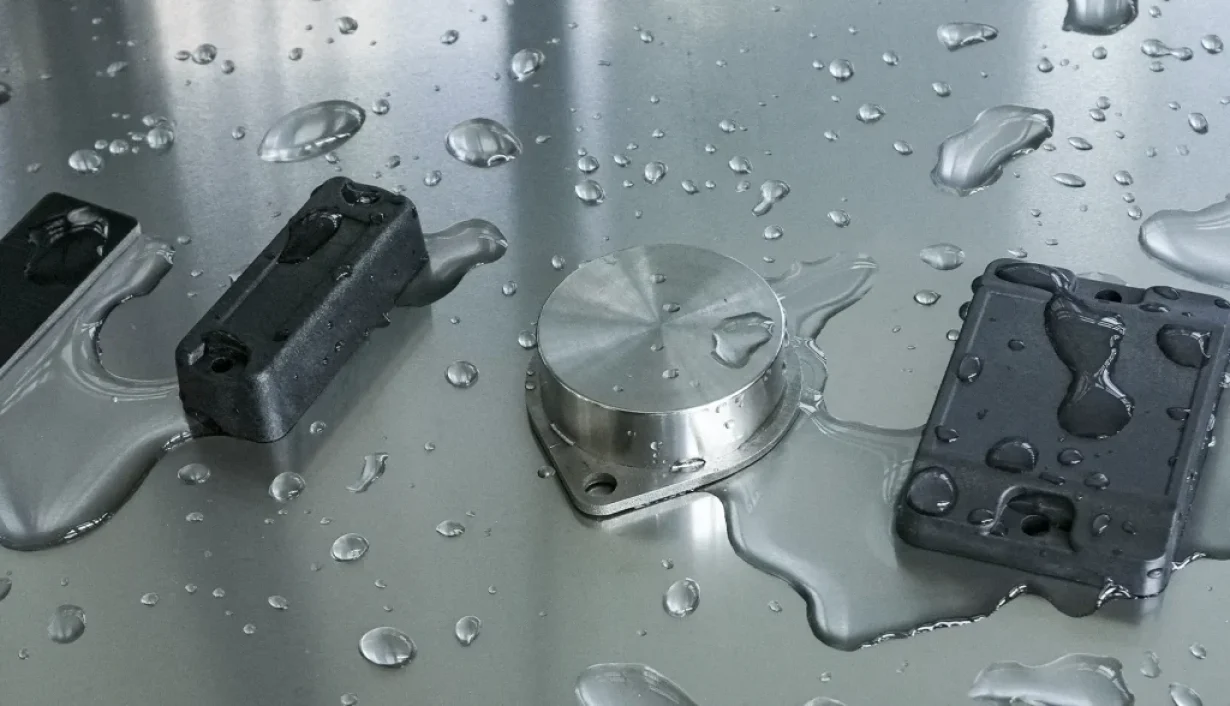

Water, humidity, rain, and frequent cleaning can quickly damage standard RFID tags or reduce their reliability. Waterproof RFID tags are designed to protect the RFID chip and antenna from moisture while maintaining stable identification performance in demanding environments. However, not every waterproof tag is suitable for every wet application. The right choice depends on water exposure, mounting surface, temperature, chemicals, and required read range.
1. Why Do You Need Waterproof RFID Tags?
Standard RFID labels are generally designed for relatively controlled environments. When exposed to rain, splashes, high humidity, or prolonged immersion, moisture can penetrate the tag structure, damage the antenna or chip connections, and cause the label material or adhesive to deteriorate.
2. What Makes an RFID Tag Waterproof?
Waterproof performance does not come from the RFID chip itself. It mainly depends on the tag’s physical construction and how well the internal components are protected.

2.1 Protective Housing or Encapsulation
A sealed housing can prevent water from reaching the chip, antenna, and electrical connections. Rugged tags may use materials such as ABS, PPS and silicone depending on the application.
2.2 Sealed Construction
A waterproof RFID tag needs to minimize potential paths for water ingress. The housing, joints, mounting holes, and other structural interfaces should be properly protected. This becomes particularly important when a tag is expected to remain outdoors or experience repeated water exposure rather than occasional splashes.
2.3 Appropriate IP Rating
The IP rating provides an established way to evaluate protection against dust and water ingress. For wet environments, an appropriate IP rating is an important specification to check before selecting a tag.
However, an IP rating should not be treated as the only selection criterion. Two tags can have the same IP rating while having very different performance in terms of read range, temperature resistance, chemical resistance, mounting method, and mechanical durability.
3. 5 Factors to Consider When Choosing Waterproof RFID Tags
Choosing a waterproof tag should start with the actual operating environment rather than the waterproof specification alone.
3.1 Type and Duration of Water Exposure
First, determine how the tag will encounter water.
| Water Exposure | Typical Environment | Recommended Consideration |
| Occasional splashes | Warehouses, outdoor equipment | Water-resistant or waterproof construction |
| Rain and humidity | Outdoor assets | Waterproof housing + outdoor durability |
| Frequent washing | Industrial equipment | High IP rating + chemical/temperature resistance |
| Temporary immersion | Containers, tools, equipment | Waterproof construction + appropriate IP rating |
| Long-term immersion | Marine or specialized equipment | Waterproof construction specifically tested for the application |
3.2 Mounting Surface
The surface on which the tag will be installed can significantly affect RFID performance.

For non-metallic assets such as plastic containers, wooden equipment, or certain packaging, standard waterproof RFID tags may be sufficient.
Metal assets require additional consideration because metal can interfere with UHF RFID communication. In these cases, an on-metal waterproof RFID tag with an antenna structure designed for metal surfaces is generally more appropriate.
3.3 Temperature
Wet environments are often accompanied by temperature changes.
Outdoor assets may experience hot sunlight, cold weather, or rapid temperature fluctuations. Industrial equipment may also be exposed to elevated temperatures during cleaning or processing.
The waterproof specification alone does not indicate whether a tag can tolerate high or low temperatures. Check the tag’s operating temperature range and make sure the housing and internal materials are suitable for the actual application.
3.4 Required Read Range
Waterproof protection and RFID read performance are separate considerations.
A rugged waterproof housing may increase tag thickness or affect the antenna structure. The required read range also depends on the tag size, RFID chip, reader, reader power, mounting surface, and surrounding environment.
Therefore, when selecting a waterproof RFID tag, consider:
- Fixed or handheld reader
- Required reading distance
- UHF frequency band
- Metal or non-metal mounting surface
- Tag dimensions
3.5 Mounting Method
The tag must remain securely attached throughout its service life.
Common mounting methods include:
- Adhesive
- Screws
- Rivets or mechanical fasteners
- Embedding
For curved or irregular metal equipment, a flexible waterproof RFID tag may be preferable. For heavy industrial assets, screw-mounted or mechanically fastened tags can provide more secure long-term attachment.
4. Waterproof Does Not Mean “Suitable for Everything”
One of the most common mistakes when choosing waterproof RFID tags is assuming that a high IP rating automatically makes a tag suitable for every harsh environment.

A waterproof RFID tag may still be unsuitable if:
- It cannot withstand the required temperature.
- It is exposed to chemicals beyond its material resistance.
- It is mounted directly on metal without an on-metal design.
- Its waterproof performance does not match the actual duration or conditions of water exposure.
A better approach is to evaluate the entire operating environment before selecting the tag.
5. A Practical Checklist for Selecting Waterproof RFID Tags
Before purchasing, confirm the following specifications:
| Requirement | What to Check |
| Water exposure | Splashing, rain, washing, or immersion |
| IP protection | Required IP rating |
| Mounting surface | Metal, plastic, concrete, fabric, etc. |
| Material | ABS, PPS, silicone, PEEK, etc. |
| Temperature | Operating and storage temperature |
| Chemicals | Oils, cleaners, fuels, acids, alkalis, etc. |
| Read range | Required distance with the actual reader |
| Physical stress | Impact, vibration, bending, abrasion |
| Application life | Short-term or long-term deployment |
Whenever possible, test the selected tag on the actual asset and under representative environmental conditions before large-scale deployment.
6. Conclusion
A high-quality waterproof RFID tag needs to do more than just resist water—it must also be suited to your entire operating environment. With careful evaluation, you can select an RFID tag that delivers reliable identification performance over its entire intended service life.
RFIDTag offers waterproof and IP-rated RFID tags in different materials, form factors, and mounting configurations for outdoor and industrial environments. Contact us to discuss your application and request samples for real-world testing.


 EN
 ES
 JA