


In chemical manufacturing, efficient asset management is crucial for safety, compliance, and profitability. Traditional tracking methods often fail in corrosive environments, extreme temperatures, and complex regulatory landscapes, leading to costly downtime and lost inventory. Imagine real-time visibility for every asset, from critical machinery to hazardous material containers, even in the most challenging conditions. This blog explores how Radio Frequency Identification (RFID) technology is revolutionizing chemical industry asset management, offering unparalleled durability, accuracy, and efficiency. Discover how robust RFID solutions can transform your operations, enhance safety, and unlock significant cost savings.
1. The Unique Challenges of Chemical Industry Asset Management
The chemical industry faces complex asset management challenges due to harsh operating environments, stringent regulations, and the critical nature of its assets.
Harsh Operating Environments
Chemical facilities expose assets to corrosive substances, extreme temperatures, and physical stresses. Standard labels and barcodes quickly degrade, becoming unreadable. Any asset management solution must be exceptionally robust to withstand acids, alkalis, solvents, and high heat or cold.
Regulatory Compliance and Safety
Safety is paramount. Handling hazardous materials and operating high-pressure systems demand strict adherence to protocols. Effective asset management ensures compliance through accurate records of equipment calibration and maintenance. Misplaced or unmaintained assets risk severe accidents and fines.
High-Value and Critical Assets
Chemical plants house expensive and critical assets like reactors, distillation columns, and pipelines. Failure of any critical asset causes significant downtime and financial losses. Real-time visibility into asset location, status, and maintenance needs is essential for proactive management.
Inventory Management Complexity
Managing inventories of hazardous raw materials and finished goods is complex. Manual checks are time-consuming and error-prone. Efficient inventory management is vital for optimizing supply chains, reducing waste, and ensuring material availability while maintaining safety standards.
Maintenance and Downtime Costs
Unplanned downtime from asset failure is extremely costly. Traditional reactive maintenance is inefficient. Predictive and preventive maintenance strategies, relying on accurate asset data, are needed to extend asset lifespan and reduce operational expenditures.
These challenges highlight the need for advanced asset management solutions that provide accurate real-time data and support proactive decision-making.

2. RFID Solutions for Harsh Chemical Environments
Effective asset management in the chemical industry requires RFID tags that can withstand extreme conditions. Standard tags are often insufficient for corrosive chemicals, high temperatures, and physical stresses.
The Need for Robust Tagging
Chemical environments demand RFID tags that are:
- Chemical Resistant: Resisting degradation from acids, alkalis, and solvents.
- High-Temperature Resistant: Operating reliably in elevated temperatures without compromising integrity.
- Durable and Impact Resistant: Withstanding physical abuse, impacts, and vibrations.
- On-Metal Performance: Ensuring optimal read range on metal surfaces, which interfere with signals.
- High IP Rating: Protecting against dust and water ingress (e.g., IP68, IP69K).
Without these specialized characteristics, RFID deployments in the chemical industry would fail. Selecting the right tag material, chip, and encapsulation is crucial for long-term reliability.
3. Introducing the Chemical Resistant NXP UCODE® 8 PEEK RFID On-Metal Tag
RFIDTag.com offers the Chemical Resistant NXP UCODE® 8 PEEK RFID On-Metal Tag, engineered for the most challenging chemical environments.
Unmatched Durability and Performance
This specialized RFID tag is ideal for chemical manufacturing facilities due to:
- Extreme Chemical Resistance: PEEK material withstands pH 0-14, impervious to most common chemical processes.
- High-Temperature Resilience: Operates from -40°C to +150°C, with storage tolerance up to +250°C. Its 150 Mpa compression strength adds robustness.
- Superior On-Metal Performance: Optimized for metal surfaces, the NXP UCODE® 8 chip provides up to 6.5 meters (US frequency) read range with a fixed reader, and 3.5 meters with a handheld reader.
- Robust Protection: IP68 and IP69K rated, fully protected against dust and high-pressure washdowns.
- Advanced Chip Technology: NXP UCODE® 8 chip offers 128 bits EPC memory, Permal LOCK™, Kill Command, and authenticity certification.
- Versatile Mounting: Four 2.3 mm holes allow secure mounting with M2 screws.
Real-World Application
This tag has been rigorously tested, enduring 30 cycles of extreme conditions (250°C heat, water immersion, ultrasonic cleaning, pressure tests) without damage. This makes it ideal for critical asset tracking in chemical plants.
Deploying these durable RFID tags enables chemical companies to achieve unprecedented accuracy and efficiency in asset management, leading to improved safety, reduced costs, and enhanced compliance.

4. Best Practices for Implementing RFID Asset Management in Chemical Plants
Successful RFID implementation requires careful planning:
Conduct a Thorough Needs Assessment
Define objectives, identify assets, and understand environmental conditions to guide hardware and software selection.
Choose the Right RFID Hardware
Select tags designed for chemical resistance, high-temperature tolerance, and on-metal performance. Ensure readers are robust and compatible.
Integrate with Existing Systems
Seamlessly integrate RFID data with ERP, EAM, or CMMS software for a holistic view of asset performance.
Develop a Comprehensive Tagging Strategy
Plan optimal tag placement for readability and protection. Consider a phased deployment for large facilities.
Train Your Workforce
Provide comprehensive training to all personnel on system usage and benefits.
Establish Clear Processes and Protocols
Define SOPs for all RFID activities to ensure data accuracy and system reliability.
Monitor, Evaluate, and Optimize
Continuously monitor system performance and KPIs to identify improvements and optimize over time.
Following these practices helps chemical companies transform asset management, leading to safer, more efficient, and profitable operations.
5. Conclusion
The chemical industry faces unique asset management challenges. RFID technology offers a transformative solution, providing real-time visibility, enhanced data accuracy, and improved operational efficiency.
Embracing advanced RFID solutions, especially those designed for harsh chemical environments like the Chemical Resistant NXP UCODE® 8 PEEK RFID On-Metal Tag, revolutionizes asset management strategies.
Contact RFIDTag.com today to learn more about our Chemical Resistant NXP UCODE® 8 PEEK RFID On-Metal Tag and discover how our comprehensive RFID solutions can transform your operations.
FAQs
How long do chemical-resistant RFID tags typically last in harsh environments?
High-quality chemical-resistant RFID tags, particularly those made with PEEK, are designed for extended durability. They can last many years (e.g., 5-10+) even with continuous exposure to corrosive chemicals and extreme temperatures, significantly outperforming standard tags.
Can RFID systems track both fixed assets and movable inventory in a chemical plant?
Yes, RFID systems are highly versatile. They can track both fixed assets (reactors, pipelines) and movable inventory (chemical drums, tools) using optimized tags and strategically placed readers, providing comprehensive real-time visibility.
What is the typical ROI for implementing an RFID asset management system in the chemical industry?
ROI for RFID in the chemical industry can be substantial, often achieved within 1-3 years. Benefits include reduced unplanned downtime, decreased inventory loss, improved labor efficiency, enhanced safety compliance, and extended asset lifespan.
Is it possible to integrate RFID asset tracking data with existing ERP or CMMS systems?
Absolutely. Modern RFID solutions integrate seamlessly with ERP and CMMS systems. This allows RFID data (location, status, history) to flow directly into central platforms, providing a unified view and improving decision-making.
How does RFID compare to barcode systems for asset tracking in chemical environments?
Barcodes require line-of-sight, are easily damaged, and lack automated tracking. RFID offers non-line-of-sight reading, simultaneous multi-tag reading, and superior durability with specialized tags, making it a more robust and efficient solution for demanding chemical environments.
Recommended Product
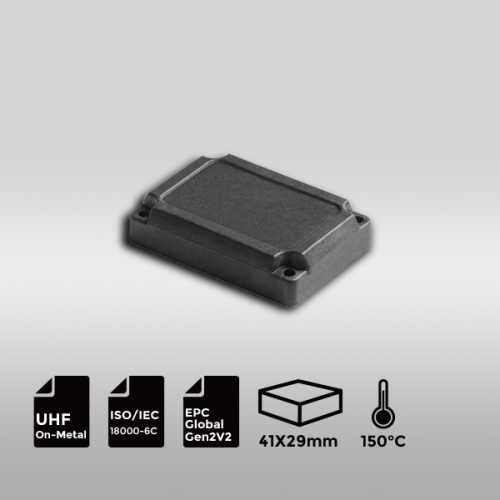
Chemical Resistant NXP UCODE® 8 PEEK RFID On-Metal Tag | 41×29 mm
This chemical resistant NXP UCODE® 8 PEEK RFID On-metal Tag adapts to pH 0–14 and endures harsh chemicals. It is perfect for asset tracking in medical devices, automotive and electronics industries where metal surfaces require durable tagging.



 EN
EN  ES
ES  JA
JA