


UHF RFID tags are smart identification devices that enable fast, contactless data transmission over long distances. Compared to traditional barcodes or low-frequency RFID systems, UHF RFID stands out with greater read range, higher efficiency, and cost-effectiveness, making it a popular choice across industries like supply chain, logistics, retail, and manufacturing.
Understanding how UHF RFID tags work is crucial for businesses looking to deploy the right system and maximize operational efficiency. It empowers organizations to streamline asset tracking, reduce labor costs, and move toward smarter, data-driven management.
So, how exactly do UHF RFID tags work? Let’s dive into the technology, benefits, and real-world use cases in the sections below.
How UHF RFID Tags Work
UHF RFID (Ultra High Frequency Radio Frequency Identification) systems are widely used across logistics, manufacturing, retail, and more due to their long reading range and fast identification capabilities. So, how exactly do UHF RFID tags work? Let’s break it down from frequency basics, system components, to the working mechanism.
What is UHF (Ultra High Frequency)?
UHF stands for Ultra High Frequency, referring to the radio frequency range between 860–960 MHz, one of the most common bands used for RFID applications.
Comparing UHF to LF and HF:
| Frequency Band | Frequency Range | Characteristics | Common Uses |
| LF (Low Frequency) | 125–134 kHz | Short read range, strong penetration, good interference resistance | Access control, animal tagging |
| HF (High Frequency) | 13.56 MHz | Moderate read range, supports NFC | Transit cards, library management |
| UHF (Ultra High Frequency) | 860–960 MHz | Long read range, fast read speed, supports multiple tag reads | Logistics, warehousing, supply chain |
Compared to LF and HF, UHF RFID tags offer higher reading efficiency and longer read distances, making them ideal for fast, large-scale identification in industrial and commercial settings.
System Components: The Three Key Parts of UHF RFID
A complete UHF RFID system typically consists of three main parts:
1. Tags
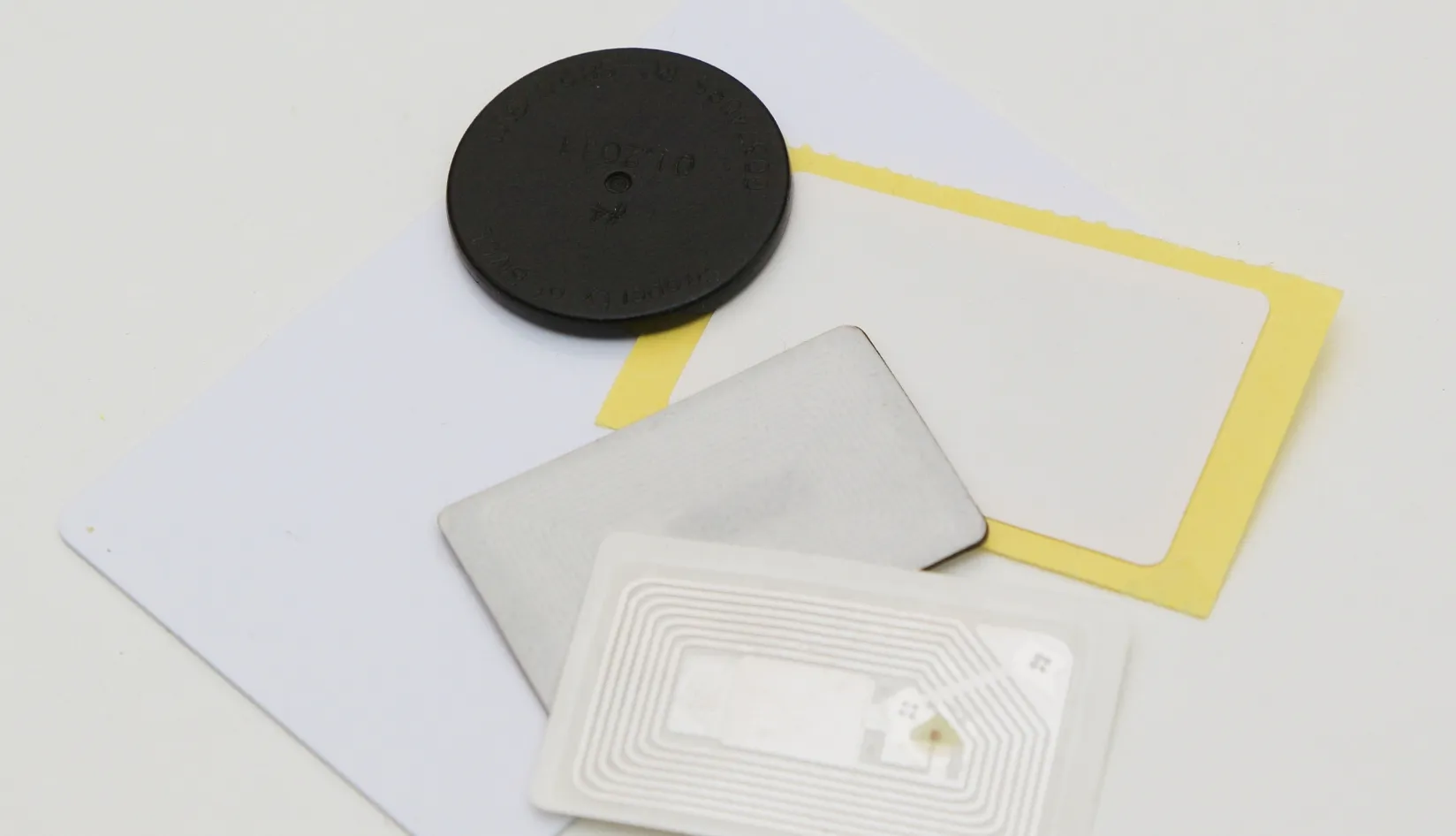
UHF RFID tags are small electronic labels attached to items or equipment. They mainly consist of:
- Chip (IC): Stores a unique identifier (like an EPC code) and user data;
- Antenna: Receives signals from the reader and reflects back responses;
- Encapsulation: Protects the internal components (can be paper, plastic, flexible materials, etc.).
Tags come in different types based on their power source, which will be explained in detail later in the “Power Transfer” section.
2. Readers
Readers send electromagnetic signals through antennas and receive responses from tags. They usually offer:
- Ability to read multiple tags simultaneously (hundreds at a time);
- High scanning speed (hundreds of reads per second);
- Connectivity to backend systems via wired or wireless networks.
3. Middleware and Backend Systems
Middleware passes data collected by readers to enterprise IT systems such as:
- ERP (Enterprise Resource Planning);
- WMS (Warehouse Management System);
- MES (Manufacturing Execution System).
It handles data filtering, cleaning, and rule application to enable automated business processes.
How UHF RFID Works: The Operating Mechanism
Power Transfer and Tag Types
UHF RFID tags are categorized based on how they get power:
- Passive Tags
No battery; powered entirely by the electromagnetic field emitted by the reader. These are the most common and cost-effective tags, with typical read ranges from 1 to 12 meters. - Active Tags
Battery-powered and actively transmit signals. They offer much longer read ranges (up to 100 meters or more) but come at a higher cost. Commonly used for critical assets and long-distance tracking. - Semi-Passive (Battery-Assisted Passive) Tags
Equipped with a battery that powers the chip but does not actively transmit signals. The tag responds when energized by the reader’s signal. These tags offer a good balance of signal stability and cost, useful in complex environments.
Data Communication Process
- The reader emits electromagnetic waves, scanning its coverage area.
- Tags receive the signal and activate their chips (passive tags rely solely on reader energy; active and semi-passive tags use their batteries).
- Tags respond by reflecting or actively sending back their data.
- The reader receives and decodes the data, forwarding it to backend systems.
Key Performance Metrics
- Read range: Passive tags 1–12 meters; active tags up to 100+ meters;
- Read speed: Can identify hundreds of tags per second;
- Penetration: Can pass through plastic, cardboard, and other non-metal materials. Metals and liquids can interfere, requiring special anti-metal tags.
Benefits of UHF RFID Tags
UHF RFID technology offers significant advantages that have made it widely adopted across industries for asset management, logistics tracking, and supply chain optimization. Here’s a detailed look at the key benefits of UHF RFID tags.
Long Read Range
UHF RFID tags offer one of the biggest advantages in the industry—their long read range, which typically reaches 12 meters or more. Compared to Low Frequency (LF) and High Frequency (HF) tags, UHF tags enable users to read data from much greater distances, significantly increasing flexibility and expanding potential use cases. For example:
- Items on warehouse shelves can be scanned without manual line-of-sight;
- Vehicles entering and exiting gates can be quickly identified by onboard tags;
- Materials on production lines can be tracked more efficiently.
The extended read range not only saves time but also reduces manual labor, boosting overall operational efficiency.
Ability to Read Multiple Tags Simultaneously
UHF RFID supports simultaneous reading of multiple tags through anti-collision technology, allowing quick and accurate bulk scanning even in dense tag environments. This capability enables:
- Fast inventory counting without missing or double-counting items;
- Speedy processing of logistics packages to improve loading and unloading;
- Real-time tracking and dynamic monitoring of assets.
- Reading multiple tags at once significantly cuts down work cycles and lowers labor costs.
Cost-Effectiveness
Especially for passive UHF RFID tags—which don’t contain batteries—the cost is much lower compared to active tags. With mature manufacturing processes, prices continue to drop, making UHF RFID tags:
- Ideal for labeling large volumes of products;
- Suitable for large-scale deployments, reducing overall system investment;
- Economically viable for businesses of various sizes and budgets.
- Low cost makes UHF RFID a practical choice for implementing smart management solutions.
Non-Line-of-Sight Reading
UHF RFID is a non-contact, non-line-of-sight technology, meaning tags don’t have to be visible to the reader to be detected. Compared to traditional barcode scanning, UHF RFID can read tags through materials like boxes and plastic, offering:
- Fast batch scanning without unpacking items;
- Greater resistance to damage, dirt, or wear;
- Flexibility for use in complex environments and diverse applications.
- Non-line-of-sight reading enhances convenience and reliability.
Strong Compatibility and Easy Integration with Automation Systems
UHF RFID systems are highly compatible with a wide range of automation software and hardware, supporting:
- Seamless integration with enterprise ERP, WMS, and other backend systems;
- Connection to industrial automation equipment such as conveyors and automated sorting machines;
- Customizable solutions for smart management across various scenarios and workflows.
This compatibility ensures UHF RFID solutions can be quickly deployed and deliver maximum value.

Typical Use Cases of UHF RFID
UHF RFID technology, with its robust capabilities and high efficiency, is widely applied across various industries. Below are some of the key use cases where UHF RFID technology provides significant value.
Supply Chain and Inventory Management
UHF RFID provides highly efficient and automated solutions in supply chain and inventory management, helping businesses track inventory in real-time, improve efficiency, and reduce human errors.
- Fast Inventory Counting
Thanks to the multi-tag reading capability of UHF RFID, businesses can achieve rapid bulk inventory counting without scanning each item individually, saving time and labor costs. - Goods Tracking
With RFID tags, companies can achieve real-time tracking of goods from production to transportation, warehousing, and delivery, ensuring the accuracy of item locations and reducing the risk of loss or delay. - Warehouse In/Out Management
UHF RFID tags help automatically record the in/out times, locations, and quantities of goods in the warehouse, enabling automated inventory updates and reducing manual errors.
Retail Industry
In the retail sector, UHF RFID is revolutionizing traditional goods management and customer experience by enhancing inventory accuracy and improving store operations.
- Smart Shelves
With RFID tags, smart shelves can monitor product stock levels in real-time. When inventory drops below a threshold, the system automatically triggers a restocking alert, ensuring timely product availability. - Anti-Theft and Loss Prevention
With RFID readers and access control systems, retailers can effectively prevent theft. If a customer tries to leave without checking out an item, the system triggers an alert, preventing losses. - Customer Behavior Analysis
By analyzing customer interaction data with products, retailers can better understand customer preferences and behaviors, offering personalized recommendations and marketing strategies to increase sales conversion.
Manufacturing and Asset Tracking
UHF RFID not only boosts production efficiency in manufacturing but also helps businesses track and manage important assets such as equipment and parts.
- Equipment Maintenance Records
Installing RFID tags on equipment allows the system to automatically upload maintenance records—including repair history, operating hours, and usage status—helping management ensure timely maintenance and extend equipment life. - Parts Tracking
UHF RFID can be used for parts tracking in the production process, ensuring that the origin and usage of each component are accurately recorded, preventing errors and quality issues during production.
Intelligent Transportation and Access Control Systems
UHF RFID plays a key role in intelligent transportation and access control systems, making traffic management and personnel access more efficient and automated.
- Vehicle Identification
Vehicle identification systems—such as highway toll stations and parking lots—widely use UHF RFID technology. RFID readers quickly identify vehicles equipped with RFID tags without physical contact, reducing traffic congestion and improving traffic flow. - Parking Lot Management
In parking lot management, RFID technology allows automatic vehicle identification and records parking times, enabling automatic payment or management without manual intervention, improving overall parking lot efficiency. - Personnel Access Control
Access control systems widely use RFID technology by issuing RFID cards or tags to employees for automatic identity verification and seamless entry, enhancing security and preventing unauthorized access to sensitive areas.
Healthcare and Document Management
In healthcare and document management, UHF RFID technology improves patient safety, tracks medication, medical equipment, and enhances records management efficiency.
- Medication Anti-Counterfeiting
UHF RFID tags can be applied to medication packaging, ensuring the authenticity and origin of the drugs. RFID technology helps hospitals and the pharmaceutical supply chain better trace the movement and use of drugs, preventing counterfeit products from entering the market. - Medical Record Management
Each patient’s medical records can be linked to RFID tags, enabling electronic medical record management. Healthcare professionals can quickly access patient information by scanning the RFID tag on the records, reducing errors and improving operational efficiency. - Consumables Tracking
Healthcare providers use UHF RFID to track medical consumables, manage and monitor supplies efficiently, reduce waste, and ensure critical items are always available when needed.
Conclusion: Is UHF RFID Right for Your Business?
UHF RFID technology, with its efficiency, accuracy, and automation capabilities, has proven to be highly valuable across various industries. From supply chain management to smart retail, asset tracking to healthcare, UHF RFID can help businesses improve operational efficiency, reduce costs, and increase transparency.
However, whether UHF RFID is right for your business depends on your specific needs and goals. Do you need real-time inventory tracking? Are you looking to improve operational efficiency and minimize human errors? Are you seeking a scalable, cost-effective tech solution?
Understanding your needs and evaluating the limitations of your current systems is crucial in deciding whether to adopt UHF RFID. If your business is undergoing digital transformation or you’re looking for an innovative way to enhance efficiency and accuracy, UHF RFID is certainly worth considering.
FAQs
What should businesses consider when choosing a UHF RFID tag?
When selecting a UHF RFID tag, businesses should evaluate several factors:
- Material and environment – Will you use the tag on metal, plastic, or textiles? Will it face exposure to heat, moisture, or chemicals?
- Read range needs – Does the application require long-distance reading (e.g., warehouse tracking) or close-range scanning?
- Tag form factor – Does it need to be flexible, rugged, or compact for item-level tagging?
- Mounting method – Will the tag be sewn, stuck, embedded, or zip-tied?
Choosing the right tag ensures system reliability and performance.
Can UHF RFID be integrated with IoT and cloud-based platforms?
Absolutely. Businesses are increasingly integrating UHF RFID with IoT ecosystems and cloud-based software to enable real-time data access, automation, and advanced analytics. For example, businesses can connect RFID readers to cloud dashboards to track inventory globally, trigger alerts, or run predictive models. This integration supports smart warehouses, remote asset visibility, and scalable infrastructure for enterprise-level digital transformation.
Is UHF RFID suitable for small businesses or startups?
Yes, UHF RFID has become increasingly accessible for small businesses thanks to declining hardware costs, modular deployment options, and plug-and-play solutions. Startups can begin with limited-scale deployments—like inventory tracking in a single store or monitoring tools in a workshop—and expand gradually. Many RFID providers offer scalable packages that grow with your business needs.





 EN
 ES
 JA