


If you’re wondering how to use NFC tags in your business, you’ve come to the right place. This guide is designed specifically for business owners looking to harness NFC technology to streamline operations, improve customer engagement, and stay ahead of the competition.
In the sections below, we’ll walk you through what NFC tags are, how they work, and most importantly—10 real-world use cases that show how these tiny tools can create powerful advantages for your business.
1. What Are NFC Tags and How Do They Work for Business?
NFC stands for Near Field Communication, a short-range wireless communication technology that enables data exchange between devices when they are brought within a few centimeters of each other. It’s the same technology used in contactless payment systems, but its potential goes far beyond mobile wallets.
An NFC tag is a small, programmable chip embedded in a label, card, wristband, or other physical format. When a smartphone or NFC-enabled device comes close to the tag, it triggers a pre-programmed action—such as opening a URL, displaying a product manual, launching a payment page, or recording data.
There is no need for batteries or power sources; NFC tags are passive and draw power from the scanning device. This makes them durable, low-maintenance, and highly versatile.
Advantages of NFC Tags Compared to Traditional Barcodes/QR Codes
While barcodes and QR codes have served businesses well, NFC tags offer distinct advantages that make them a superior choice for many modern applications:
| Feature | NFC Tags | QR Codes | Barcodes |
| Interaction | Tap (no line of sight needed) | Scan (requires camera, good lighting) | Scan (requires scanner, good lighting) |
| Ease of Use | Extremely simple, instant, intuitive | Requires opening camera/app, aiming | Requires dedicated scanner |
| Security | Can be encrypted, unique IDs, harder to clone | Easily copied/replicated, less secure | Easily copied/replicated, less secure |
| Data Capacity | Moderate (up to a few KB) | Moderate (up to a few KB) | Low (typically 20-30 characters) |
| Durability | Highly durable, resistant to wear & tear | Prone to damage (scratches, fading) | Prone to damage (scratches, fading) |
| User Experience | Seamless, magical, frictionless | Can be clunky, app-dependent | Basic, functional |
| Power Source | Passive (no battery needed) | None (visual code) | None (visual code) |
This table clearly illustrates why understanding how to use NFC tags can provide a significant competitive edge. Their superior user experience, enhanced security features, and ease of interaction make them a powerful tool for businesses aiming to innovate and optimize their operations.
2. Why Should Business Owners Care About NFC Tags?
In an era where speed, personalization, and automation define customer expectations, NFC tags offer a powerful yet cost-effective way to elevate your business operations and interactions. Whether you run a retail store, a restaurant, or a service-based company, understanding how to use NFC tags can give you a competitive edge. Here are three key reasons why NFC tags are worth your attention:
Enhance Customer Engagement with Contactless Experiences
Today’s customers prefer fast, intuitive, and contactless interactions. With NFC tags, businesses can provide tap-and-go experiences that feel effortless.
Imagine this: A customer taps their phone and instantly sees product details, accesses exclusive discounts, or submits feedback—no apps, no QR codes, just one tap.
This seamless experience not only improves customer satisfaction but also opens up new ways to build loyalty and boost post-sale engagement.
Streamline Operations and Automate Daily Workflows
Beyond customer-facing uses, NFC tags can simplify internal operations. From inventory management to employee check-ins and equipment tracking, a single tap can log data, trigger processes, or update records in real time.
The result? Reduced human error, faster workflows, and increased operational efficiency—all without complex infrastructure or training.
Reinforce Your Brand’s Innovation and Modern Identity
In a competitive market, being seen as forward-thinking matters. Businesses that adopt smart technologies are often perceived as more reliable, efficient, and in tune with customer needs.
Using NFC tags in daily operations or customer experiences showcases your commitment to innovation and signals that your brand is built for the future.
3. 10 Best Ways to Use NFC Tags in Business: Real-World Use Cases
NFC tags can be applied across various industries and use cases—from marketing and customer loyalty to logistics and security. Let’s explore 10 powerful ways your business can start using NFC technology today.
Smart Product Packaging
NFC-enabled smart packaging transforms traditional product labels into interactive touchpoints. Customers can tap their smartphones on the packaging to instantly access detailed product information, usage instructions, authenticity verification, and even exclusive promotional content. This not only enhances customer engagement but also builds brand trust by providing transparency and interactivity.
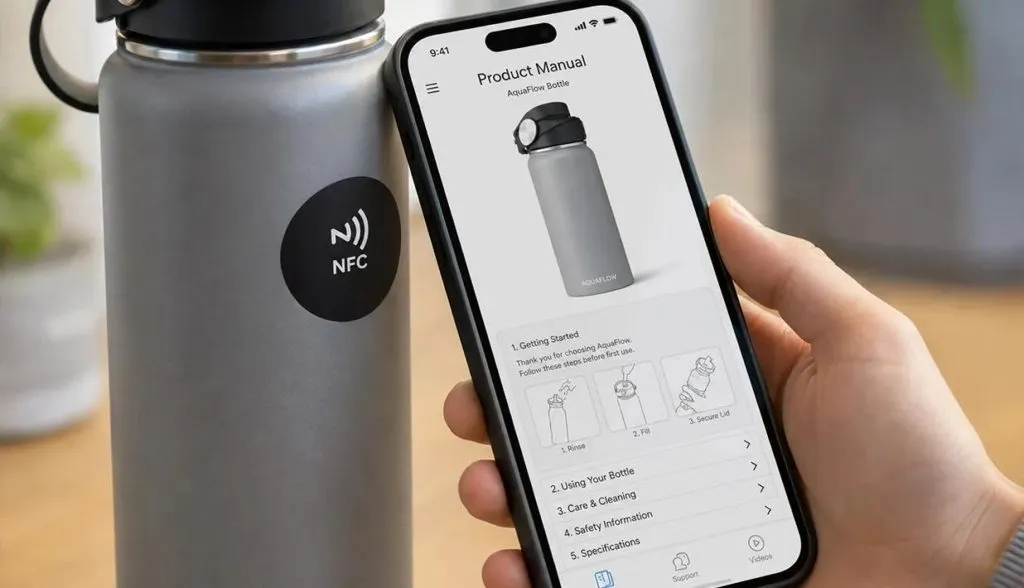
Brands can integrate NFC tags into their packaging to differentiate themselves in a competitive market, reduce counterfeit risks, and encourage direct customer interaction. For example, fashion companies can embed NFC garment tags in clothing labels to provide care instructions and verify authenticity instantly.
Pro-Tip: Use NTAG213 chips for basic product info, but upgrade to NTAG216 if you need to store complex digital menus or multi-language instructions.
Recommended Products:
- NFC Garment Tag: Durable and flexible, ideal for textile applications.
- NFC FPCB Tag: Flexible printed circuit boards suitable for complex packaging surfaces.
- NFC Label: Cost-effective, versatile for high-volume product labeling.
Contactless Business Cards
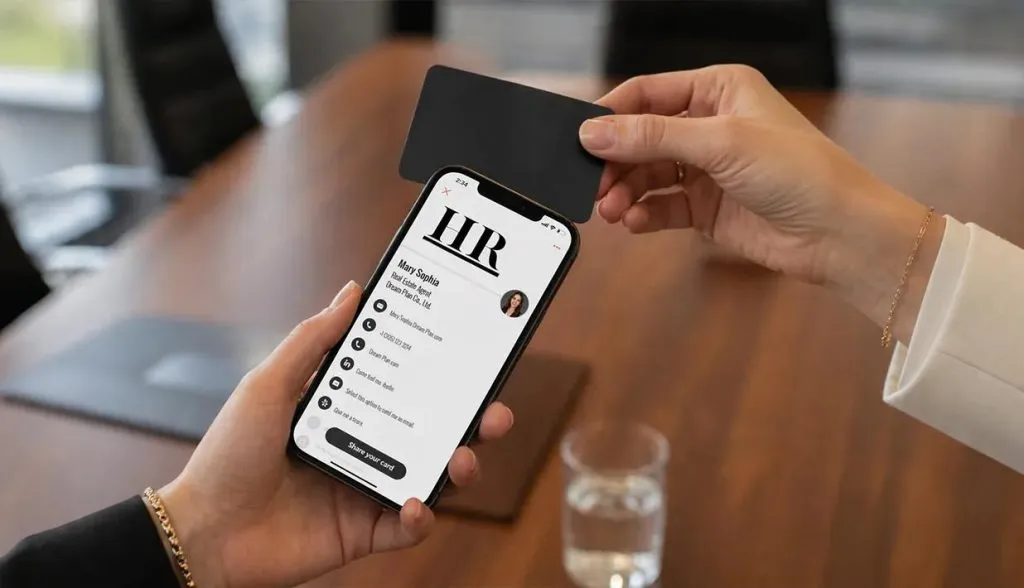
NFC business cards revolutionize traditional networking by enabling instant, contactless sharing of professional information. With a simple tap of a smartphone, contact details, company websites, social media profiles, or portfolios are seamlessly transferred, eliminating the need for physical data entry or paper waste.
Professionals can boost networking efficiency, maintain updated digital profiles, and project a modern corporate image. These cards are especially useful for sales teams, consultants, and executives who regularly attend conferences and meetings. Implementing digital NFC business cards allows your team to share contact info instantly with a simple tap, replacing traditional paper cards and improving networking ROI.
Recommended Products:
- NFC Business Cards: Fully customizable with pre-encoded digital data for seamless contact sharing.
Customer Loyalty and Rewards Programs
NFC technology enables streamlined customer loyalty programs by allowing customers to earn points, redeem rewards, and receive personalized offers simply by tapping their NFC-enabled device or wearable. This creates a seamless and engaging experience that incentivizes repeat business and strengthens brand loyalty.
Retailers and service providers can deploy NFC loyalty cards, rings, or wristbands to simplify program participation, especially in busy environments like stores or events. Quick tap-and-go interactions reduce wait times and enhance customer satisfaction.
Recommended Products:
- NFC Review Card: Combines loyalty functions with customer feedback capabilities.
- NFC Ring: Fashionable and convenient wearable for continuous loyalty engagement.
- NFC LED Wristband: Perfect for events, providing interactive rewards and real-time status feedback.
Access Control and Security
NFC access control solutions offer a contactless, secure way to manage building entry and sensitive area authentication. Authorized users can unlock doors or access systems simply by presenting an NFC-enabled card or wearable device, reducing the need for keys or PIN codes.
Offices, hotels, and facilities managers can improve security protocols while enhancing user convenience. The non-contact method also supports hygiene standards and quick access, especially in high-traffic environments.
Recommended Products:
- NFC Ring: Wearable, discreet access credential.
- Standard NFC Cards: Versatile for integration with existing access control systems.
Event Management and Ticketing
NFC technology streamlines event check-ins, ticket validation, and visitor tracking. It accelerates the entrance process while providing organizers with valuable real-time data. Combining NFC wristbands with LED lighting enhances the attendee experience, creating engaging and immersive event atmospheres.
Event planners can adopt NFC-enabled wristbands or cards for quick attendee verification, cashless payments, and interactive experiences during concerts, festivals, conferences, and exhibitions.
Recommended Products:
- NFC LED Wristband: Integrates identification and light effects for memorable events.
- NFC Ring: Useful for VIP or staff access credentials at events.

Asset Tracking and Inventory Management
NFC tags provide a reliable solution for tracking and managing company assets. They enable fast scanning, detailed record keeping, and real-time inventory monitoring, improving operational efficiency and reducing loss or theft.
Manufacturers and logistics firms benefit from NFC tags designed for metal surfaces and complex equipment. These tags ensure accurate asset identification even in challenging industrial environments.
Recommended Products:
- On-Metal NFC Mobile Tag: Specially engineered to perform on metallic assets.
- NFC FPCB Tag: Flexible, adaptable for diverse equipment shapes and surfaces.
- NFC Label: Economical for tagging non-metal assets in large volumes.
Restaurant and Retail Ordering
NFC-enabled digital menus and payment systems simplify customer ordering processes. Customers scan NFC tags to browse menus, place orders, and make contactless payments, speeding up service and enhancing convenience.
Restaurants and retail stores reduce queue times and increase table turnover. Digital menus can also be updated in real-time to reflect stock or promotions without reprinting physical materials.
Recommended Products:
- NFC Label: Easily affixed to tables, counters, or product displays.
Product Authentication and Anti-Counterfeiting
NFC tags provide a robust anti-counterfeiting measure by enabling consumers to verify product authenticity via smartphone scans. This protects brands from counterfeit goods, ensuring customer trust and compliance with industry standards.
Luxury brands, electronics manufacturers, and jewelry retailers can integrate NFC tags in their products for on-the-spot verification, enhancing brand integrity.
Recommended Products:
- NFC Garment Tag: Ideal for high-value apparel authentication.
- On-Metal NFC Mobile Tag: Perfect for metallic goods requiring secure verification.
- NFC Label: Versatile option for embedding in packaging or product labels.
Customer Feedback and Surveys
Collecting customer feedback through NFC simplifies participation and increases response rates. Customers tap an NFC tag to instantly access surveys or feedback forms, providing businesses with actionable insights to improve products and services.
Retailers and service providers can distribute NFC review cards at points of sale, events, or service desks to facilitate quick, hassle-free feedback collection.
Recommended Products:
- NFC Review Card: Portable and easy to distribute, encouraging customer engagement.
Smart Advertising and Promotions
NFC technology enhances advertising by enabling interactive, personalized marketing campaigns. Customers engaging with NFC-enabled ads can instantly receive coupons, product demos, or event information, increasing conversion rates.
Marketers can deploy NFC labels on posters, flyers, or product displays to capture attention and provide tailored offers based on customer interactions.
Recommended Products:
- NFC Label: Versatile and easy to deploy on various advertising media.
- NFC Business Cards: Ideal for promo handouts containing special offers.
- NFC LED Wristband: Engages customers during promotional events with interactive light displays.
4. A Step-by-Step Guide: How to Get Started with NFC Tags
Embarking on your NFC journey doesn’t have to be daunting. With a clear understanding of your business needs and a structured approach, you can effectively integrate NFC tags into your operations. Here’s a roadmap to help you get started:
Choosing the Right NFC Tag Type and Specifications
The first step in understanding how to use NFC tags effectively is selecting the appropriate tag for your specific application. Consider factors such as:
- NFC Chip Type
Different chip types (e.g., NTAG® 213, NTAG® 215, NTAG® 216, MIFARE Classic®) offer varying memory capacities and security features. For most business applications, NTAG® series tags are common due to their affordability and compatibility. - Form Factor
Tags come in various physical forms – adhesive labels, rigid cards, key fobs, wristbands, and even specialized on-metal tags. Choose a form factor that best suits the environment and intended use. - Memory Size
Determine the amount of data you need to store (e.g., a URL, text, contact information). While most URLs are small, complex data or multiple actions might require larger memory. - Read/Write Capability
Decide if you need tags that can be reprogrammed multiple times (rewritable) or if a one-time programmed (read-only) tag is sufficient.
Encoding and Programming Tools (Apps and Hardware)
Once you have your NFC tags, you’ll need tools to encode (write data to) them. For basic applications, your smartphone is often sufficient:
- Smartphone Apps
Numerous free and paid apps are available for both iOS (e.g., NFC Tools, NFC TagWriter by NXP) and Android (e.g., NFC Tools, TagWriter). These apps allow you to easily write URLs, text, contact information, and other data to your NFC tags. - Dedicated NFC Readers/Writers
For bulk encoding or more complex integrations, dedicated desktop NFC readers/writers connected to a computer offer higher speed and automation. These are often used in conjunction with specialized software for large-scale deployments.
Here’s a quick video demonstration showing how to encode and program your NFC tags, making the process easy to follow.

Considerations for Bulk Deployment
When planning to deploy NFC tags across your business, especially in large quantities, keep the following in mind:
- Batch Encoding
Invest in software and hardware that support batch encoding to program multiple tags simultaneously, saving significant time. - Quality Control
Implement a quality control process to verify that each tag is correctly programmed and functional before deployment. - Placement Strategy
Plan the optimal placement of your NFC tags to ensure ease of access for users and to avoid interference from metallic surfaces or other electronic devices. - Scalability
Choose a solution that can scale with your business needs, allowing for future expansion of your NFC applications.
Budget and Cost Considerations
The cost of NFC tags varies widely depending on the chip type, form factor, memory size, and order quantity. Generally, NFC tags are very affordable, especially when purchased in bulk. Beyond the tags themselves, consider potential costs for:
- NFC Readers
If smartphones are not sufficient for your reading needs. - Software/Platform
For advanced management, data analytics, or integration with existing systems. - Customization
Design and printing costs for branded NFC tags. - Installation
If professional installation is required for large-scale deployments.
Despite these costs, the potential for increased efficiency, enhanced customer experience, and improved data collection often results in a significant return on investment (ROI), making NFC a cost-effective solution for many business challenges.
Conclusion
We strongly encourage business owners to explore how NFC technology can be tailored to meet your unique business needs and unlock new growth opportunities. Embracing NFC not only positions your company at the forefront of innovation but also delivers tangible benefits that your customers will appreciate.
To fully leverage the potential of NFC, partnering with a professional supplier is essential. Our team specializes in customized NFC solutions designed to align perfectly with your operational goals and budget. Reach out to us today to discuss your specific requirements, receive expert advice, and get started on implementing NFC technology that transforms your business.
Don’t wait—contact us now to discover how NFC can elevate your customer experience and operational performance.
FAQs
What devices can read NFC tags?
Most modern smartphones with NFC capabilities, including iPhones (7 and later) and Android devices, can read NFC tags by simply tapping near the tag.
Do I need special software to program NFC tags?
Yes, NFC tags are programmed using dedicated apps or software. We also offer professional programming services to simplify this process.
Can NFC tags be reused or reprogrammed?
Some NFC tags support multiple rewrites, while others are one-time programmable. We can help you choose the best type based on your application.
Are NFC tags secure for business applications?
Absolutely. NFC tags can include encryption and password protection to ensure data security for sensitive uses like access control.
How long do NFC tags last?
Depending on the material and environment, NFC tags typically last from several years up to a decade without losing performance.






 EN
 ES
 JA