


The world of wireless identification can be confusing, with terms like NFC and RFID often used interchangeably. If you’re investing in access control, secure authentication, inventory tracking, or contactless interactions, choosing the right tag matters. This article breaks down NFC tags vs RFID tags: the differences between NFC and RFID tags, helping you avoid costly missteps and maximize ROI.
What are NFC Tags?
Near Field Communication (NFC) is a wireless technology. NFC (Near Field Communication) tags are compact, passive devices that wirelessly send data when they are in proximity to an NFC reader, like a smartphone.

What are RFID Tags?
RFID tags fall into two types: Active and Passive. Active RFID tags possess their power source, which allows them to send signals over distances of up to 100 meters, making them suitable for long-range asset tracking in logistics and warehousing.

NFC Tags VS RFID Tags: What’s the Difference?
While both serve as communication tools that depend on radio waves, they differ significantly in range, application, and operation.
Frequency
RFID and NFC tags function at distinct radio frequency ranges, which significantly influences their performance and use cases.
NFC operates at 13.56 MHz and over a very short distance, usually limited to just a few centimeters (up to 10 cm or 4 inches).
On the other hand, RFID covers a wider range: Low-Frequency (LF) RFID operates at 125–134 kHz, High-Frequency (HF) RFID shares the 13.56 MHz frequency with NFC, and Ultra-High-Frequency (UHF) RFID operates between 860–960 MHz, providing much longer read distances—up to several meters.

Read Range
The read range is perhaps the most immediately noticeable difference between NFC and RFID, directly influencing their practical applications. NFC communicates over a short distance, limited to around 10 cm or 4 inches. The short read range is a feature, not a limitation, for its intended use cases, providing a sense of control and privacy for the user.
In stark contrast, RFID systems boast a much wider range of read distances, varying significantly depending on the frequency and power source of the tags. Passive RFID tags, which draw power from the reader, can have read ranges from a few centimeters (like LF and HF tags) up to several meters (for UHF tags).
Active RFID tags have their power source, enabling them to reach much greater read distances, sometimes extending to hundreds of meters. However, this long-range also requires careful planning to prevent unintended reads or interference in dense environments.
Security
Security is a paramount concern in any wireless communication technology, and both NFC and RFID have inherent characteristics that influence their security profiles. NFC, under its extremely short read range, offers a built-in layer of security. The necessity for physical proximity ensures that interactions are deliberate and reduces the risk of unauthorized interception or data skimming.
Furthermore, NFC often incorporates encryption and other cryptographic protocols to further protect data during transmission, adding another robust layer of defense against potential threats.
The design philosophy behind NFC prioritizes user control and privacy, making it a trusted technology for personal and financial interactions.
RFID systems, especially those with longer read ranges, present a different set of security considerations. While the ability to read tags from a distance offers significant operational advantages, it also introduces potential vulnerabilities such as unauthorized reading, data cloning, or even denial-of-service attacks. RFID systems’ security measures include encryption of data transmission, authentication protocols, and access control mechanisms.
Power Source
The power source mechanism is a key distinction that influences the design, cost, and application of NFC and RFID tags. NFC tags mainly function as passive devices, lacking their power source. They obtain the required energy by capturing the electromagnetic field emitted by an NFC reader or an NFC-enabled device like a smartphone.
The absence of a battery makes NFC tags incredibly small, thin, and inexpensive to manufacture, enabling their widespread integration into everyday items like stickers, posters, and product packaging. Their passive nature also contributes to their longevity, as there is no battery to drain or replace, making them a sustainable and maintenance-free solution for many applications.
RFID technology, while also featuring passive tags that operate similarly to NFC, extends its capabilities with the inclusion of active and semi-passive (or battery-assisted passive) tags.
Active RFID tags have their internal power source, typically a battery, which allows them to broadcast their signal over much greater distances and at regular intervals.
This self-powered capability makes them ideal for real-time tracking of assets, even when not near a reader. The trade-off for this performance is a higher cost, larger size, and a finite lifespan.
Applications
NFC is effective in consumer applications due to its short read range and peer-to-peer communication, primarily used for contactless payments where users tap their smartphones or cards to complete transactions. It also facilitates secure access control, quick data sharing, and enhances customer interaction through smart posters and product packaging that link to digital content.

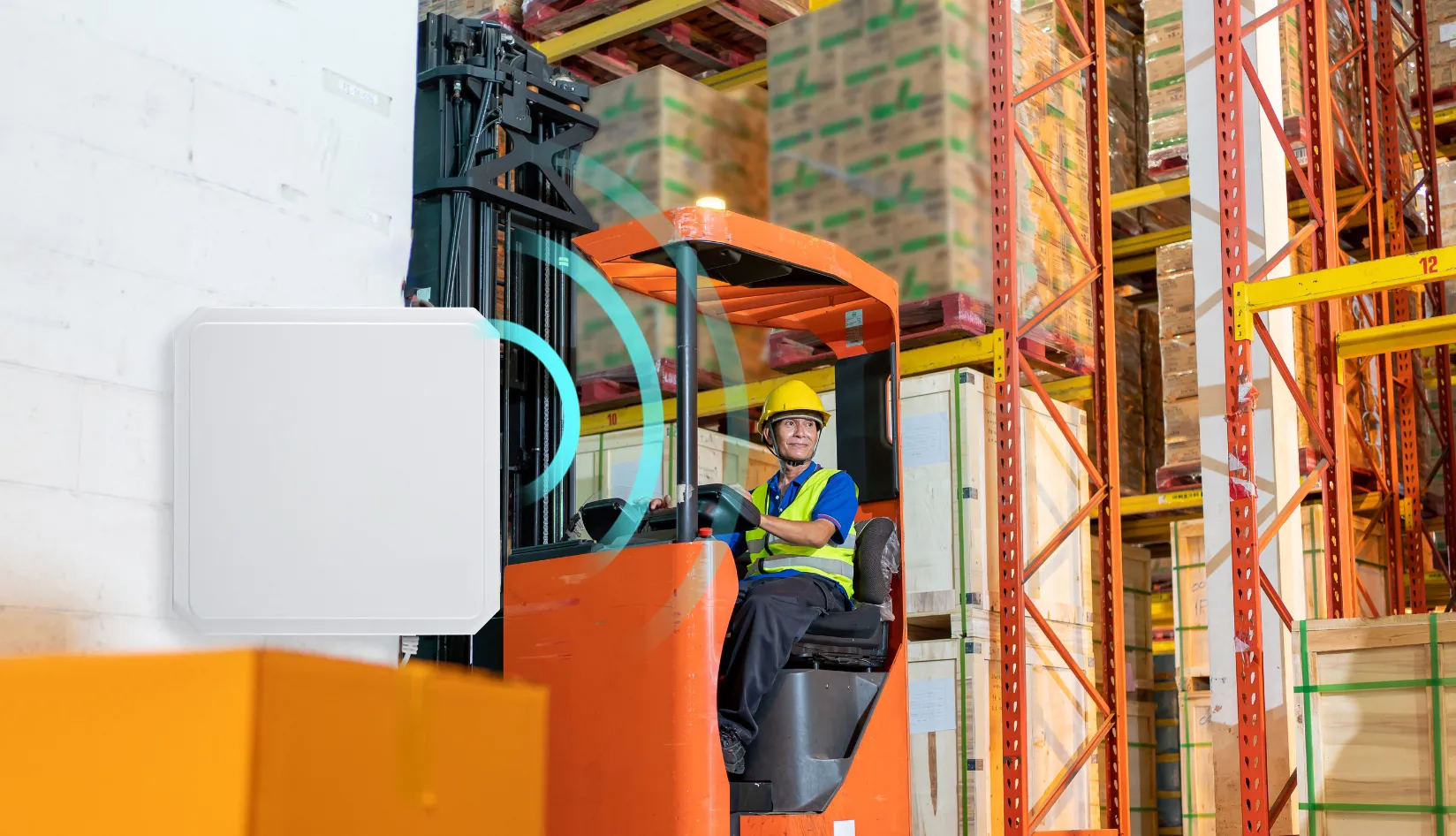
In contrast, RFID supports extensive asset tracking and supply chain management with its longer read ranges and ability to read multiple tags simultaneously. It automates inventory tasks, improves data accuracy, and is used in retail for real-time inventory management, healthcare for tracking devices and patients, and logistics for efficient tracking of shipments.
Choosing between NFC and RFID depends on whether the goal is to create interactive experiences or to improve large-scale tracking.
Conclusion
In the dynamic landscape of wireless identification, both NFC and RFID stand as powerful technologies, each with its unique strengths and optimal applications.
The key lies not in determining which technology is inherently ‘better,’ but rather in understanding their distinct communication methods, operating frequencies, read ranges, security considerations, power sources, and application focuses.
By carefully evaluating your specific business needs—whether it’s enhancing customer engagement through intuitive taps or streamlining complex inventory processes with automated tracking—you can leverage the right technology to unlock significant value and drive digital transformation.
FAQs
Can I use NFC and RFID together in the same application?
Yes, absolutely. For instance, you may implement an RFID system in large-scale inventory tracking in a warehouse, while you can also integrate NFC into individual product packaging to provide consumers with interactive information or authentication at the point of sale. The key is to design the system to utilize each technology where it provides the most value, creating a comprehensive and efficient solution.
Is NFC more secure than RFID?
NFC offers a security benefit because its short read range reduces the chance of unauthorized access. Its interactions require proximity, making them intentional and controlled. NFC also employs strong encryption and authentication. In contrast, RFID systems with longer read ranges may face more threats but use various security measures like encryption and access control. Therefore, NFC offers a simpler security model based on proximity, while RFID requires more comprehensive security strategies for data protection, especially in large-scale applications.
Which is better for inventory management?
For large-scale inventory management, particularly in warehouses, retail environments, or supply chains, RFID (especially UHF RFID) is generally superior. Its ability to read multiple tags simultaneously from a distance significantly speeds up inventory counts, reduces manual errors, and provides real-time visibility into stock levels. NFC, with its short read range and one-to-one communication, is less efficient for bulk inventory tracking.
Does NFC work as RFID?
Given that NFC is a type of RFID, an NFC-enabled device can function as an RFID reader for compatible HF RFID tags (those operating at 13.56 MHz). While NFC can perform certain RFID functions within its specific frequency and read range limitations, it cannot replace the full spectrum of RFID capabilities, especially those requiring longer distances or different frequencies.




 EN
 ES
 JA