


In today’s hyper-connected business landscape, selecting the optimal wireless technology is paramount for efficiency, security, and competitive advantage. While both Near Field Communication (NFC) and Bluetooth offer seamless connectivity, their distinct capabilities cater to vastly different operational needs.This comprehensive guide will dissect the nuances of NFC and Bluetooth, empowering you to make informed decisions that directly impact your bottom line.
1. Understanding the Core Technical Differences: NFC vs. Bluetooth
At first glance, both NFC and Bluetooth appear to serve similar purposes: enabling wireless communication between devices. However, a deeper dive into their technical specifications reveals fundamental differences that dictate their suitability for various business applications. Understanding these distinctions is crucial for any enterprise looking to optimize its wireless infrastructure.
Operating Range & User Intent
The most fundamental distinction between NFC and Bluetooth lies in physical communication distance:
- NFC operates strictly at ultra-short range, typically requiring devices to be within 4 centimeters (1.6 inches). This ultra-short distance is an intentional design constraint that ensures explicit user intent and physical security—data exchanges only happen when a user deliberately taps a device.
- Bluetooth offers an extended operating range, reaching up to 10 meters (33 feet) for standard devices and over 100 meters for Bluetooth Low Energy (BLE) beacons. This range makes Bluetooth ideal for continuous background connectivity over wider physical spaces.
Frequency Band & Signal Resilience
- NFC functions on the 13.56 MHz High-Frequency (HF) band using magnetic field induction. Because it relies on near-field magnetic coupling rather than radio propagation, NFC suffers virtually zero signal interference from neighboring wireless networks.
- Bluetooth operates on the open 2.4 GHz ISM radio frequency band—the same spectrum heavily populated by Wi-Fi networks and industrial equipment. While modern Bluetooth protocols employ adaptive frequency hopping (AFH) to minimize signal collisions, environments dense with Wi-Fi traffic can occasionally experience latency or packet loss.
Connection Setup & Latency
- NFC delivers true zero-friction connection setup. With a setup latency under 100 milliseconds (< 0.1s), users simply tap and go without manual device discovery, pairing confirmation, or PIN codes.
- Bluetooth requires a multi-step pairing procedure involving channel discovery, authentication handshakes, and key exchanges. Even with automated reconnection algorithms, pairing takes between 2 and 6 seconds, making it less suitable for high-throughput touchpoints like transit turnstiles or rapid point-of-sale terminals.
Bandwidth vs. Power Efficiency
- NFC maintains a lower data transfer rate of 424 kbps. However, because NFC tags can operate passivesly—drawing power directly from the reader’s electromagnetic field—they require no internal battery. This enables maintenance-free deployments across thousands of physical assets.
- Bluetooth provides high data rates up to 2.1 Mbps, enabling audio streaming, large file transfers, and continuous sensor data logging. While Bluetooth Low Energy (BLE) significantly reduces power consumption for battery-powered sensors, active Bluetooth nodes still require dedicated power sources.

2. NFC vs. Bluetooth: Best Practices in Commercial Applications
Choosing between NFC and Bluetooth for commercial applications isn’t about identifying a universally superior technology, but rather about selecting the most appropriate solution for specific use cases. Both technologies excel in different domains, and understanding their strengths in various commercial applications is a key to maximizing efficiency and return on investment.
Mobile Payments and Contactless Transactions
NFC is the global standard for contactless transactions (such as Apple Pay, Google Wallet, and EMV payment cards). Its instant connection speed and mandatory close physical proximity ensure that transactions are completed rapidly while preventing accidental charges or remote sniffing. Bluetooth is rarely used for direct financial transactions due to its broader broadcast range and pairing overhead.
Access Control and Identity Verification
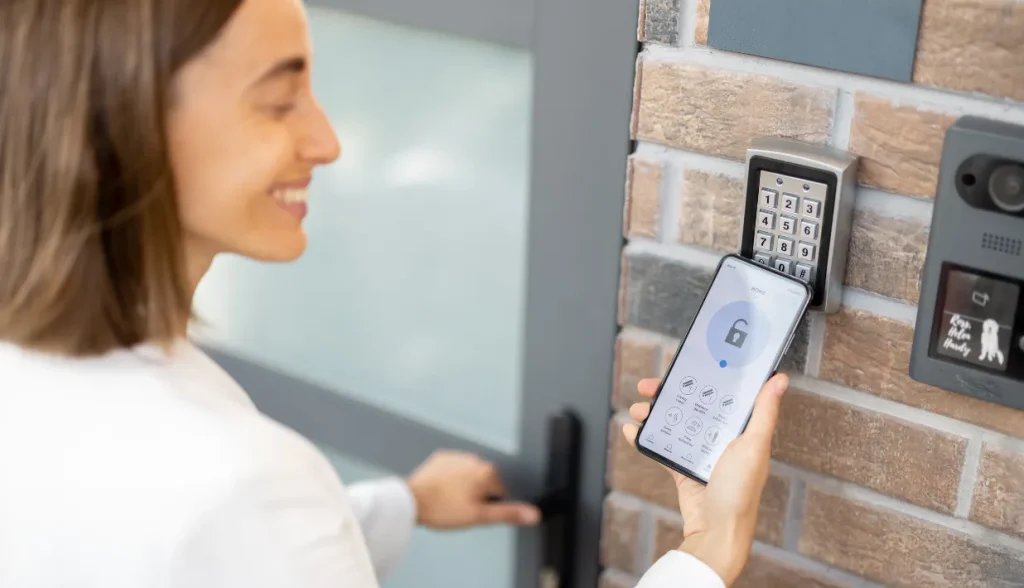
NFC powers secure building access cards, smart badges, and mobile wallet credentials. The requirement to physically present a phone or card to a reader guarantees explicit user authorization, preventing accidental unlock events from inside an office.
Bluetooth (BLE) is preferred for hands-free or long-range access, such as automated parking gates or warehouse roll-up doors, where opening a barrier from several meters away adds operational speed.
Asset Tracking and Inventory Management
When it comes to asset tracking and inventory management, the choice between NFC and Bluetooth depends heavily on the scale, environment, and required level of detail.
For localized, high-value asset tracking or item-level identification in a contained environment, NFC can be highly effective. NFC tags can be affixed to individual items, and a quick tap with an NFC-enabled device can provide immediate access to product information, maintenance history, or inventory status. This is particularly useful in retail for product information, in healthcare for tracking medical equipment, or in manufacturing for work-in-progress tracking.
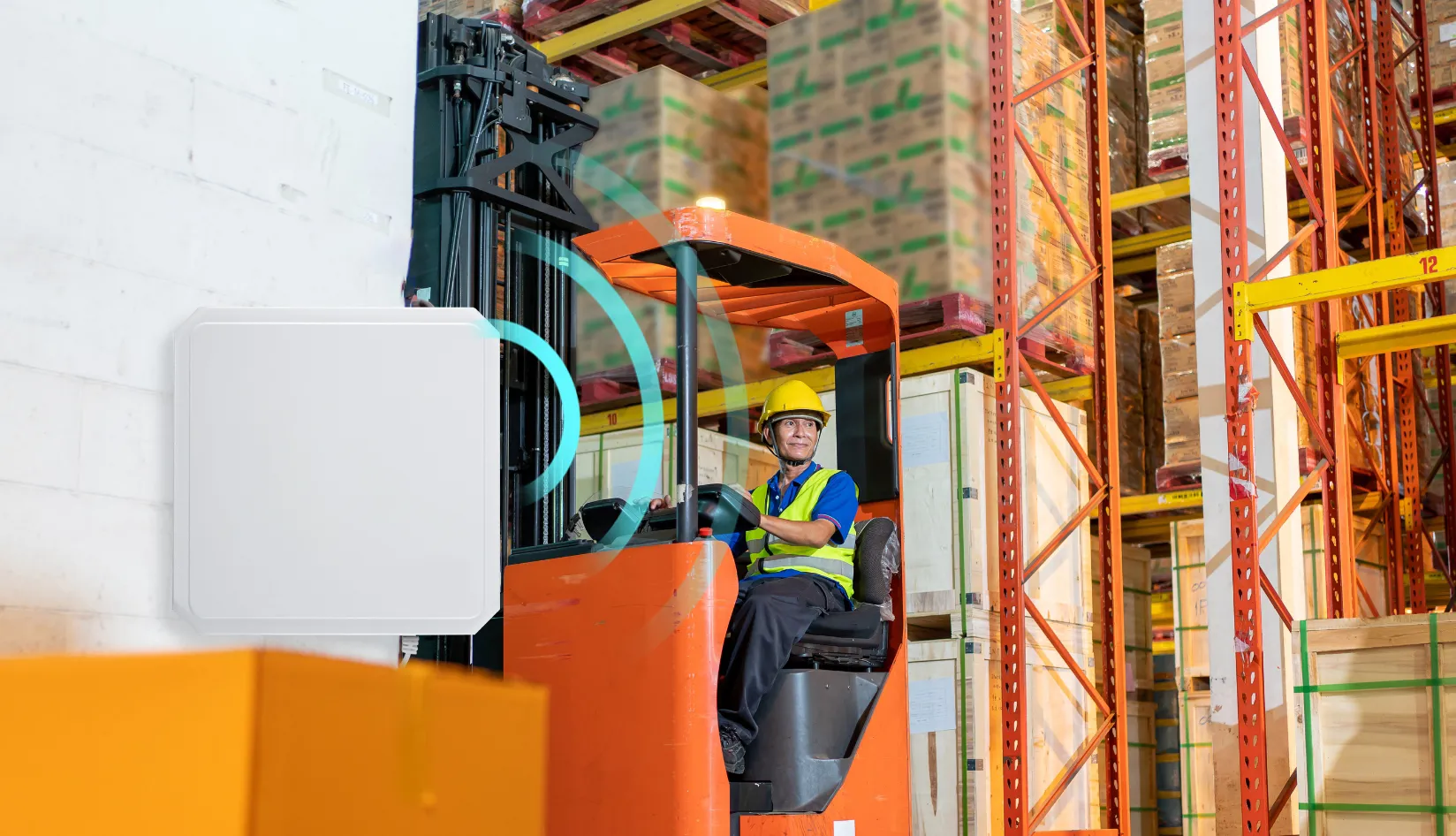
Bluetooth, especially BLE beacons, offers a more scalable solution for wider-area asset tracking and real-time location services (RTLS). BLE beacons can transmit signals over a longer range, allowing for the tracking of assets across large warehouses, campuses, or even entire facilities. While BLE provides location data, it may not offer the same granular, item-specific identification that NFC provides through direct interaction. The choice here often comes down to whether precise, on-demand item identification (NFC) or broader, continuous location tracking (Bluetooth) is the primary requirement.
Device Pairing and Data Exchange
For device pairing and general data exchange between two devices, both NFC and Bluetooth play complementary roles.
NFC’s ‘tap-to-pair’ functionality simplifies the initial setup of Bluetooth devices. Instead of manually searching for and selecting a Bluetooth device, users can simply tap their NFC-enabled smartphone to an NFC-enabled Bluetooth speaker or headset, and the NFC chip will automatically initiate and complete the Bluetooth pairing process. This significantly enhances user experience by eliminating the often cumbersome manual pairing steps.
Once paired via NFC, the actual data transfer, such as audio streaming or file sharing, then occurs over the Bluetooth connection, leveraging Bluetooth’s higher data transfer rates and longer range. This symbiotic relationship highlights how the two technologies can work together to provide a more seamless and efficient user experience, with NFC handling the quick, secure setup and Bluetooth managing the continuous data flow.
3. Security: Which Technology Offers Superior Protection?
Security considerations differ fundamentally between short-range and broadcast radio technologies:
Security by Proximity in NFC
NFC’s primary security layer stems from physical isolation. Because signals decay rapidly beyond a few centimeters, intercepting data requires an attacker to place an eavesdropping device within immediate physical contact.
For enterprise applications, advanced NFC chips (such as NTAG DNA) utilize cryptographic authentication protocols that generate a unique, single-use authentication code on every tap. This prevents tag cloning, dynamic url forgery, and relay attacks.
Bluetooth Security Considerations
Because Bluetooth broadcasts over 10 to 100 meters, its attack surface is wider. Unsecured or improperly configured Bluetooth networks can be susceptible to eavesdropping, Man-in-the-Middle (MITM) attacks, or unauthorized device tracking. Implementing robust AES-128 encryption, secure pairing modes, and periodic key rotations is critical when deploying BLE beacons across public or enterprise environments.
4. NFC and RFID: A Synergistic Relationship
For businesses already invested in or considering RFID technology, NFC presents a unique and highly beneficial integration opportunity. As a specialized subset of RFID, NFC operates on the same frequency as High-Frequency (HF) RFID (13.56 MHz), allowing for seamless interaction between NFC-enabled devices and existing HF RFID tags. This compatibility is a significant advantage for businesses looking to enhance their current RFID systems without a complete overhaul.
Enhancing Existing RFID Systems with NFC
Many businesses utilize RFID for supply chain management, inventory tracking, and asset identification. By introducing NFC-enabled devices, such as smartphones or dedicated NFC readers, these businesses can add new layers of functionality to their existing RFID infrastructure. For example, a worker can use an NFC-enabled smartphone to quickly read an HF RFID tag on a product, instantly accessing detailed information, updating inventory records, or triggering specific actions within a system. This provides a more interactive and user-friendly interface for RFID data, moving beyond simple bulk scanning to individual item-level engagement.
NFC’s ability to read passive RFID tags means that businesses can leverage their existing investment in RFID tags while expanding the ways in which they interact with those tags. This can lead to improved operational efficiency, better data accuracy, and enhanced user experiences for employees and customers alike. Unlike Bluetooth, which requires separate hardware and protocols to interact with RFID, NFC offers a direct and native compatibility that streamlines integration and reduces complexity.
Custom Tag Manufacturing: Leveraging NFC for Business Needs
As a manufacturer of custom NFC tags, RFIDTag.com is uniquely positioned to help businesses harness the full potential of NFC technology. Custom NFC tags can be designed to meet specific business requirements, whether for product authentication, interactive marketing, access control, or specialized asset tracking. These tags can be embedded with unique identifiers, URLs, or other data, enabling a wide range of applications when paired with NFC readers or NFC-enabled smartphones.
By offering custom NFC tags, RFIDTag.com empowers businesses to create tailored solutions that integrate seamlessly with their operations. This includes designing tags with specific form factors, durability requirements, or data capacities to suit diverse industrial and commercial environments. The ability to customize tags ensures that businesses can optimize their NFC deployments for maximum effectiveness and efficiency, leveraging the inherent advantages of NFC for secure, quick, and reliable data exchange.
5. The Future: Convergence and Evolution of NFC and Bluetooth
The technological landscape is constantly evolving, and both NFC and Bluetooth are at the forefront of this innovation. While they currently serve distinct primary purposes, there is a growing trend towards convergence and complementary use, particularly in the realm of the Internet of Things (IoT) and smart business solutions. The future will likely see these technologies working even more closely together, leveraging each other’s strengths to create more seamless and intelligent environments.
Complementary Roles in the IoT Ecosystem
In the burgeoning IoT ecosystem, NFC and Bluetooth are increasingly playing complementary roles. NFC can serve as a simple, secure provisioning mechanism for Bluetooth devices, allowing for easy setup and configuration with a quick tap. Once provisioned, the Bluetooth connection can then handle the continuous data flow, firmware updates, and longer-range communication required for many IoT applications. This
hybrid approach simplifies user interaction while maximizing the capabilities of both technologies.
For example, imagine a smart factory where NFC tags on machinery allow technicians to quickly access maintenance logs or operational data with a tap of their smartphone. Simultaneously, Bluetooth sensors on the same machinery could continuously monitor performance metrics and transmit data to a central control system over a longer range. This integration creates a powerful, multi-layered data collection and interaction system.
Advancements and Emerging Applications
Both NFC and Bluetooth technologies are continually evolving, with ongoing advancements pushing their capabilities further. For NFC, innovations are focusing on enhanced security features, increased data capacity for tags, and broader integration into various form factors beyond traditional cards and phones. This includes NFC being embedded into wearables, smart packaging, and even industrial components for enhanced traceability and interaction.
Bluetooth is also seeing rapid development, particularly with new versions of Bluetooth Low Energy offering even lower power consumption, longer ranges, and mesh networking capabilities. These advancements are opening up new possibilities for large-scale sensor networks, smart city applications, and more robust industrial IoT deployments.
The convergence of these technologies will lead to more sophisticated and user-friendly solutions. Businesses can expect to see more devices that seamlessly switch between NFC for secure, close-proximity interactions and Bluetooth for broader connectivity and data streaming. This integrated approach will be crucial for building truly intelligent environments that are both efficient and secure.
6. Empowering Your Business with the Right Wireless Choice
In the dynamic landscape of modern business, the strategic selection of wireless technology is no longer a luxury but a necessity. Both NFC and Bluetooth offer compelling advantages, but their optimal application hinges on a clear understanding of their distinct technical characteristics and suitability for specific commercial needs. For businesses seeking secure, rapid, and intuitive interactions, particularly in areas like mobile payments, access control, and seamless integration with existing RFID infrastructures, NFC stands out as a powerful and reliable choice.
While Bluetooth excels in broader connectivity and continuous data streaming over longer distances, NFC provides unparalleled security through proximity and an effortless user experience. As the world moves towards more interconnected and intelligent systems, the ability to leverage the unique strengths of both technologies, often in a complementary fashion, will be a key differentiator for competitive advantage.
Ready to Optimize Your Operations with Custom NFC Solutions?
Don’t let outdated or mismatched wireless technologies hinder your business growth. Explore how custom NFC tags and solutions from RFIDTag.com can transform your operations, enhance security, and provide a seamless experience for your customers and employees. Visit RFIDTag.com today to learn more about our products and how we can help you implement the perfect wireless solution for your enterprise.
FAQs
Can NFC be used for long-range tracking like GPS?
No, NFC is designed for very short-range communication (typically within 4 cm) and is not suitable for long-range tracking like GPS or even Bluetooth beacons. Its strength lies in secure, close-proximity interactions for identification and data exchange.
Is Bluetooth always faster than NFC for data transfer?
While Bluetooth generally offers higher data transfer speeds than NFC, NFC excels in connection establishment speed. NFC connections are almost instantaneous, whereas Bluetooth requires a pairing process that takes more time. For small data packets and quick interactions, NFC can feel faster due to its rapid setup.
Can I use my existing Bluetooth devices with NFC tags?
NFC tags cannot directly communicate with Bluetooth devices. However, NFC can be used to simplify the pairing process for Bluetooth devices. By tapping an NFC-enabled smartphone to an NFC-enabled Bluetooth device, the NFC chip can automatically initiate and complete the Bluetooth pairing, after which data transfer occurs over Bluetooth.
What are the primary security risks associated with Bluetooth compared to NFC?
Due to its longer range, Bluetooth is more susceptible to eavesdropping and man-in-the-middle attacks if not properly secured. While Bluetooth includes encryption and authentication, its broader attack surface requires more rigorous security implementation. NFC’s inherent security by proximity significantly reduces these risks, as an attacker needs to be in very close physical range.
How does RFIDTag.com’s custom NFC tag manufacturing benefit my business?
RFIDTag.com specializes in creating custom NFC tags tailored to your unique business needs. This means we can design tags with specific form factors, durability, and data capacities to integrate seamlessly into your existing systems and processes. This customization ensures optimal performance, efficiency, and security for your specific applications, from asset tracking to interactive marketing and access control.




 EN
EN  ES
ES  JA
JA