


In our modern interconnected society, wireless communication technologies are revolutionizing business operations and consumer interactions with products and services. Among the leading technologies revolutionizing this space are Near Field Communication (NFC) and Radio Frequency Identification (RFID). Although both technologies facilitate wireless data transmission, they possess unique characteristics and benefits.
Grasping the distinctions between NFC and RFID is essential for choosing the technology that best aligns with your business requirements. This detailed guide will delve into what is a difference between NFC and RFID, advantages, limitations, and practical applications, equipping you to make a well-informed choice.
What is NFC?
NFC (Near Field Communication) is a wireless communication technology that operates over short distances, allowing data transfer between two devices that are very close to each other, usually just a few centimeters apart. It has developed from RFID technology and is commonly found in smartphones, payment cards, and wearable gadgets.

How NFC Works?
NFC functions at a frequency of 13.56 MHz and utilizes electromagnetic induction for communication. When two NFC-capable devices are either in contact or near each other, they generate a magnetic field that facilitates seamless data transmission. One device serves as the initiator while the other serves as the target, allowing for peer-to-peer communication.

Advantages of NFC
Before choosing a technology for your business, it’s essential to assess its distinct benefits. NFC provides numerous significant advantages.
- Security
One of the key benefits of NFC technology is its robust built-in security. Since NFC operates over a very short range, usually just a few centimeters, the risk of data interception is greatly reduced. Additionally, many NFC transactions, particularly mobile payments, use encryption and secure communication channels. This makes NFC a reliable and secure option for transferring sensitive information. - Lower Power Consumption
One major advantage is their exceptionally low power consumption. NFC devices consume far less power than other wireless technologies. Remarkably, passive NFC tags operate without a dedicated power source; they harness energy from the initiating device, which not only makes them economical but also simplifies their implementation.
Disadvantages of NFC
Even the most widely used technologies come with their own set of challenges. Disadvantages of NFC are as follows:
- Limited range
One significant limitation is the very limited range of operation. For devices to communicate, they must be in contact, which restricts their use in situations that require remote tracking or long-range communication. - Lower Data Transfer Rate
Although adequate for minor data transfers, NFC’s data transfer rates are comparatively slower than other wireless communication technologies. This limitation can pose challenges when dealing with large files or multiple transactions.
Application of NFC
Due to its safety and ease of use, NFC is gaining popularity in numerous sectors.
- Contactless Payment
NFC serves as the foundation of the modern mobile payment landscape. Platforms like Apple Pay, Google Pay, and Samsung Pay depend on NFC technology to facilitate quick and secure transactions. Additionally, NFC tags, including RFIDtag.com NFC rings and wristbands, offer advanced cryptographic security, safeguarding users against skimming and fraud during payment verification. - Access Control
NFC revolutionizes access to buildings and facilities by removing the necessity for physical keys or magnetic stripe cards. For example, NFC rings and wristbands provide a safe, contactless method for entering offices, hotels, and secure locations. - Public Transportation
NFC technology is rapidly standardizing public transport, enabling contactless payments and ticketing. Passengers can use smartphones or NFC devices like NFC rings and NFC wristbands to pay fares and access services with a tap, streamlining boarding and minimizing wait times. It allows for seamless payment across buses, trains, trams, and bike-sharing from a single device. - Product Authentication
NFC (Near Field Communication) technology serves as a powerful tool for product authentication, ensuring authenticity and combating counterfeiting by embedding a unique identifier in each item. By simply tapping their smartphones on the NFC tag, consumers can instantly access a secure database to authenticate the product’s originality. For example, with the comprehensive NFC garment badge from RFIDtag.com, customers can easily confirm the authenticity of garments, safeguarding brand integrity and fostering consumer confidence. - Social Engagement
NFC (Near Field Communication) provides businesses with a fast and efficient method to connect with customers both in person and online. By utilizing NFC tags, customers can simply tap their smartphones to unlock a range of digital content and experiences, such as sharing on social media, gathering feedback, joining loyalty programs, and accessing exclusive offers. This innovative technology seamlessly integrates the physical and digital realms, enriching customer engagement and delivering tailored experiences. An example is the NFC ring available at RFIDtag.com, which allows users to quickly exchange contact information and seamlessly share social media profiles with a simple tap.
What is RFID?
RFID, or Radio-Frequency Identification, is a technology that employs radio waves to identify and monitor objects, animals, or people wirelessly. It functions similarly to a digital barcode, allowing for reading from a distance without requiring direct contact or a clear line of sight. An RFID tag is composed of two essential components: a microchip and an antenna, both encased within a durable shell designed to shield them from external environmental factors.

How RFID Works?
An RFID system generally consists of a reader, a transceiver, an antenna, and a transponder, often referred to as an RFID chip, label, or tag. The reader continuously emits a signal, and when a compatible tag comes within its range, the tag captures the signal and transmits the requested information back to the reader.
Active tags have an internal battery that enables them to send data over greater distances, usually up to 100 meters, and allows them to store new information. In contrast, passive tags do not have a battery, which limits their capabilities: these tags are powered by the radio waves from the reader, which restricts their range and data transmission abilities.

Advantages of RFID
RFID technology brings some powerful benefits that are critical for high-volume and industrial applications.
- Longer Range
A key advantage of RFID technology is its impressive read range. Depending on the frequency and type of tag used, RFID readers can detect items from mere centimeters to distances exceeding 100 meters, which is particularly beneficial for extensive tracking applications. - Tag Reading Efficiency
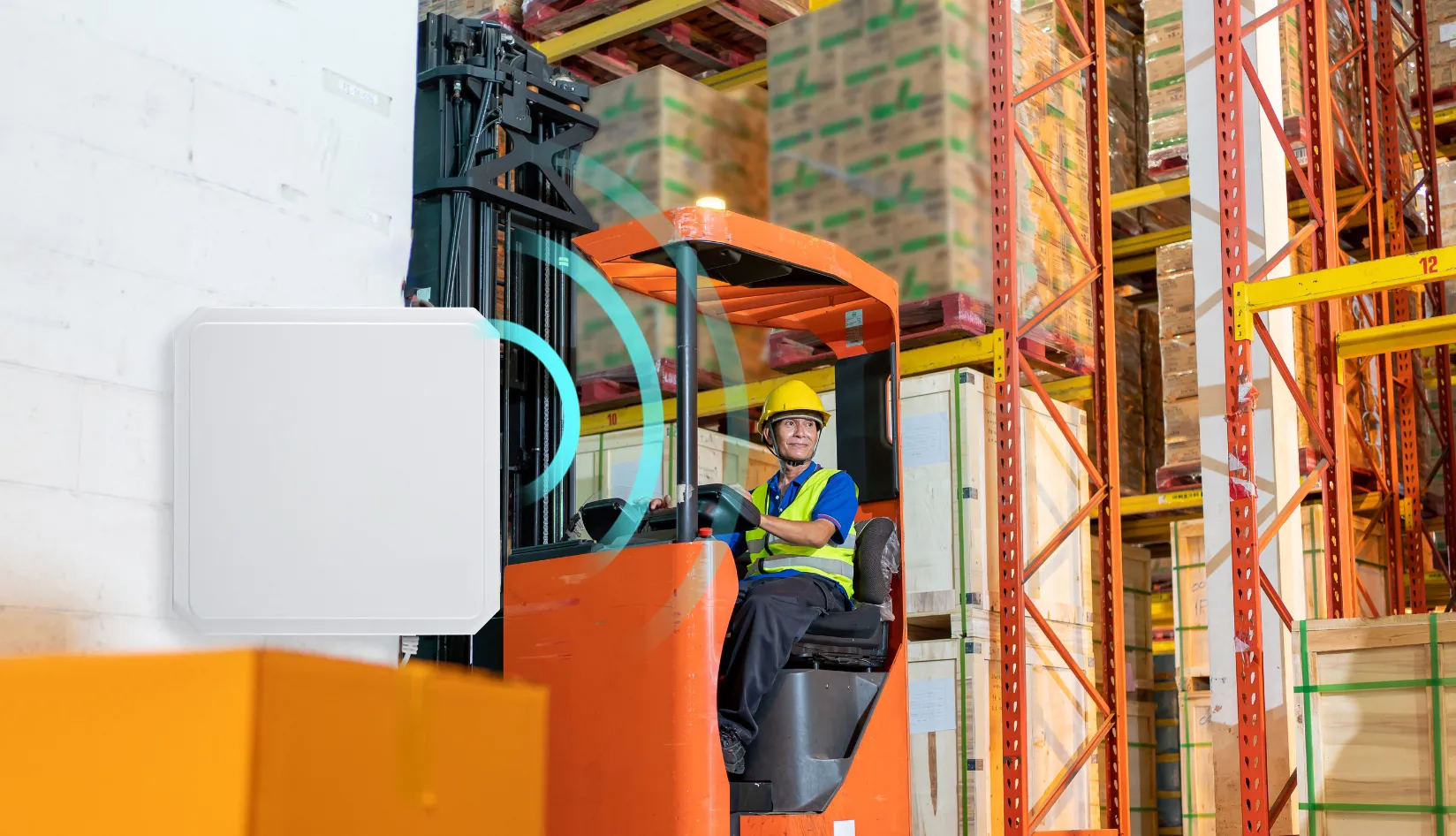
RFID systems have the ability to read several tags at once, facilitating quick inventory checks and large-scale tracking. This capability for bulk reading significantly enhances operational efficiency, particularly in settings such as warehouses and logistics hubs.
Disadvantages of RFID
While RFID technology is incredibly powerful, it also comes with specific risks and operational hurdles.
- Security Risks
Due to the ability to capture RFID signals from afar, they are more susceptible to eavesdropping and unauthorized access than NFC. It is crucial to implement appropriate encryption and authentication measures to reduce these vulnerabilities.
Application of RFID
The versatility of RFID technology positions it as a preferred choice for industries aiming for effective tracking and management solutions.
- Asset Tracking
RFID technology is extensively utilized for the management of valuable assets, particularly in sectors such as manufacturing, healthcare, and logistics. UHF RFID tags, including on-metal and cable tie tags from RFIDtag.com, are typically affixed to machinery, tools, and equipment. These tags enable companies to monitor their assets in real-time, enhancing inventory transparency and minimizing losses. RFID systems can simultaneously scan numerous items from several meters away, facilitating efficient large-scale asset management. - Inventory Tracking
RFID technology revolutionizes inventory management by utilizing radio waves for the automatic identification and tracking of assets, offering businesses real-time insights into inventory levels and locations. This innovative system employs RFID tags, like on-metal and cable tie tags from RFIDtag.com— devices embedded with unique identification data—that are affixed to products or their packaging. RFID readers transmit radio waves to retrieve the tag information, allowing companies to streamline inventory counts, enhance precision, and lower labor expenses. - Attendee Tracking
RFID technology revolutionizes event management by utilizing wristbands or badges to monitor attendee movements, simplify registration processes, and bolster security at large conferences, trade shows, and festivals. For example, RFIDtag.com offers RFID wristbands that provide real-time tracking of attendees, significantly improving the overall efficiency of event management. - Hotel Access Control
In the hospitality sector, RFID technology, such as wristbands, keycards, and key fobs, has transformed hotel access control, moving away from conventional keys and magnetic stripe cards. These advanced systems seamlessly integrate with hotel management software to monitor guest activities, improve resource allocation, and elevate the guest experience by providing tailored services, including room service and access to exclusive amenities. - Laundry Management
RFID technology plays a vital role in laundry management across sectors such as hospitality and healthcare, where monitoring linens, uniforms, and towels is essential. RFID laundry tags are integrated into fabrics, facilitating the automatic counting and sorting of laundry. This real-time tracking capability empowers businesses to minimize losses and guarantee the appropriate cleaning of frequently used items like towels and hospital gowns.
How to Select the Right Choice Between NFC and RFID?
Having explored the advantages and disadvantages of each technology, the next step is to determine the optimal choice for your application.
- Consider Read Range
For close-range interactions with devices or tags (within a few centimeters), NFC is the preferred choice. Conversely, for long-range identification (extending up to several meters), RFID is the more appropriate option. - Assess Data Exchange Needs
Choosing the right solution depends on your data transfer needs. NFC supports two-way communication, allowing data to be both read and written, making it perfect for interactive activities such as authentication and mobile payments. In contrast, RFID typically supports unidirectional communication, which is better for passive item identification. - Evaluate Security Requirements
Ensuring security is essential in settings that manage sensitive information. NFC provides enhanced security inherently because of its limited range and typically incorporates encryption. In the case of RFID, particularly in UHF applications, it is necessary to implement supplementary security measures to safeguard against potential breaches. - Analyze Deployment Scale and Costs
Consider the scale of your deployment and available resources. NFC is typically more affordable and suitable for smaller applications, such as contactless payments and access control. On the other hand, RFID’s cost efficiency shines in large-scale environments that require real-time inventory tracking, asset management, or supply chain logistics.
Conclusion
Both NFC and RFID are pivotal in shaping modern technology and transforming various industries. Whether you’re looking for secure payments, efficient inventory management, or reliable asset tracking, choosing the right wireless communication system is crucial. It requires a careful assessment of your unique needs.
Understanding the key differences between NFC and RFID will allow businesses to select the most effective solution for their specific requirements. This strategic choice can drive operational efficiency and enhance customer satisfaction.
In conclusion, both NFC and RFID are essential components of the wireless communication ecosystem. Their distinct features and advantages can be leveraged to meet a wide range of business demands. By evaluating factors like range, security, data requirements, and deployment scope, companies can identify the best fit for their applications.
Interested in learning more?
At RFIDtag.com, we specialize in providing innovative solutions such as NFC garment badges and RFID tags for diverse industries. Reach out to us to discuss how our products can enhance your business operations today!




 EN
 ES
 JA