


The modern hospital is a marvel of medical science, yet it remains surprisingly vulnerable to the most basic of human errors: misidentification and logistical friction. In an environment where seconds count and precision is non-negotiable, the integration of RFID in healthcare has transitioned from a futuristic luxury to a foundational necessity. By replacing manual, error-prone processes with automated, radio-frequency-based identification, healthcare facilities are finally addressing the systemic “blind spots” that have long plagued patient safety and operational efficiency. This technology does not merely offer a new way to scan a wristband; it provides a real-time digital nervous system that connects patients, staff, and equipment in a seamless, data-driven ecosystem.
1. The Core Problems Hospitals Are Trying to Solve
Despite the advancement of Electronic Health Records (EHR), the physical link between the digital record and the actual patient or piece of equipment remains fragile. Hospitals face two primary categories of operational failure that directly impact clinical outcomes and the bottom line.

1.1 Patient Identification Errors and Workflow Breakdowns
Patient misidentification is a leading cause of sentinel events, including medication errors, transfusion reactions, and even wrong-site surgeries. While barcode systems were a significant step forward, they are far from foolproof. In high-pressure environments like the Emergency Room or ICU, clinicians may skip wristband scanning if the barcode is smudged, if the patient is covered by blankets, or if the scanner fails to connect. These “workarounds” create a dangerous gap where manual checks—often performed under extreme fatigue—become the only line of defense.
1.2 Lack of Real-Time Visibility into Medical Assets
On the operational side, hospitals struggle with “equipment chaos.” It is a common sight to see nurses wandering hallways in search of a functional infusion pump or a clean wheelchair. This lack of visibility leads to “hoarding,” where departments hide equipment to ensure they have it when needed, further exacerbating perceived shortages. Consequently, hospitals often over-purchase mobile medical equipment by 20% to 30% to compensate for poor utilization data, tying up millions in capital that could be better spent on patient care.
2. RFID Patient Wristbands: How They Work in Real Clinical Environments
The shift toward RFID in healthcare is most visible at the patient’s bedside. Unlike traditional barcodes, which require a direct line-of-sight and a steady hand, RFID uses radio waves to transmit data.

2.1 What Makes RFID Wristbands Different from Barcodes
RFID wristbands differ fundamentally from barcode-based identification. RFID does not require line-of-sight scanning, allowing patient identification to occur quickly and reliably even when wristbands are partially covered or the patient is moving. This reduces dependency on perfect human execution and supports safer workflows in high-pressure settings such as emergency rooms and intensive care units.
RFID wristbands are also more durable for long hospital stays. They withstand moisture, frequent handling, and daily patient movement without degrading scan reliability.
2.2 Typical RFID Wristband Workflows in Hospitals
The implementation of RFID transforms the standard clinical workflow into a more secure and automated process:
- Admission: Upon arrival, a patient is issued an RFID wristband. Their unique ID is cryptographically bound to their EHR profile.
- Medication Administration: Before administering a drug, the clinician uses a mobile reader. The system automatically cross-references the patient’s ID with the medication’s barcode and the physician’s order, providing a “triple check” that occurs in milliseconds.
- Transfer and Tracking: As patients move between the ER, Radiology, and the OR, fixed readers at doorways automatically update their location in the hospital’s management system, allowing families and staff to track patient progress without manual status updates.
3. RFID Asset Tracking: From Equipment Chaos to Controlled Utilization
Beyond the patient, RFID in healthcare is revolutionizing how hospitals manage their physical inventory. By tagging thousands of mobile assets, facilities can move from a reactive “find it when you need it” model to a proactive “utilization-based” strategy.

3.1 Which Assets Deliver the Highest ROI When Tagged
Not every item in a hospital needs an RFID tag. The highest Return on Investment (ROI) is typically found in three categories:
- Mobile Medical Equipment (MME): Infusion pumps, ventilators, and telemetry monitors that move frequently between rooms.
- High-Value Assets: Specialized surgical kits or portable ultrasound machines that are expensive to replace.
3.2 How RFID Asset Tracking Actually Works Inside Hospitals
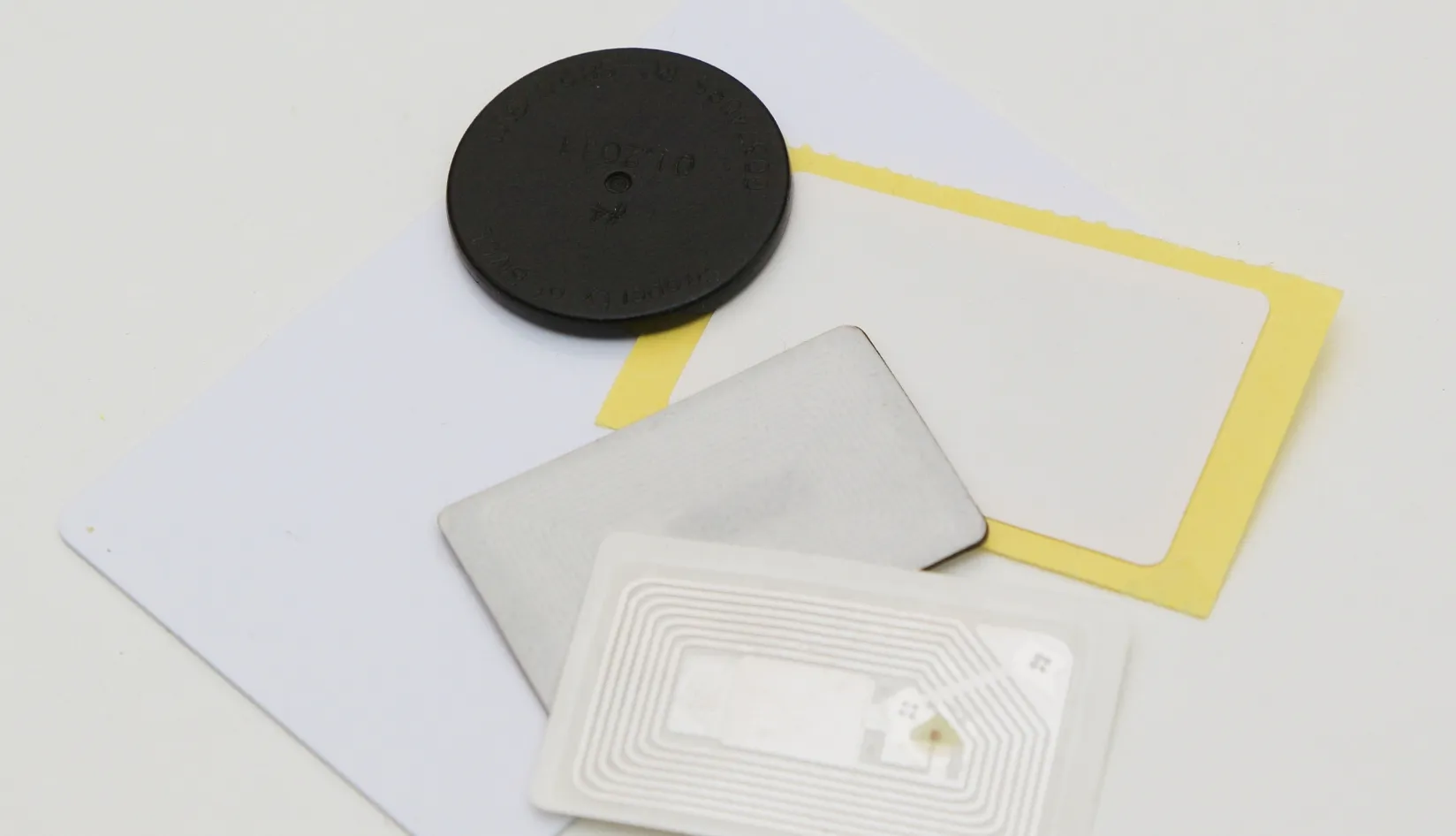
A robust asset tracking system utilizes a combination of tag types and reader infrastructures. On-metal tags are used for devices with high metal content, like pumps, to prevent signal interference. Fixed readers are often placed in “choke points” like elevators and exits, while handheld readers allow for rapid “Geiger-counter” style searching or room-level inventory audits. This creates a tiered visibility model where staff can see exactly which floor, zone, or room a device is located in at any given moment.
3.3 What Hospitals Gain Beyond “Knowing Where Things Are”
Once asset data is collected consistently, hospitals gain insights far beyond location. Utilization analytics reveal how often equipment is used, maintenance schedules can be automated, and preventive servicing can be triggered based on actual usage rather than fixed calendars. Over time, this enables better capital planning and reduces unnecessary purchases.
4. Common Pitfalls Hospitals Encounter—and How to Avoid Them
While the benefits of RFID in healthcare are clear, the path to implementation is fraught with potential missteps. Success depends less on the hardware and more on the strategy behind it.

4.1 Over-Engineering vs. Under-Engineering the System
A common mistake is attempting to track everything from the start. This leads to “data fatigue,” where staff are overwhelmed by alerts and information they cannot act upon. Conversely, under-engineering, such as using cheap, low-quality tags that fail in a clinical environment leads to a loss of trust in the system. The goal should be “actionable visibility”: providing just enough data to solve a specific problem, such as reducing the time spent searching for IV pumps.
4.2 Ignoring Clinical Staff Adoption
If an RFID system is perceived as “big brother” or as an additional burden on an already overworked nursing staff, it will fail. The design must be “workflow-first.” For example, if an RFID reader can automatically document a patient’s arrival in the OR, it removes a manual charting step for the nurse. When technology reduces work rather than adding to it, adoption becomes organic.
5. Conclusion
The integration of RFID wristbands and asset tags represents a fundamental shift in hospital operations. These are not isolated tools; they are the building blocks of a smarter, safer, and more efficient healthcare system. RFIDTag provide a range of RFID patient wristbands and asset tags and can help you evaluate the right solution. Contact us to discuss your needs or request samples.
Recommended Product

RFID Silicone Wristband NTAG® 213
The HF RFID Silicone Wristband NTAG® 213 integrates NFC technology in a flexible, durable silicone band. It features unique UID and password protection for data security and enables fast interaction with NFC-enabled devices for access control, cashless payments, loyalty programs, and social engagement at events or venues.

NTAG® 424 DNA NFC FPCB Tag | Flexible & Secure
The NTAG® 424 DNA FPCB tag delivers secure, encrypted data exchange through a flexible PCB format. This NTAG® 424 DNA FPCB tag supports re-encapsulation, is heat and pressure-resistant, and is built for high-frequency short-range communication. Integrated anti-collision ensures signal integrity even in dense tag environments. Its compact form makes it ideal for cryptocurrency wallets, smart packaging, product authentication, real-time customer engagement, and embedded systems in harsh conditions.
Note: Tags are supplied in factory-default condition, with no data pre-encoded. For pre-encoding to enable immediate verification, please contact us for pricing.

NXP NTAG® 213 NFC FPCB Tag
The HF NFC FPCB Tag NXP NTAG® 213 integrates advanced NFC technology with a flexible printed circuit board design, offering heat and pressure resistance ideal for re-encapsulation. Equipped with NTAG® 213 chip, it supports anti-collision and 32-bit password protection for enhanced security. Its compact size and reliable performance make it perfect for product authentication, dynamic marketing, and real-time customer engagement.

NXP ICODE® SLIX NFC FPCB Tag
The HF NFC FPCB Tag NXP ICODE® SLIX combines high-performance NFC technology with a flexible printed circuit board (FPCB) design, providing durability under heat and pressure—ideal for re-encapsulation. Featuring the ICODE® SLIX chip, it supports anti-collision technology, 32-bit password-protected EAS security, and EAS AFI DSFID locking for enhanced data protection. Compact and secure, this tag is perfect for pharmaceutical item-level tracking, consumer goods counterfeit protection, asset management, and more.

NFC FPC Tag ST Microelectronics® ST25TV02KC
The NFC FPC Tag is a flexible NFC-based identification solution designed for high-performance identification and data exchange. Made with FPC material, it provides durability and flexibility, making it suitable for curved surfaces, compact devices, and industrial smart applications requiring reliable integration. Designed for embedded installation and further product integration, it is commonly used in OEM and space-constrained applications.
Powered by the ST25TV02KC chip and compliant with ISO/IEC 15693 and NFC Forum Type 5 standards, it enables reliable contactless identification, secure data communication, and standard interoperability.

Heat Resistant NXP UCODE® 8 PEEK RFID On-Metal Tag | 40×15mm
The UHF Heat Resistant RFID On-Metal Tag PEEK NXP UCODE® 8 is purpose-built for extreme temperatures up to 260°C and direct use on metal surfaces. With durable PEEK construction and advanced NXP UCODE® 8 performance, it is ideal for asset tracking in automotive, metal processing, glass manufacturing, and other harsh industrial environments.



 EN
 ES
 JA