


In the field of RFID (Radio Frequency Identification) technology, understanding the range of RFID tags is crucial for selecting the right system that meets your business needs. Whether you’re managing inventory, tracking assets, or controlling access, knowing the reading distance of an RFID tag is key to finding the most effective solution.
What’s the Read Range of RFID Tags?
The read range of an RFID tag is the maximum distance at which an RFID reader can communicate with it. This range varies based on several factors and is crucial for RFID implementation. Active tags, which emit signals, can read over 100 m. While passive tags have a shorter range. Low-frequency and high-frequency tags usually support reading distances of up to 1 meter, while UHF tags offer ranges extending to 10 meters.
Why does understanding the Range of RFID Matter for Business?
Understanding the read range of RFID tags is not merely a technical detail; it is a strategic imperative for businesses. Ultimately, a thorough understanding of RFID read range enables businesses to design robust, scalable, and highly efficient RFID solutions that directly contribute to operational excellence and a competitive advantage.
4 Key Factors Affecting the Range of RFID
Frequency
The operating frequency of an RFID system is perhaps the most fundamental determinant of its read range. Different frequency bands behave distinctly in various environments. Low Frequency (LF) RFID (around 125-134 kHz) offers very short read ranges, typically a few centimeters.
High Frequency (HF) RFID (13.56 MHz) provides slightly longer ranges, up to 1 meter. Ultra-High Frequency (UHF) RFID (860-960 MHz) offers the longest read ranges, often up to 10 meters. The choice of frequency must align with the specific application and environmental conditions to achieve optimal read performance.
Environmental Interference
Common sources of interference include metals, liquids, and other electromagnetic fields. Metals can reflect or absorb radio waves, creating dead spots or reducing signal strength. Liquids, including water in human bodies or products, can absorb RFID signals, effectively shortening the read range.
Antenna Design and Placement
The antenna plays a crucial role in transmitting and receiving RFID signals, directly influencing the system’s read range and coverage area. Antenna design, including its gain, polarization (linear or circular), and beam width, dictates how effectively it can communicate with tags.
A high-gain antenna can extend the read range in a specific direction, while a wider beam width might be suitable for covering a larger area. Proper placement of antennas is equally vital. Obstructions, such as walls, shelves, or even dense product stacks, can block or weaken signals.
Tag Size, Angle, Placement, and Orientation
The physical characteristics and positioning of the RFID tag itself are critical determinants of its read range. Larger tags generally have larger antennas, which can capture more energy from the reader’s signal, leading to longer read ranges.
The tag’s angle and orientation relative to the reader’s antenna strongly influence performance. RFID signals exhibit polarization, and effective communication occurs when the tag antenna’s polarization aligns with the reader antenna’s polarization. Proper placement of the asset, ensuring minimal obstruction and optimal orientation, is essential.
4 Ways to Maximize the Read Range of RFID
Choose the Suitable RFID Tags based on your Application Requirements
The type of RFID tag you select is paramount to achieving optimal read range. Carefully evaluate your specific needs, including the environment, the items, and the reading distance, to choose tags that are inherently capable of meeting your range objectives. A well-matched tag to its application is the first step towards maximizing read range.
Use Unblocking Mounting Materials to Avoid Interference
To maximize read range, it’s crucial to minimize interference from blocking or absorbing materials. If metal is unavoidable, utilize special on-metal tags with an insulating layer or standoff to mitigate this effect. Similarly, water and other liquids absorb RFID signals, so consider the proximity of liquids to your tags and readers. When designing your system, identify potential sources of interference and choose mounting solutions and tag types that are resilient to these challenges.
The use of non-interfering materials around the tag and reader can ensure a clear path for radio waves, thereby extending the effective read range.
Optimize RFID System Layout
The physical layout and configuration of your RFID system components—readers, antennas, and tags—are critical for maximizing read range and coverage. Proper antenna placement is key; ensure antennas can provide optimal signal coverage across the desired read zone, avoiding obstructions like walls, shelves, or dense product stacks. A more appropriate system layout leads to reliable and longer read ranges.
Improve Antenna Design
The antenna is the primary component responsible for transmitting and receiving radio frequency energy, making its design and characteristics fundamental to achieving maximum read range. Investing in high-performance antennas with appropriate gain and polarization can significantly extend the communication distance. High-gain antennas focus the radio energy in a specific direction, allowing for longer reads in that particular zone.
Practical Applications of RFID Tags with Different Ranges
The versatility of RFID technology is evident in its wide range of applications.
Short Range (0-10 cm)
Short-range RFID applications are ideal for proximity and high security, often involving direct contact or very near-field communication.
Access Control
Users simply tap or wave their card near a reader to gain entry to buildings, rooms, or restricted areas.
The short read range ensures that only authorized individuals close can trigger the access, enhance security, and prevent unauthorized entry from a distance. This precise control is vital for sensitive environments like data centers, laboratories, or corporate offices, where granular access management is essential.
Contactless Payment
The short read range is a critical security feature, ensuring that secure and efficient payments happen when the device is close to the reader. This convenience and security have made contactless payment a widely adopted technology in retail and public transport.
Mid-Range (Up to 1m)
Mid-range RFID applications bridge the gap between very close-proximity interactions and broader area tracking. This range offers a balance of convenience and control, suitable for various item-level tracking and management scenarios.
Ticketing
Users can simply tap their RFID ticket or wristband at a turnstile or entry point, allowing for quick and efficient validation.
The mid-range capability means users don’t need to precisely align their ticket, speeding up entry and reducing queues. This enhances the user experience while providing event organizers or transport authorities with real-time data on attendance and usage.

Retail Inventory Tracking
Handheld RFID readers can quickly scan multiple items within a meter’s radius, enabling rapid inventory counts, stock replenishment, and identification of misplaced items.
This significantly improves inventory accuracy, reduces stockouts, and streamlines the process of getting products onto the sales floor, leading to better sales and customer satisfaction.

Event Management
RFID wristbands or badges are popular in event management for attendee tracking, cashless payments, and access control within different zones of an event.
The mid-range capability allows for the smooth flow of attendees through checkpoints and facilitates interactive experiences, making events more engaging and efficient.
Long Range Passive RFID (Up to 10m)
Long-range passive RFID systems are ideal for applications requiring tracking over significant distances without the need for battery-powered tags. This capability is invaluable for large-scale logistics, asset management, and supply chain visibility.
Long-Range Asset Tracking
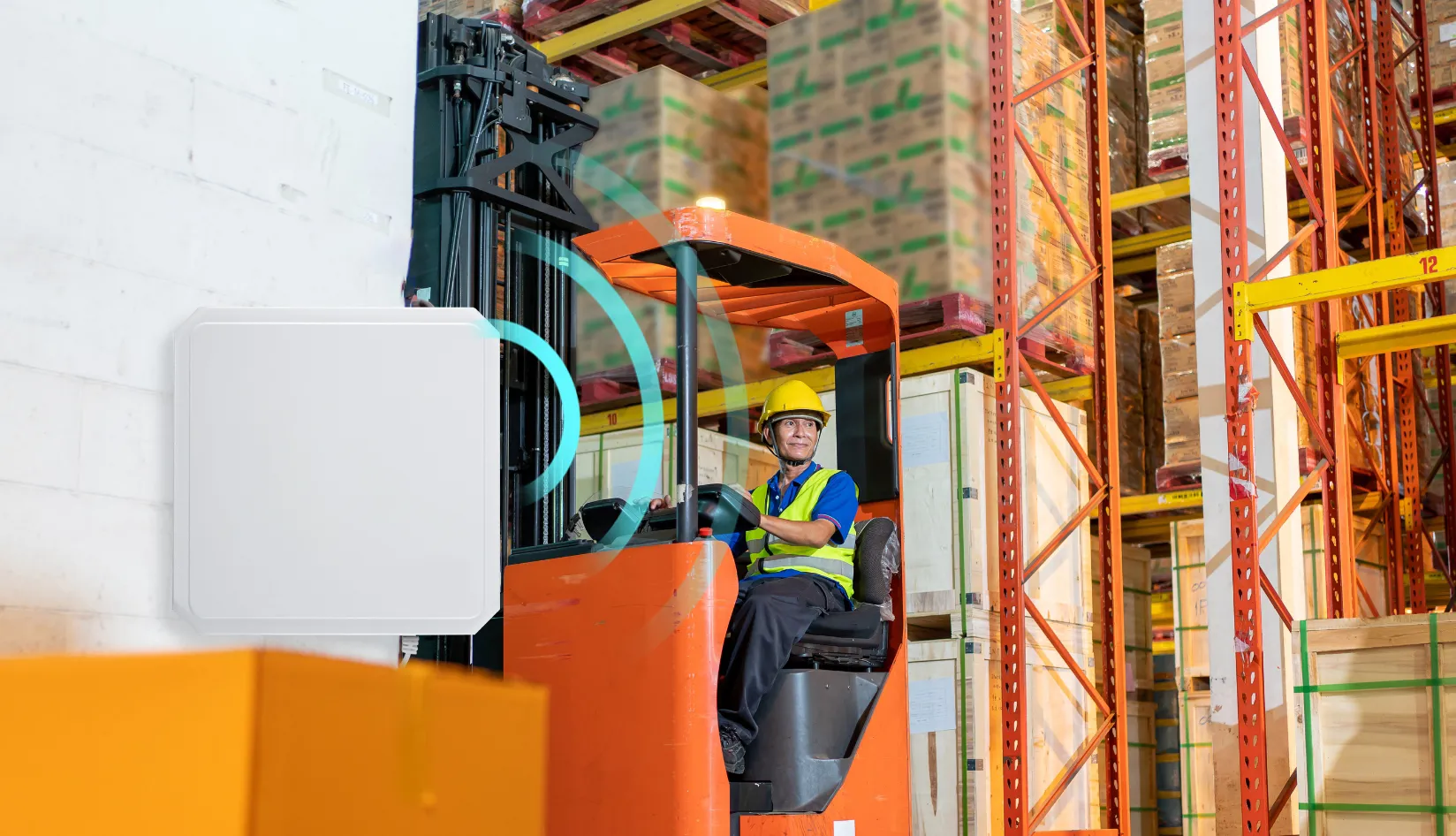
For tracking high-value assets across large facilities, warehouses, or outdoor yards, long-range passive RFID, like RFID on-metal tags, is an ideal solution. You can read tags on equipment, vehicles, or containers from several meters away by fixed or handheld readers.
This provides real-time location data, improves asset utilization, reduces loss, and streamlines auditing processes, offering significant operational efficiencies for businesses with extensive asset portfolios.
Supply Chain Management
In complex supply chains, long-range RFID, like RFID cable tie tags, enables automated tracking of goods as they move from manufacturing to distribution centers and retail stores.
This helps in optimizing logistics, reducing shipping errors, improving delivery times, and enhancing overall supply chain transparency. Ultimately, it leads to more efficient and responsive operations.
Waste Management and Smart Recycling
RFID recyclable cups now play an active role in waste management and smart recycling programs. This data helps optimize collection routes, ensure compliance with recycling programs, and provide insights for urban planning, leading to more efficient and sustainable waste management practices.

Conclusion
The read range of RFID tags is far more than a technical specification; it is a critical determinant of an RFID system’s success and its ability to deliver tangible business value. By understanding the multifaceted factors that influence read range—from frequency and environmental conditions to antenna design and tag characteristics—businesses can make informed decisions that optimize their RFID deployments.
FAQs
Which RFID tag is best for long range?
For long-range applications, Ultra-High Frequency (UHF) passive RFID tags are generally the best choice due to their ability to achieve read ranges of up to 10 meters or more.
What’s the best way to test the RFID range before full deployment?
The best way to test the RFID range before full deployment is to conduct thorough site surveys and pilot programs in your actual operating environment. Moreover, this involves testing various tag types, reader placements, and antenna configurations under real-world conditions, including potential interference sources.
Can I read multiple RFID tags simultaneously at long distances?
Yes, one of the significant advantages of UHF RFID technology is its ability to read multiple tags simultaneously, even at long distances. This capability, known as “bulk reading” or “anti-collision,” allows an RFID reader to identify and process hundreds of tags within its read field almost instantaneously, greatly enhancing efficiency in applications like inventory management and asset tracking.



 EN
EN  ES
ES  JA
JA