
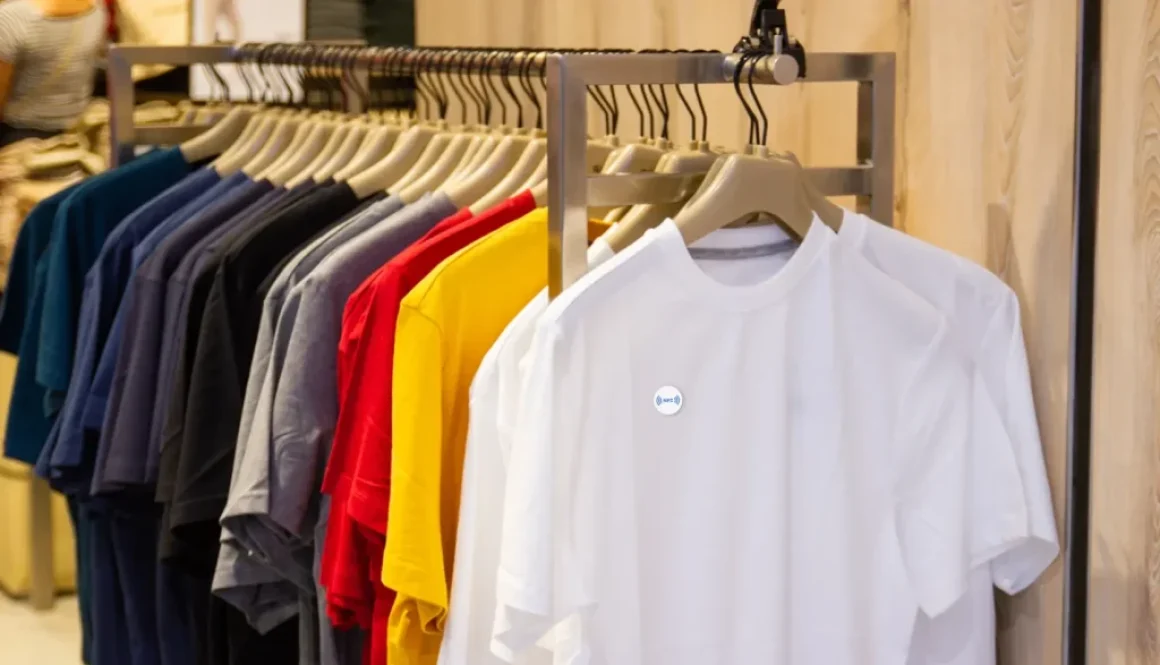
RFID tag on Clothes: Benefits and Applications You Need to Know
The global fashion and apparel industry faces growing demand for smarter supply chains, precise inventory control, and improved customer experiences. In this dynamic landscape, traditional methods often fall short, leading to inefficiencies, lost revenue, and frustrated customers. Imagine a world where every garment tells its own story, from its origin to its journey through the supply chain, right into the hands of the consumer. RFID tags—seamlessly embedded or heat-pressed onto clothes—are transforming the game. This article explores how RFID clothes work, their importance, and how they transform apparel operations.
What is RFID Technology?
Radio-Frequency Identification (RFID) is a smart wireless technology that uses radio waves to track and identify objects with high precision.
You can click on the YouTube video below to get more information about how RFID technology works.

Common Applications of RFID Tags on Clothes
The versatility and efficiency of RFID technology have paved the way for its widespread adoption across various facets of the apparel industry. From streamlining back-end operations to enriching customer interactions, RFID tags on clothes are proving to be an indispensable tool.
RFID Laundry Tags for Laundry Management in Various Industries
In industries such as hospitality, healthcare, and industrial workwear, managing large volumes of linens and uniforms is a complex and labor-intensive task. Traditional methods often lead to lost items, inaccurate counts, and inefficient processing.
RFID laundry tags are often small and discreet, and are sewn into textiles. They enable automated tracking of individual items through the entire laundry cycle, from collection and washing to sorting and delivery.
This approach cuts manual errors and labor costs significantly. It also delivers real-time data on inventory levels, item lifespan, and usage patterns. This helps optimize stock rotation and lowers replacement expenses. The ability to precisely track each garment ensures accountability, minimizes loss, and enhances operational efficiency in high-volume laundry environments.
RFID Laundry Tags for Uniform Rental Services
RFID laundry tags provide a reliable, automated way to track garments throughout their lifecycle, ensuring seamless uniform rental services. Rental companies use RFID tags to track each item’s washing history, usage, and return schedule. This improves inventory control and ensures clean garments are always available.
The technology cuts down time and labor spent on sorting, scanning, and auditing laundry, making operations smoother and lowering the chance of lost uniforms.
Beyond boosting efficiency, RFID tags support hygiene and safety by monitoring laundering frequency and enforcing cleanliness standards. They also prevent theft and unauthorized use, which is crucial in regulated sectors. Overall, RFID helps rental services optimize washing cycles, extend garment life, and cut costs while maintaining top service quality.


Heat Press Interactive NFC/UHF Garment Badge for Product Authentication and Customer Engagement in Retail
Counterfeiting is a pervasive problem in the fashion industry, eroding brand value and consumer trust. Simultaneously, brands are constantly seeking innovative ways to engage with their customers beyond the point of sale.
The UHF Garment Badge is a dual-frequency RFID tag that merges NFC and UHF technology into a single heat-pressable badge. Equipped with a cutting-edge chip, it effortlessly facilitates UHF Garment Badge solutions aimed at enhancing digital brand engagement, preventing counterfeiting, and ensuring traceability within the fashion sector. Its design is robust, adaptable, and engineered for permanent application onto clothing items through heat press techniques.
These garment badges create opportunities for interactive experiences that connect with consumers on a personal level. Through product details, videos, or social media content, they foster a unique relationship that enriches the customer journey.
Additionally, brands have the option to embed social media functionalities directly into their garment badges. This allows consumers to access exclusive content, share their purchases on social media platforms, and even unlock discounts and loyalty rewards by engaging with the badge.

Why Integrate RFID in Clothes: Drive Efficiency, Elevate Customer Satisfaction in the Clothing Industry
The integration of RFID technology into clothing is not merely a technological upgrade; it represents a strategic imperative for businesses aiming to thrive in the competitive and rapidly evolving apparel market. Here’s why integrating RFID into clothes is becoming an undeniable necessity:
Improve Efficiency and Productivity in the Clothing Industry
RFID enhances operational efficiency and productivity by automating the sorting, counting, and tracking of garments in large laundries. This technology allows for bulk identification and processing, significantly reducing time for inventory checks and dispatching, leading to labor cost savings and faster turnaround of clean linens and uniforms.
Stores can now scan their entire inventory in minutes, providing real-time stock levels. This efficiency allows staff to prioritize customer service and sales, improving overall productivity and the shopping experience.
Reduce Inventory Losses and Stockouts
By providing precise, real-time visibility into every item’s location and status, RFID significantly reduces the likelihood of misplaced items, theft, and shrinkage. Retailers can maintain optimal stock levels, ensuring that popular items are always available, thereby preventing lost sales due to stockouts.
Conversely, accurate data helps avoid overstocking, minimizing the need for costly markdowns and reducing carrying costs. This enhanced inventory accuracy directly impacts the bottom line, safeguarding profits and optimizing capital utilization.
Enhance Customer Experience and Engagement
Imagine a seamless checkout process where items are automatically scanned as they pass through a gate, eliminating the need for individual barcode scanning.
Beyond checkout, RFID enables truly personalized shopping experiences. Smart mirrors can suggest outfits based on items brought into the fitting room, or customers can use their smartphones to access detailed product information, styling tips, and customer reviews by simply tapping an RFID-enabled garment. This level of interaction and personalization creates a more engaging, satisfying, and memorable shopping journey, fostering loyalty and repeat business.
Optimize Product Authenticity
The global market is flooded with counterfeit goods, posing a significant threat to brand reputation, consumer safety, and revenue.
By embedding unique, secure RFID tags like garment badges into clothes at the point of manufacture, brands can create an unforgeable digital identity for each item. Consumers, retailers, and customs officials can then easily verify the authenticity of a product by scanning its RFID tag, instantly confirming its legitimacy and origin.
This not only protects brands from the financial and reputational damage caused by counterfeits but also builds immense trust with consumers, assuring them that they are purchasing genuine articles.
Improve the Cloth and Linen Supply Chain Management
The journey of a garment—from raw material to retail shelf—relies on a complex logistics network. RFID plays a vital role in streamlining this supply chain by providing real-time visibility across manufacturing, distribution, and retail stages.
This transparency leads to efficient routing, reduced transit times, and proactive issue resolution. For instance, if a shipment is delayed, its exact location can be pinpointed to activate contingency plans.
Moreover, RFID data integrates smoothly with ERP systems, improving forecasting, demand planning, and supply chain synchronization. The result is a more agile and resilient supply chain that adapts quickly to market changes, lowering operational costs and enhancing delivery performance.
Conclusion
From the meticulous tracking required in laundry management and garment rental to the dynamic demands of retail inventory and product authentication, RFID technology provides a scalable and tangible advantage.
As the fashion and apparel industry continues to evolve, embracing smart technologies like RFID will be crucial for staying competitive and meeting the ever-increasing expectations of a globalized market.
FAQs
Do RFID tags in garments reduce comfort or change how they look?
Modern RFID tags designed for apparel are incredibly discreet and engineered to be as unobtrusive as possible. Many are thin, flexible, and can be seamlessly integrated into garment labels, seams, or even woven directly into the fabric.
What happens if I remove an RFID tag from clothes?
If an RFID tag is removed from clothes, its primary function of enabling automated tracking and identification for inventory management, supply chain visibility, or authenticity verification will cease for that specific garment. For consumers, removing a tag typically has no direct consequence on the wearability or functionality of the clothing itself. However, for businesses, unauthorized removal could disrupt inventory accuracy or prevent future tracking.
Are RFID tags on clothes traceable?
Yes, RFID tags on clothes are designed to be traceable, but the extent of traceability is typically limited to the specific supply chain or retail environment in which they are deployed. RFID systems operate within a defined range, meaning a tag can only be read when it comes into proximity with an RFID reader. The traceability is primarily for business operations and inventory management, not for tracking individual consumers.





 EN
 ES
 JA