


Confusing UHF RFID and RAIN RFID in enterprise tracking can lead to hardware incompatibilities and vendor lock-in. Here is a clear breakdown of their technical differences and how to choose the right system for your operations.
What is UHF RFID?
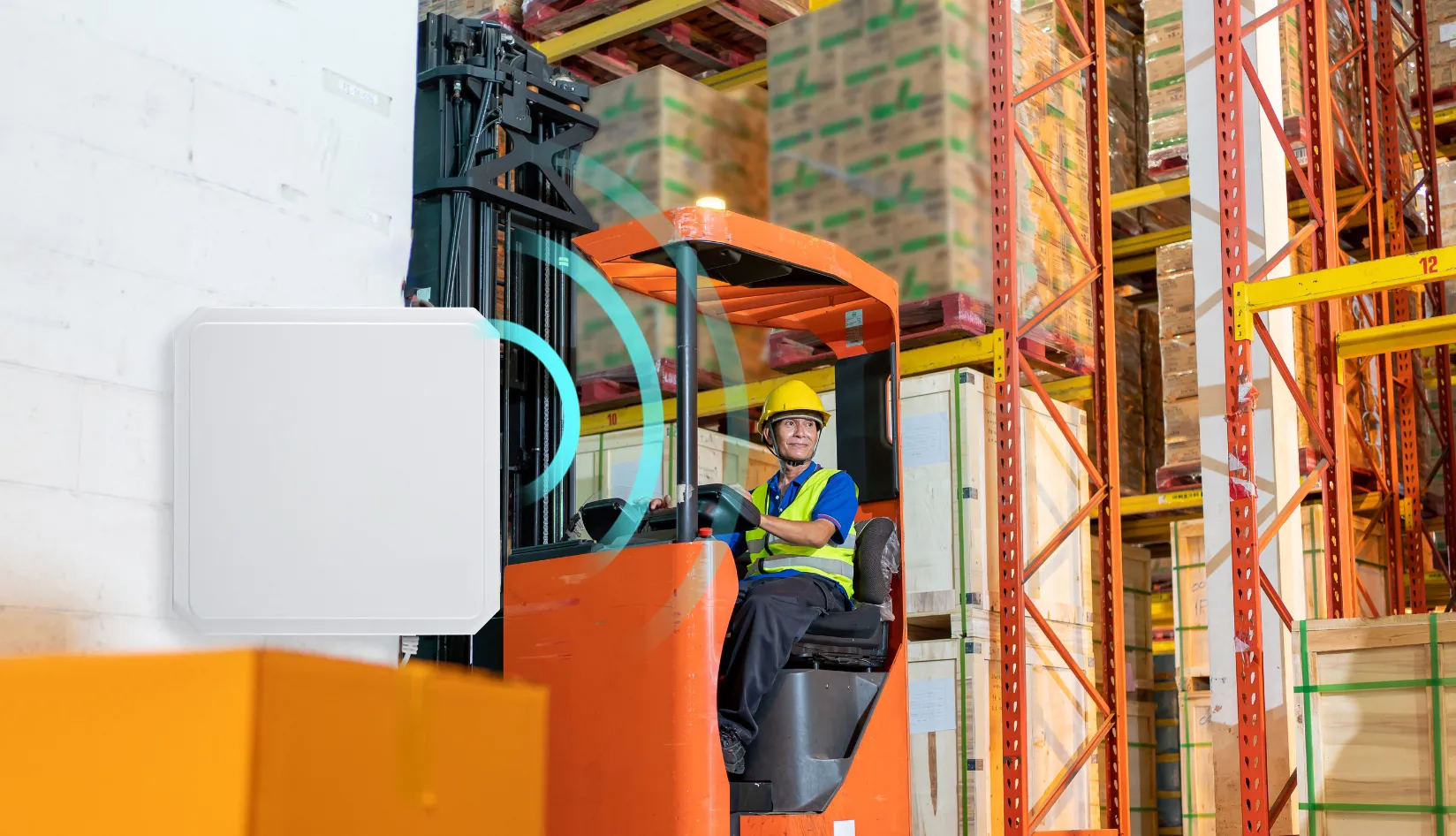
Before exploring RAIN RFID, it’s important to understand Ultra-High Frequency RFID. UHF RFID operates between 860 MHz and 960 MHz, enabling long-range identification and fast data exchange. The term UHF RFID includes various protocols and technologies for RFID systems in this frequency range. Its main advantage is efficient asset tracking and inventory management without needing direct line-of-sight scanning.

What is RAIN RFID?
RAIN stands for “Radio-Frequency Identification” and promotes the global adoption and standardization of passive Ultra-high frequency RFID technology. As a battery-free, wireless solution, RAIN RFID connects billions of everyday items—like clothing, fresh produce, and pallets—to the internet. It lets businesses and consumers identify, track, and interact with these connected objects, providing real-time insights and historical data. With RAIN RFID, users can identify an item, track its movement, locate it within a facility, and more.

Relationship of RAIN RFID and UHF RFID
RAIN RFID is a subset of Ultra-high frequency RFID that uses a standardized, cloud-connected approach. All RAIN RFID tags run on UHF RFID technology, but not all UHF RFID systems follow RAIN RFID protocols. RAIN RFID targets large-scale, globally standardized applications, while traditional UHF RFID can be customized for specific or niche uses. Both technologies operate within the same frequency range, but RAIN RFID is optimized for scalability, IoT integration, and cloud-based asset tracking.
What are the differences between UHF RFID and RAIN RFID?
Definition:
Ultra-high frequency RFID refers to RFID systems within the UHF frequency range, while RAIN RFID is a trademark focused on driving the global adoption and standardization of passive UHF RFID technology.
Technical Differences:
| Feature | UHF RFID | RAIN RFID |
| Frequency | 860-960 MHz | 860-960 MHz |
| Standard | Various proprietary & open standards | EPC Gen2 (ISO/IEC 18000-63) |
| Power Source | Passive, active, or semi-passive | Passive only (no battery required) |
| Cloud Integration | Optional | Core feature |
| Application | Supply chain management, access control, inventory management, and healthcare management | Retail, Healthcare equipment tracking, transportation |
When to Choose UHF RFID vs. RAIN RFID
Selecting the right technology depends on your operational scope, system architecture, and compliance requirements. Use the following decision guidelines to determine which solution fits your project.
Choose Generic / Standard UHF RFID if:
- You require Active or Semi-Passive tags: Your application involves internal battery-assisted sensors (e.g., real-time temperature tracking or environmental logging in cold chains).
- You operate a Closed-Loop System: Your tracked assets remain entirely within your own facility, with no need to share data or tags across external logistics partners or standard cloud systems.
- You rely on legacy or proprietary hardware: You are expanding a specialized setup that uses non-standard communication protocols tailored to custom industrial machinery.
Choose RAIN RFID if:
- You manage Global Supply Chains or Retail: You need to track apparel, pallets, or medical equipment across multiple suppliers, distribution centers, and retail outlets using standardized GS1 EPC codes.
- You need direct Cloud and IoT integration: You are building a data-driven infrastructure where tagged items must sync seamlessly with enterprise software (ERP, WMS) or cloud analytics platforms.
- You want to avoid Vendor Lock-in: You require multi-vendor interoperability so you can source tags, fixed readers, and handheld scanners from different RAIN-certified manufacturers without compatibility issues.
Conclusion
In short, Ultra-high frequency RFID and RAIN RFID share the same core technology, but RAIN RFID is a standardized, cloud-first subset designed for global interoperability and IoT readiness. While ultra-high frequency RFID offers flexibility for niche applications, RAIN’s unified standards and certified ecosystem make it the ideal choice for industries focusing on scalability (like retail and healthcare) and regulatory compliance. With AI, blockchain, and 6G integration, RAIN’s battery-free, low-cost design will drive sustainable, connected supply chains. Ultimately, RAIN RFID is more than just an upgrade to UHF—it sets the gold standard for a data-driven, transparent future.
FAQs
What is the difference between Passive UHF RFID and RAIN?
Passive UHF RFID is the general technology that uses ultra-high frequencies (860-960 MHz) for wireless identification. On the other hand, RAIN specifically refers to Passive UHF RFID products certified by the RAIN Alliance to guarantee interoperability and compliance with ISO/IEC 18000-63 and GS1 EPC Gen2 standards. RAIN is a branded term, like Wi-Fi, highlighting cloud connectivity and standardized performance.
What is the RAIN Reader Communication Interface (RCI)?
The RAIN Reader Communication Interface (RCI) is a standardized protocol that uses JSON commands to control RFID readers, ensuring interoperability across different brands and eliminating the need for vendor-specific APIs. It streamlines operations by bundling multiple commands into profiles and supports global standards like GS1 and ISO for easy integration. RCI is open-source, machine-readable, and allows for vendor-specific extensions.
What is the origin of RAIN RFID?
The term “RAIN RFID” was introduced in 2014 when a group of companies, including Google, Intel, and Impinj, coined “RAIN” as a unified brand for passive UHF RFID technology. The goal was to eliminate market confusion caused by the broad use of the term “RFID” and to highlight its IoT potential. To promote global adoption, they formed the RAIN Alliance, standardizing it under the GS1 EPC Gen2 and ISO/IEC 18000-63 protocols and enabling RFID data to connect to the cloud.
Is NFC the same as RAIN RFID?
No, NFC and RAIN RFID are two completely different technologies. RAIN RFID works in the UHF frequency band (860–960 MHz) and follows the ISO/IEC 18000-6 standards, making it perfect for long-range use (up to 15 meters) like logistics and inventory tracking. On the other hand, NFC runs at 13.56 MHz (HF) using the ISO/IEC 14443/18092 standards and is built for short-range stuff, like contactless payments or pairing devices within just a few centimeters. Sure, both are passive RFID technologies, but their frequencies, protocols, and applications couldn’t be more different.



 EN
 ES
 JA