


In today’s fast-paced digital world, businesses are increasingly turning to smart technologies for more efficient tracking and management. Among these, RFID (Radio Frequency Identification) stands out as a key solution across industries like logistics, retail, and manufacturing. Specifically, UHF RFID tags are gaining popularity due to their long read range, high-speed data capture, and ability to scan multiple items at once.
This guide helps you understand UHF RFID tags clearly—what they are, how they work, where to use them, and how to choose the right ones for your needs—whether you’re new to RFID or running a business aiming to streamline operations.
What Are UHF RFID Tags?
UHF (Ultra-High Frequency) RFID tags are electronic tags that transmit data wirelessly using radio waves in the UHF frequency band, typically ranging from 860 MHz to 960 MHz. They are designed to identify and track objects efficiently without requiring direct line-of-sight or physical contact.
A standard UHF RFID tag is made up of three main components:
- IC chip (integrated circuit): Stores data and manages communication with the reader.
- Antenna: Sends and receives signals to and from the RFID reader.
- Substrate or encapsulation material: Holds the components together and provides durability in various environments.
Compared to LF and HF RFID Tags:
- Longer read range: Readers can detect UHF tags from distances of up to 10 meters or more, while they can only read LF and HF tags from a few centimeters to about one meter.
- Faster data transfer: UHF offers faster read/write speeds, making it ideal for real-time applications.
- Greater efficiency: It uses anti-collision protocols to scan multiple tags at the same time.
Key Advantages of UHF RFID Tags
UHF RFID technology offers several compelling benefits, especially for businesses seeking scalability, automation, and real-time visibility:
- Long read range: Readers can detect tags from over 10 meters (33 feet) away, making them ideal for warehouse and supply chain environments.
- High-speed, multi-tag reading: Capable of identifying hundreds of tags per second, even in fast-moving systems like conveyor belts or loading docks.
- Lower cost per tag: Especially in large-scale deployments, passive UHF tags are relatively inexpensive to produce and implement.
- Flexible form factors: Manufacturers can embed tags in labels, hard plastic, or even sew them into fabric, enabling use across diverse industries.
Common Types of UHF RFID Tags
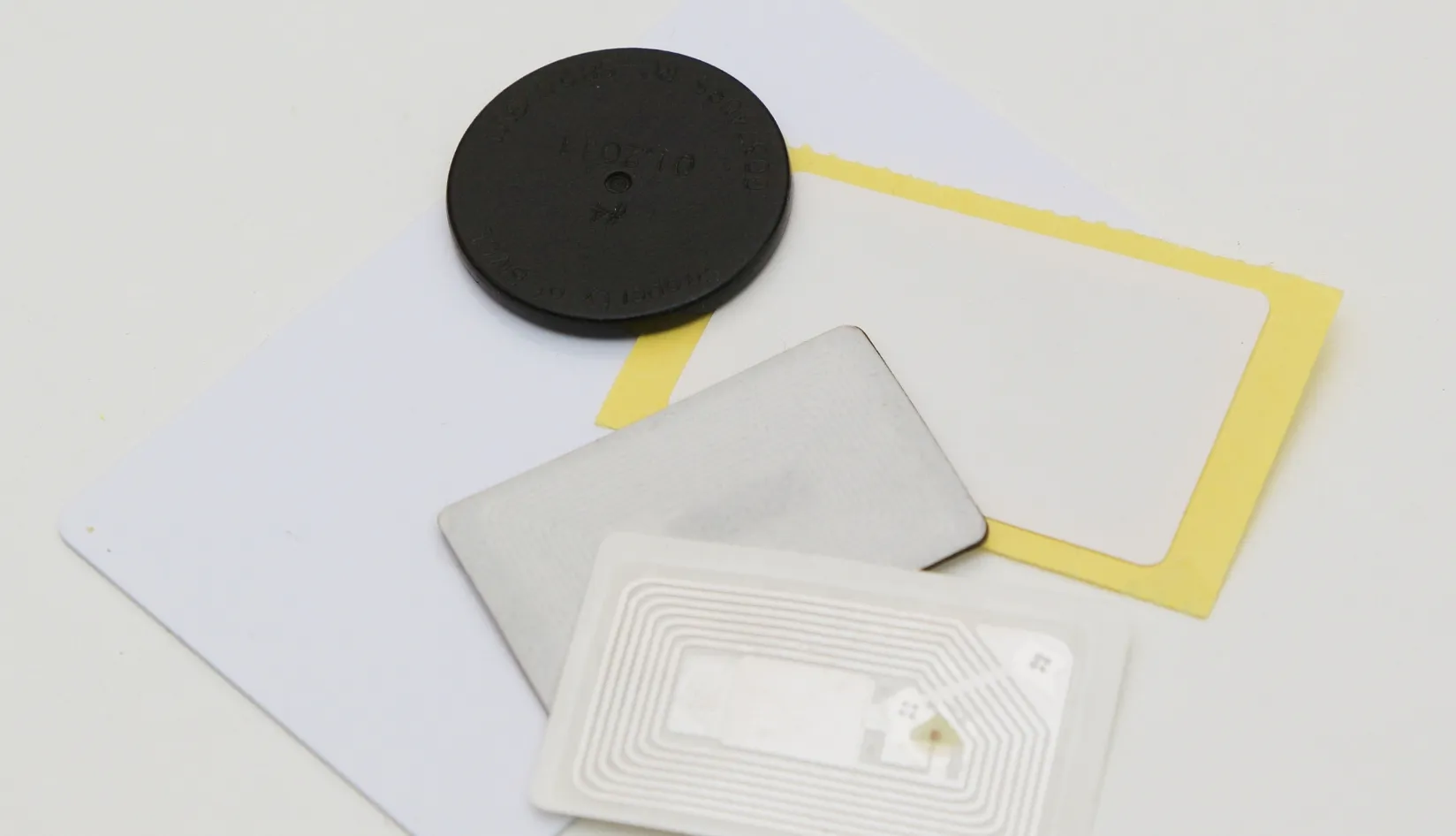
UHF RFID tags are available in several forms to meet different technical and environmental needs.
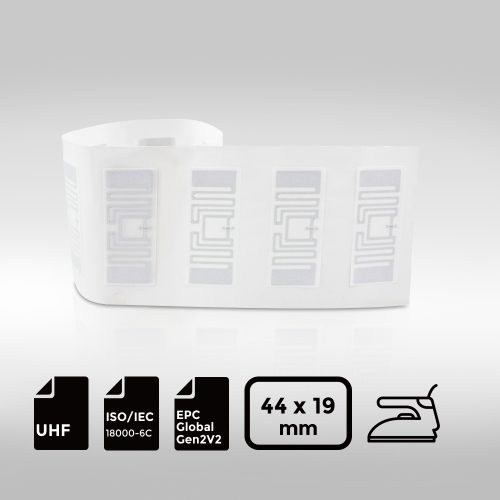
UHF RFID Labels (Smart Labels)
UHF RFID labels are the most widely used type of passive UHF RFID tags. They consist of an RFID inlay (chip and antenna) attached to a paper or synthetic adhesive label. Due to their low cost and lightweight design, UHF RFID labels are commonly used for high-volume applications such as:
- Retail inventory management
- Warehouse and logistics tracking
- Product identification
- Supply chain visibility
They are ideal for different surfaces such as cardboard boxes, plastic packaging, and apparel products.
UHF RFID Hang Tags
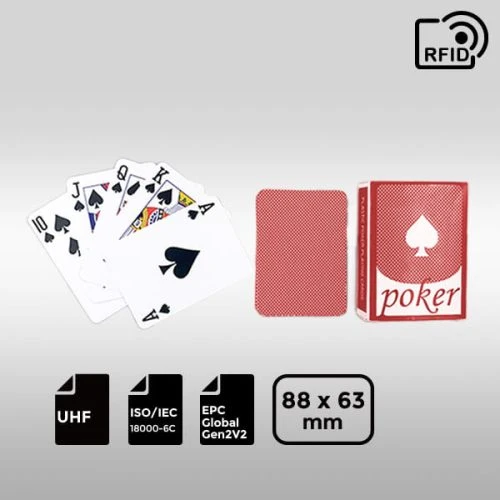
UHF RFID hang tags are thicker and more durable than standard RFID labels. They are usually made from paper, textile, PVC, or other durable materials and can be attached using strings, clips, or other fastening methods.
Common applications include:
- Apparel and fashion inventory
- Luggage tracking
- Jewelry management
- Retail product identification
Their larger surface area allows manufacturers to include printed branding, product information, barcodes, or QR codes alongside the RFID function.
Rugged UHF RFID Hard Tags
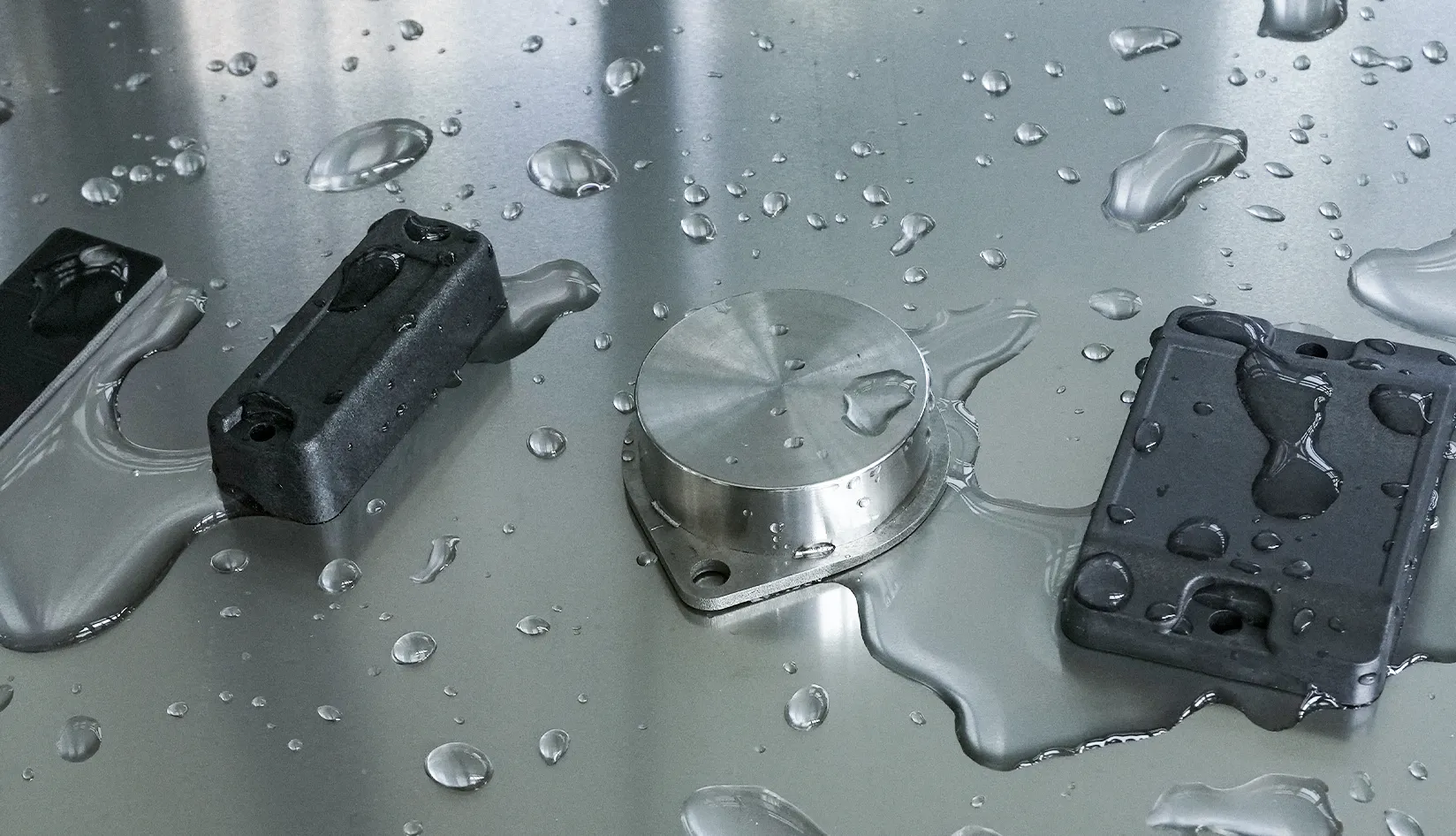
UHF RFID hard tags are enclosed in durable materials such as ABS, PVC, Steel, or industrial-grade plastics to withstand harsh environments.
Compared with flexible labels, hard tags provide better resistance against:
- Impact
- Dust
- Moisture
- Temperature variations
- Mechanical stress
They are commonly used for:
- Industrial asset tracking
- Tool and equipment management
- Returnable transport items (RTIs)
- Outdoor asset identification
UHF RFID On-Metal Tags
Standard UHF RFID tags often perform poorly when placed directly on metal surfaces because metal can interfere with radio wave transmission. UHF RFID on-metal tags are specially designed with a spacer layer or modified antenna structure to maintain reliable performance on metallic objects.
Typical applications include:
- Metal tools and equipment tracking
- Machinery identification
- IT asset management
- Industrial inventory control
They are available in different designs, including flexible on-metal labels and rugged hard tags.
Embedded UHF RFID Tags
Embedded UHF RFID tags are designed to be integrated into products or equipment during manufacturing. By placing the RFID component inside the object, these tags provide a permanent identification solution while protecting the RFID chip and antenna from external damage.
Common applications include:
- Automotive components
- Industrial equipment
- Manufacturing process tracking
- High-value asset identification
Embedded tags are suitable when long-term tracking is required throughout the product lifecycle.
Specialty UHF RFID Tags
For specific environments, manufacturers also provide specialized UHF RFID tags designed for unique requirements, including:
- Laundry RFID tags: Designed to withstand repeated washing and high-temperature processing in textile management.
- Cable tie RFID tags: Used for wire, cable, and pipeline identification.
- Flexible UHF RFID tags: Suitable for curved surfaces where traditional rigid tags cannot be installed.
These specialized designs help extend UHF RFID applications to challenging environments where standard tags may not perform effectively.
Real-World Applications of UHF RFID Tags
UHF RFID technology is transforming how businesses track, manage, and optimize assets across a wide range of industries. Below are some of the most impactful and practical applications of UHF RFID tags:
Inventory and Warehouse Management
Efficient inventory control is critical for minimizing loss and improving operational accuracy. UHF RFID tags offer major advantages in:
- Rapid inventory audits: Staff can scan thousands of tagged items in seconds without line-of-sight, drastically reducing manual counting time.
- Real-time location tracking: RFID-enabled zones help pinpoint the exact location of pallets, boxes, or individual products.
- Automated inbound/outbound processing: RFID-enabled dock doors or conveyor systems automatically log entries and exits into inventory systems as items pass through.
Retail Industry
Retailers use UHF RFID tags to enhance operational efficiency and customer experience:
- Smart shelves: Automatically detect low stock or misplaced items on store shelves.
- Self-checkout systems: Customers can check out multiple items at once by simply placing them in a reader-enabled basket—no scanning required.
- Theft prevention: RFID gates at store exits detect unpaid items and trigger alerts, reducing shrinkage.
Logistics and Supply Chain
In logistics, real-time tracking and automation are essential. UHF RFID enables:
- Package tracking from origin to destination: Each parcel is tagged and can be tracked through every stage of the shipping process.
- Fleet and cargo coordination: RFID readers installed at loading bays or in vehicles help monitor what’s loaded and where it’s going.
- Supply chain visibility: Data collected from RFID systems enables predictive analytics and just-in-time (JIT) inventory planning.
Healthcare and Asset Management
Healthcare organizations benefit from UHF RFID for improving safety, compliance, and efficiency:
- Medical equipment tracking: Hospital staff can quickly locate essential devices like defibrillators or infusion pumps using RFID.
- Patient identification and safety: RFID wristbands ensure accurate medication delivery and help prevent patient misidentification.
- Fixed asset audits: Large-scale hospitals and labs use RFID to maintain up-to-date asset records for compliance and budget tracking.
Deployment and Selection Guide for UHF RFID Tags
Successfully implementing a UHF RFID system requires more than just selecting tags at random. Businesses must consider environmental, technical, and operational factors to ensure optimal performance and ROI. This section outlines how to choose the right tag and what to watch for during deployment.
How to Choose the Right UHF RFID Tag
Selecting the right UHF RFID tag depends on several key variables:
Operating Environment (Indoor/Outdoor, Metal/Non-metal Surfaces)
- Indoor use (e.g., retail, offices): Standard paper or plastic tags are often sufficient.
- Outdoor/harsh environments (e.g., construction, manufacturing): Require rugged or waterproof tags with resistance to heat, dust, and moisture.
- Metal surfaces: Special on-metal tags are needed, as standard tags may fail due to signal reflection or interference.
Tag Shape and Material
Choose tag size and form factor based on the object being tagged:
- Flat items: Use flexible label-type tags.
- Curved or metal surfaces: Use foam-backed or metal-mount tags.
- Clothing and textiles: Use sew-in or hang tags with fabric-compatible adhesives.
Material affects durability—consider plastic casing for long-term use or paper-based tags for temporary applications.
Data Storage and Read Range Requirements
- Data capacity: Most passive tags support 96 to 512 bits of EPC memory, sufficient for basic tracking. Choose extended memory for asset history or maintenance records.
- Read range: Match tag read range (usually 3–10+ meters) to your system’s reader power, antenna type, and environmental layout.
Key Considerations During Deployment
Even the best RFID tags won’t deliver optimal performance if the deployment is poorly planned. Keep these factors in mind:
Reader and Antenna Placement
- Proper placement ensures full coverage of entry/exit points, shelves, loading docks, or production lines.
- Use overlapping coverage zones where high tag traffic occurs to prevent read gaps.
Signal Interference and Obstruction
- Metal, water, and electronic noise can affect UHF RFID performance.
- Use shielding, tuned antennas, or specially designed tags to reduce the impact of reflective or absorbing surfaces.
Tag Placement on the Object
- Place tags in visible, accessible, and non-obstructed areas.
- Avoid corners, metal enclosures, or positions where the tag is likely to be bent, scratched, or covered.
- Conduct read tests to determine optimal positioning for different product types.
Pro Tip: Always conduct a pilot test before full-scale rollout. This allows you to validate tag performance, optimize reader placement, and avoid unexpected costs or operational disruptions.
Conclusion
UHF RFID tags are a powerful tool for boosting efficiency, accuracy, and visibility across a wide range of industries. With their long read range, low cost, and scalable design, they offer a smart solution for businesses looking to modernize operations and stay competitive.
To get the most value from UHF RFID technology, it’s essential to choose the right tag type and deployment strategy based on your specific industry needs and environment. Whether you’re managing inventory, tracking assets, or automating workflows, a tailored RFID solution can make a measurable impact.
Looking for the right UHF RFID tags for your application? Contact our team for expert guidance, customized options, and sample testing to help ensure reliable RFID performance before deployment.
FAQs
Is a UHF RFID tag waterproof?
It depends on the tag design. Many UHF RFID tags are available in waterproof or water-resistant versions, especially those intended for outdoor or industrial use. These tags are typically sealed in durable plastic or epoxy materials to protect against moisture, rain, or even submersion. However, standard paper or label-style tags are not waterproof and may degrade when exposed to water.
Tip: Always check the tag’s IP (Ingress Protection) rating to ensure it meets your environmental requirements.
Does metal affect UHF RFID tag performance?
Yes, standard UHF RFID tags can experience signal degradation or complete read failure when placed on or near metal surfaces. This is because metal reflects radio waves, disrupting the tag-reader communication.
However, special “on-metal” UHF RFID tags are engineered with insulation layers or specific antenna designs to function reliably on metallic surfaces.
Solution: Use metal-mount tags specifically designed for these environments.
What are the advantages of UHF RFID tags over barcode systems?
UHF RFID tags offer several key advantages over traditional barcodes:
| Feature | UHF RFID Tags | Barcodes |
| Read range | Up to 10+ meters | A few centimeters (line-of-sight) |
| Read multiple items | Yes (hundreds at once) | No (one at a time) |
| Durability | Resistant to dirt, water, scratches | Susceptible to damage |
| Automation | Enables hands-free, real-time tracking | Manual scanning required |
| Data storage | Can store more complex data | Limited to a printed number |
Bottom line: UHF RFID is ideal for high-volume, fast-paced, or harsh environments where barcodes fall short.




 EN
 ES
 JA