


An RFID security tag in apparel retail is more than a modern anti-theft device. It is a dual-purpose technology that combines loss prevention with item-level visibility, enabling stores to stop theft while simultaneously achieving near real-time inventory accuracy. As fashion retailers struggle with shrinkage, fitting room concealment, tag switching, and the operational burden of manual stock counts, the RFID technology has emerged as a foundational tool for intelligent retail operations.
1. What Is an RFID Security Tag?

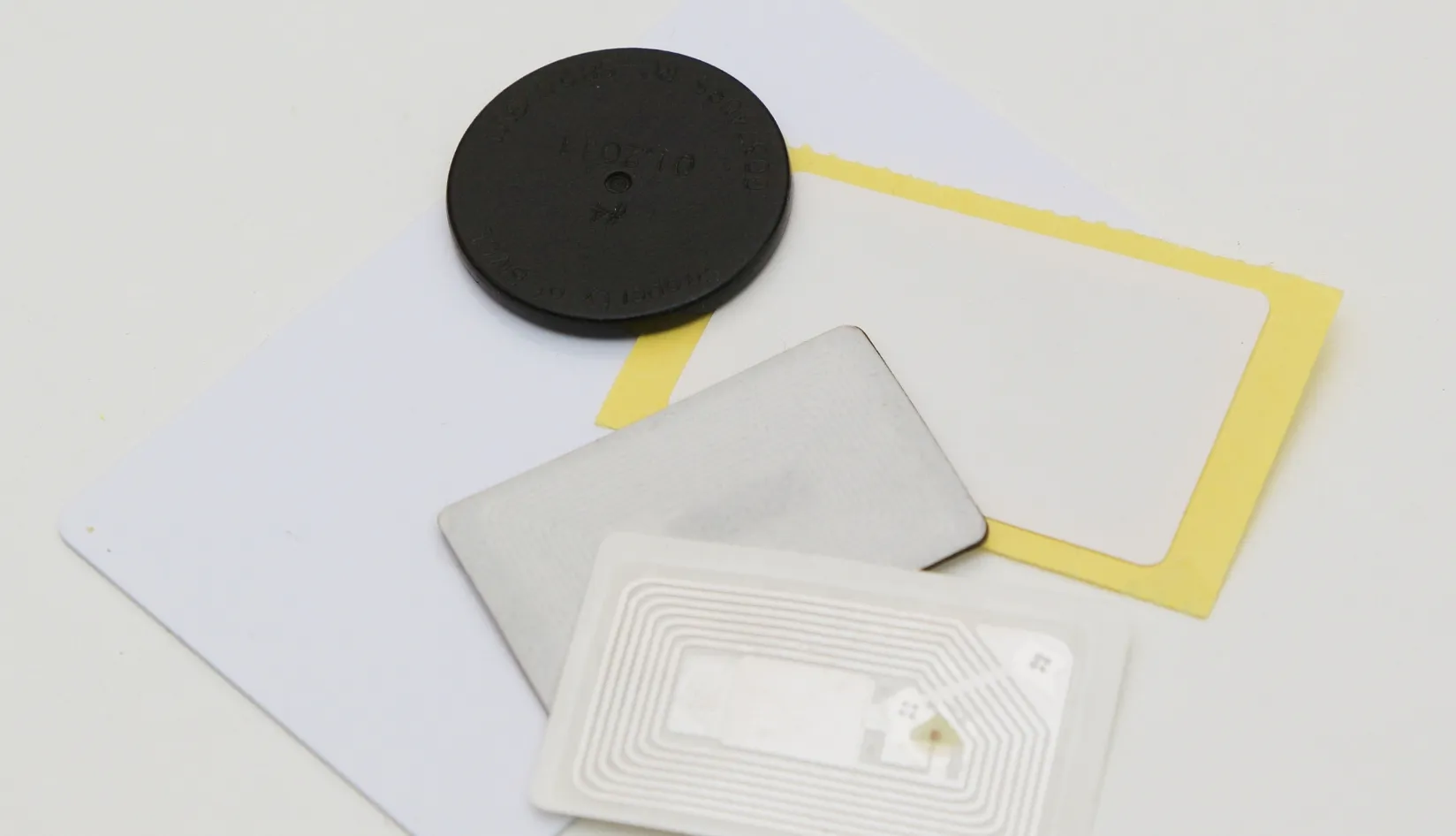
An RFID security tag is an advanced form of identification and tracking device used in retail, particularly in the apparel sector. Unlike a standard RFID tag, which primarily serves for inventory management by providing a unique identifier for each item, an RFID security tag incorporates additional features designed to prevent theft and unauthorized removal from the store. At its core, an RFID security tag consists of three elements:
- RFID chip – stores a unique ID for each garment
- Antenna – enables wireless communication with readers and gates
- Security structure – prevents easy removal or tampering
The key distinction of an RFID security tag lies in its integration with loss prevention systems. While a normal RFID tag might simply identify an item, a security tag is designed to trigger an alarm if it passes through an exit gate without being properly deactivated or purchased. This dual functionality makes it a powerful tool for retailers looking to enhance both their security and operational efficiency. The data stored on the chip can include not only product information but also security flags that indicate its payment status, making it a “smart” anti-theft device.
2. How RFID Security Tags Work with Retail Gates
Retail RFID gates are installed at store exits, similar in appearance to EAS pedestals. The difference lies in how they detect items.

Traditional EAS systems only sense the presence of an active tag. They do not know which item triggered the alarm. An RFID security tag, however, communicates the exact identity of the garment to the system in milliseconds.
This provides several advantages:
- Accurate alarm source identification (which SKU, which item)
- Reduced false alarms
- Harder to bypass by shielding or tag manipulation
- Automated logging of theft attempts for analytics
When a cashier completes a sale, the POS system updates the item’s status in the database. If the same item ID appears at the exit afterward, it is recognized as paid and will not trigger an alarm. This seamless synchronization between POS, inventory system, and gate readers is what makes RFID fundamentally different from EAS.
3. Beyond Anti-Theft: Inventory Visibility in Real Time
The true power of an RFID security tag in apparel retail is revealed when handheld readers enter the picture.

Store associates can perform a full rack inventory count in minutes by walking past garments with a handheld reader. There is no need to scan barcodes one by one. The system instantly reconciles what is physically present with what the system believes is in stock.
This enables:
- Daily or weekly cycle counts instead of quarterly audits
- Instant location of missing sizes or colors
- Accurate separation of sales floor vs backroom stock
- Reliable data for omnichannel services like BOPIS
Retailers that adopt RFID often report inventory accuracy rising from 60–70% to above 95%. This improvement directly impacts sales, because items that “exist in the system but not on the shelf” are a hidden source of lost revenue.
4. RFID Hard Tags vs. RFID Soft Labels for Garments
When implementing RFID technology in apparel retail, a key decision involves choosing between RFID hard tags and RFID soft labels. They differ in their physical characteristics, application, and impact on customer experience.

4.1 RFID Hard Tags
Pros:
- Durability: Designed for repeated use, making them suitable for high-value items or rental garments.
- Security: Often more robust and harder to remove without specialized tools, enhancing their anti-theft function.
- Reusability: Can be detached at the point of sale and reused on other merchandise, offering a cost-effective solution in the long run.
Cons:
- Customer Experience: Can be bulky or aesthetically unpleasing, potentially detracting from the garment’s presentation.
- Application: Requires manual attachment and removal, adding a step to the sales process.
- Potential Damage: Improper removal can damage the garment.
4.2 RFID Soft Labels (or Inlays)
Pros:
- Discreetness: Can be seamlessly embedded into care labels, hangtags, or even directly into the garment’s fabric, maintaining aesthetic appeal.
- Customer Experience: Virtually invisible and do not interfere with the customer’s interaction with the product.
- Source Tagging: Ideal for source tagging, where tags are applied during manufacturing, ensuring item-level visibility from the very beginning of the supply chain.
Cons:
- Single-Use: Typically designed for single use and are discarded with the packaging or after purchase.
- Security: While effective, they might be easier to tamper with compared to robust hard tags if not properly integrated.
Retailers often employ a hybrid approach, using hard tags for high-value items and soft labels for general merchandise. The choice depends on factors such as product type, price point, brand image, and the desired customer experience.
5. Why Major Fashion Retailers Are Moving from EAS to RFID
The shift is not only about better theft prevention. It is about operational transformation.
EAS only answers: Is someone stealing?
RFID answers: What is in stock? Where is it? What is selling? What is missing?
This broader visibility leads to:
- Reduced labor for inventory tasks
- Fewer out-of-stock situations
- Faster replenishment
- Data-driven merchandising decisions
RFID security tag deployments often start as anti-theft upgrades but quickly become the backbone of store operations.
6. ROI: Are RFID Security Tags Worth the Investment?

Retail decision-makers evaluate RFID through measurable returns:
- Shrinkage reduction – fewer losses from theft
- Labor savings – inventory counts reduced from hours to minutes
- Sales uplift – higher on-shelf availability
- Process efficiency – faster receiving and replenishment
When these factors are combined, many apparel retailers find payback periods within 12–24 months.
7. Implementation Considerations
Successful deployment requires planning:
- Optimal tag placement (seam, care label, hangtag)
- Choosing UHF for longer read range in stores
- Integration with POS and inventory systems
- Staff training for new workflows
- Gate calibration to avoid blind spots
RFID is not a plug-and-play sticker; it is a system that must be aligned with store operations.
8. Conclusion
An RFID security tag in apparel retail is far more than a modern replacement for EAS. It is a technology that merges security, visibility, and operational intelligence into a single system. By giving every garment a unique, traceable identity, retailers can prevent theft, eliminate inventory blind spots, and enable smarter retail processes.
RFIDTag is a trusted RFID tag manufacturer offering high-quality RFID solutions for a wide range of business applications.
Recommended Product

Impinj® Monza® R6-P ABS UHF RFID EAS Smart Security Tag
The Impinj® Monza® R6-P UHF RFID Pin Tag is a compact and durable tag designed for apparel security and inventory tracking. Operating at 860–960 MHz and compliant with EPC Global Gen2v2 and ISO/IEC 18000-6C protocols, it features 128 bits of EPC memory and 64 bits of user memory. Made of ABS with an IP54 rating, this Ø34×5 mm tag weighs only 2.7g and uses a pin buckle design for easy attachment to garments in retail environments.

Impinj® Monza® 4QT Silicone RFID Laundry Tag
The Impinj® Monza® 4QT Silicone RFID Laundry Tag combines flexible silicone material with robust UHF performance, ensuring excellent readability through harsh laundry processes. Trusted by hospitality and healthcare industries, it streamlines linen tracking, inventory control, and garment lifecycle management with long-lasting durability and consistent results.

UHF RFID Gate Reader with Light & Sound Alarm
The Q410PF UHF RFID Gate Reader is a mature and widely adopted RFID access control solution designed for high-efficiency identification and monitoring in busy environments. Featuring a clean, modern design and easy installation, it integrates a high-performance RF module capable of fast and accurate dense tag reading, making it well suited for warehouse inbound and outbound asset inventory, retail loss prevention, and circulation management. Infrared trigger sensors are used to activate tag reading and determine entry and exit direction, while built-in sound and light alarm functions support both online and offline EAS anti-theft modes. The system supports RJ45 Ethernet communication and can be expanded to WiFi or 4G connectivity to meet different deployment requirements.
This UHF RFID Gate Reader is widely applied in libraries, archives, warehouses, and apparel retail stores, enabling batch identification, flow statistics, and unauthorized removal alerts. It features high-quality infrared sensors for precise triggering and direction detection, a powerful RF module for high-speed and high-accuracy tag recognition, and a 10.1-inch HD touch display for intuitive human–machine interaction and LiDAR-based triggering for smarter read-zone control. Equipped with four narrow-beam, low-axis-ratio antennas and adjustable output power from 0–33 dBm, the gate ensures accurate coverage with minimal misreads or cross-reads, delivering reliable performance with no blind spots in complex environments.



 EN
 ES
 JA