


RFID and IoT are complementary technologies rather than competing ones. RFID identifies and tracks physical objects, while IoT connects those objects to the internet, enabling real-time visibility, automation, and data-driven decision-making. Together, RFID and IoT power smart supply chains, manufacturing, healthcare, retail, and many other industries.
What is RFID Technology?
RFID technology represents a remarkable leap beyond traditional identification methods. At its core, RFID is a wireless, non-contact system that uses radio waves to identify and track objects, animals, or people. Unlike barcodes that require line-of-sight scanning, RFID tags can be read through materials and from a distance.
How does RFID work?
When activated, the reader emits radio waves through the antenna, creating an electromagnetic field. When a tag enters this field, it captures energy from these waves, powering its circuit to transmit stored data back to the reader.

What is IoT?
The Internet of Things (IoT) refers to a network where physical devices integrate sensors, software, and connectivity to collect data and continuously share it across diverse platforms. IoT transforms ordinary objects into intelligent assets that can sense their environment, communicate with other devices, and even make decisions based on the information they gather.
From smart thermostats that learn your preferences to industrial sensors that predict equipment failures before they occur, IoT is creating a more responsive, efficient world where devices work together seamlessly.
How does IoT work?
In summary, the Internet of Things (IoT) operates as follows: Devices with hardware, such as sensors, gather data. Sensors collect data, transmit it through the cloud, and integrate the information with software. The software then processes and sends the data to users through an application or website. People can utilize the data to monitor the devices, assess their performance, and manage their functions.
RFID and IoT: What’s the Difference?
RFID and IoT are closely related, but they are not the same. RFID is a technology for identifying and tracking physical objects, while IoT is a network that connects devices and enables them to exchange and analyze data. In many smart solutions, RFID acts as a data collection technology within the broader IoT ecosystem.
| RFID | IoT |
|---|---|
| Identifies and tracks physical objects | Connects devices, sensors, and systems through the internet |
| Uses RFID tags and readers | Uses sensors, gateways, cloud platforms, and connected devices |
| Collects identification and location data | Shares, analyzes, and manages data in real time |
| Can operate without internet access | Typically requires internet or network connectivity |
| Primarily focuses on asset identification and tracking | Focuses on automation, monitoring, and intelligent decision-making |
What is the Relation between RFID and IoT?
The relationship between RFID and IoT represents a perfect technological symbiosis—RFID provides the identity and tracking capabilities, while IoT delivers the connectivity and intelligence that transforms this data into actionable insights. RFID technology serves as the foundation of IoT architecture, enabling physical objects to become part of the digital ecosystem.
When an RFID tag identifies an object, IoT connectivity ensures this information reaches the right systems in real-time. This immediate data transmission enables businesses to maintain accurate inventory records, track asset movements, and make informed decisions based on current conditions.
Benefits of Combining RFID and IoT
Integrating RFID with IoT allows businesses to move beyond simple asset identification. By combining real-time data collection with connected systems and analytics, organizations can improve operational efficiency, visibility, and decision-making.
- Real-time visibility: Track assets, inventory, and equipment instantly across different locations.
- Improved inventory accuracy: Automatically capture data to reduce manual counting errors and maintain up-to-date inventory records.
- Greater operational efficiency: Automate data collection and workflows, saving time and reducing labor costs.
- Data-driven decision-making: Combine RFID data with IoT platforms to generate insights that support faster and more informed business decisions.
- Predictive maintenance: Monitor the status and usage of equipment to identify potential issues before failures occur.
- Enhanced customer experience: Faster inventory updates and asset tracking help improve order fulfillment, product availability, and service quality.
Applications of RFID in IoT
Smart Cities
Smart transportation systems use RFID tags on bus and trains to monitor traffic flow in real-time, allowing for dynamic adjustments that reduce congestion. When buses equipped with RFID tags pass readers, IoT systems immediately update arrival times for waiting passengers.
Additionally, RFID systems in conjunction with IoT can play a significant role in waste management. RFID tags on garbage collection trucks enable monitoring their movements and enhancing their efficiency. This data can be crucial for implementing a charging system or for developing a more efficient garbage collection route.
Healthcare
Healthcare uses RFID tags, such as on-metal tags, to track Medical equipment throughout a facility, ensuring critical devices are available when and where in need most.
Hospital transforms patient care through wristbands containing RFID chips that store vital medical information. When a patient moves through a healthcare facility, IoT-connected RFID readers can access their medical history, allergies, and treatment plans instantly. This seamless information flow reduces errors, speeds treatment decisions, and ultimately improves patient outcomes.

Retail and Consumer Goods
Intelligent shelves equipped with RFID readers monitor inventory levels in real-time and automatically trigger reorders when stock levels drop.
Interactive fitting rooms equipped with RFID readers can identify items brought in by shoppers and display complementary products on smart mirrors. Payment systems that identify RFID-tagged products remove the need for checkout lines, resulting in a seamless shopping experience.

Modern Smart Warehouse
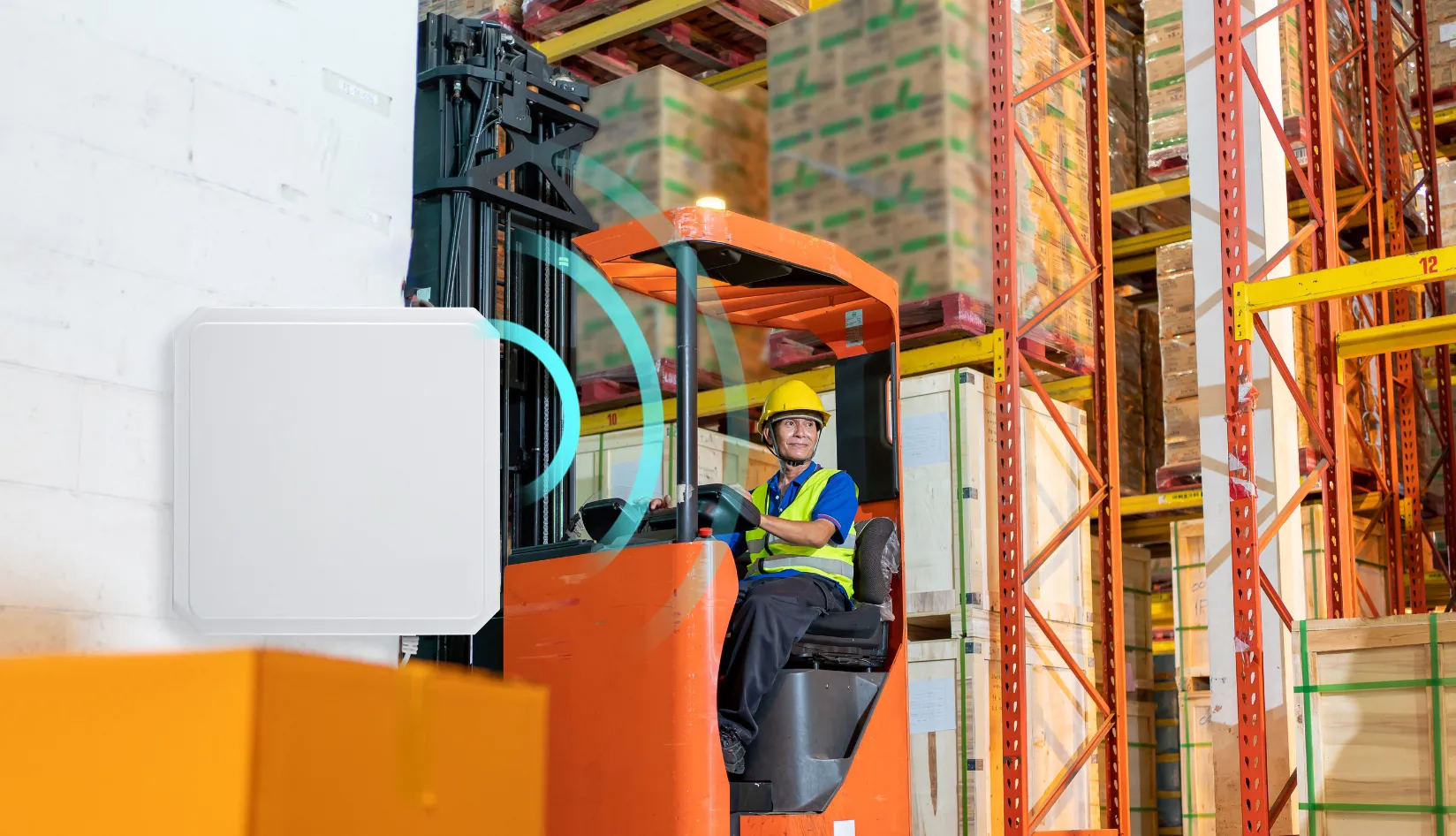
Traditional inventory management has given way to automated systems that remarkably accurately maintain perpetual inventory. RFID portals at entry and exit points track every item moving through the facility, while IoT connectivity ensures instant information collection in inventory management systems.

Challenges of Implementing RFID and IoT
While RFID and IoT offer significant advantages, successful implementation requires careful planning. Businesses should consider the following challenges before deploying an integrated solution.
- Initial investment: RFID tags, readers, IoT gateways, and software platforms require upfront costs that should be evaluated based on project goals and expected ROI.
- System integration: Connecting RFID hardware with existing ERP, WMS, or IoT platforms may require additional customization and technical support.
- Data security: As more devices become connected, protecting sensitive business data through encryption, authentication, and secure network management becomes increasingly important.
- Tag and reader selection: Different environments require different RFID frequencies, tag materials, and reader configurations to achieve reliable performance.
- Environmental interference: Metal surfaces, liquids, and electromagnetic interference can affect RFID read performance if the system is not properly designed.
Conclusion
The relationship between RFID and IoT represents more than just a technological integration—it’s a transformative partnership reshaping how businesses connect with and manage physical assets. RFID provides the crucial identification layer that allows recognizing items in the digital realm, while IoT delivers the connectivity and intelligence that transforms this identification into actionable insights.
As these two continue to evolve and become more accessible, businesses across industries are discovering new ways to enhance efficiency, improve customer experiences, and gain competitive advantages.
Curious how RFID can connect your enterprise to the IoT era? Contact our RFID experts today for a tailored consultation.
FAQs
What are the 4 components of IoT?
The four essential components of IoT are sensors/devices that collect data, connectivity infrastructure that transmits data, data processing systems that convert raw data into insights, and user interfaces that allow humans to interact with IoT systems.
How is IoT different from the Internet?
While the Internet connects people to information through computers and mobile devices, IoT extends this connectivity to everyday objects and machines with specialized hardware, software, and protocols designed specifically for machine-to-machine communication.
How can RFID and IoT work together?
RFID and IoT work together in a complementary relationship. In contrast, RFID provides identification and tracking capabilities, while IoT delivers connectivity and intelligence. RFID tags serve as data collection points that identify objects, while IoT systems transmit this data to central platforms.
How does RFID enhance IoT applications?
RFID enhances IoT applications by providing a reliable method for identifying physical objects within digital systems. It enables automatic identification without manual scanning or direct line of sight, allows simultaneous reading of multiple tags, and functions in challenging environments where other identification methods might fail.
Does RFID require an internet connection?
No. RFID systems can operate without internet access because communication occurs directly between RFID tags and readers using radio waves. Internet connectivity is only required when RFID data is transmitted to cloud-based IoT platforms or enterprise software for remote monitoring and analysis.




 EN
 ES
 JA