


From unlocking office doors and hotel rooms to accessing gyms and residential buildings, contactless access has become part of everyday life. At the center of this convenience is the RFID key fob, a small but powerful device that serves as a digital cornerstone for modern enterprise security and operational efficiency. While many people use an RFID key fob daily, few understand how it actually works. This article provides a simple, clear explanation of how an RFID key fob functions, what components it contains, and why it remains one of the most popular access credentials worldwide.
1. What Is an RFID Key Fob?
An RFID key fob is a small, handheld security token that uses radio waves to communicate with a nearby reader. The term “fob” refers to its compact, keychain-friendly form factor, which is designed for portability and durability. Unlike a traditional mechanical key, which requires a physical lock and tumblers, the key fob operates on a purely digital principle. It contains a microchip that stores a unique identification number and an antenna that transmits this number wirelessly.

2. The Basic Components of an RFID Key Fob
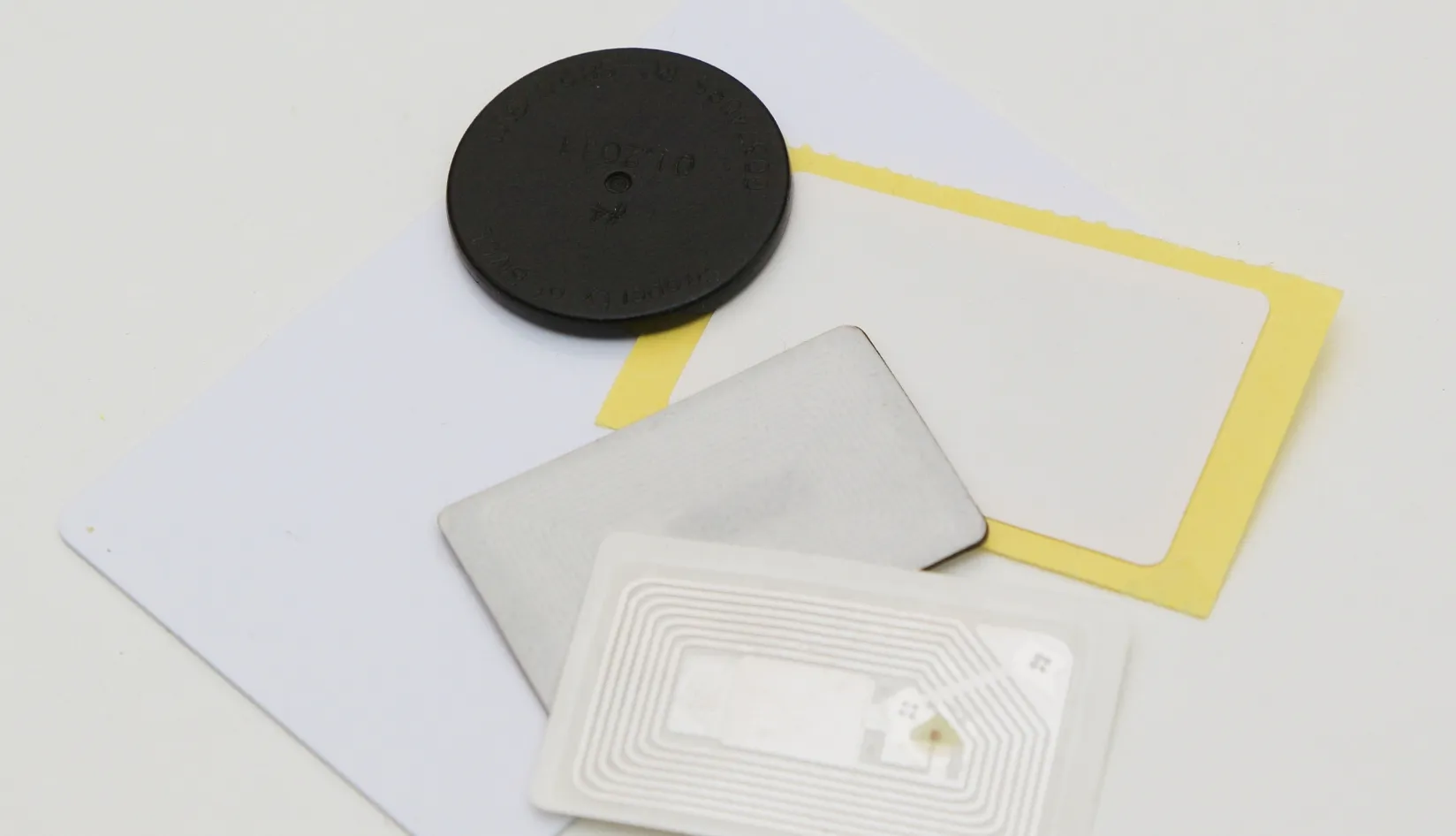
Despite its simple appearance, an RFID key fob is an elegant piece of engineering composed of three primary elements working in concert: the RFID chip, the antenna, and the protective housing.

2.1 RFID Chip
The RFID chip is the “brain” of the RFID key fob. It stores a unique identification number and, in high-security environments, encrypted authentication keys. Security levels vary significantly depending on the chip: from basic read-only IDs (like EM4200) to advanced chips supporting AES-128 encryption and mutual authentication (such as MIFARE® DESFire® or NTAG® series), allowing businesses to tailor security to their specific risk profile.
2.2 RFID Antenna
The antenna allows the RFID key fob to receive and transmit radio signals. It is typically made from copper or aluminum and is designed to operate at a specific frequency. When the RFID key fob enters the electromagnetic field generated by a reader, the antenna captures energy and enables communication between the chip and the reader. Antenna design plays a crucial role in read range and reliability.
2.3 Protective Housing
The housing protects the internal chip and antenna from physical damage, moisture, and environmental stress. The most common material used for key fob housing is Acrylonitrile Butadiene Styrene (ABS) plastic. ABS is favored for its excellent balance of strength, cost-effectiveness, and impact resistance, making it ideal for a device that is constantly handled and subjected to wear and tear.
3. How an RFID Key Fob Communicates with a Reader
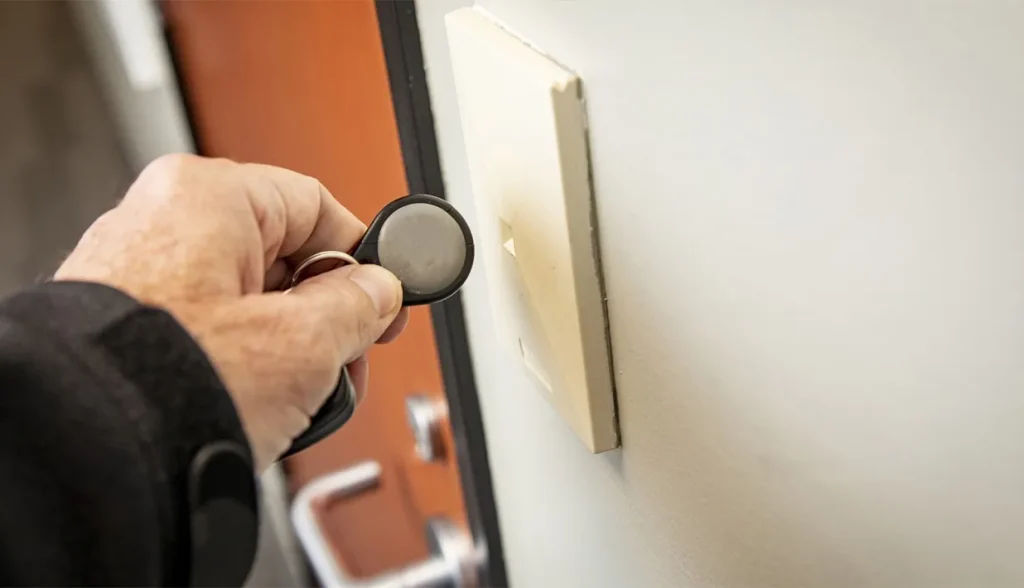
Most RFID key fobs used for access control are passive devices, meaning they do not contain a battery.
- Energy Harvesting: The RFID reader emits a continuous low-power radio frequency field.
- Activation: When the fob enters this field, the antenna harvests energy to power the chip.
- Data Transmission: The chip retrieves its unique ID (and security credentials) and transmits them back to the reader by modulating the field.
This contactless process takes only a fraction of a second and requires no physical contact, drastically reducing hardware wear and tear compared to magnetic stripe cards.
4. Why Choose Fobs over Traditional Keys?
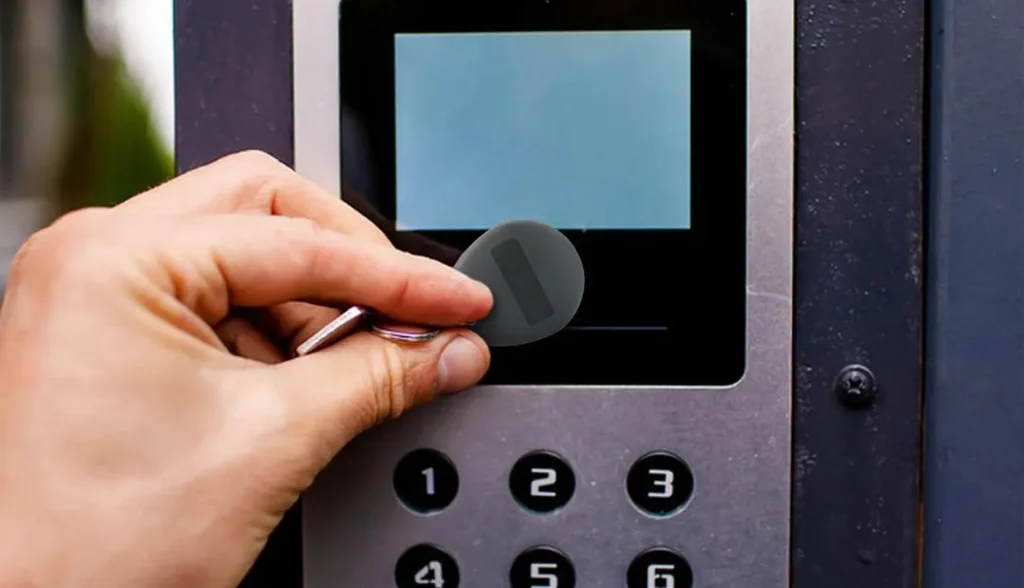
For facility managers and IT directors, RFID fobs offer a superior Return on Investment (ROI):
- Operational Efficiency: If a fob is lost, it can be instantly deactivated in the system and a new one issued. This eliminates the massive cost and downtime associated with re-keying physical locks.
- Enhanced Durability: The robust encapsulation makes fobs nearly indestructible in harsh environments like construction sites or factories, where cards might snap or bend.
- Multi-Application Integration: A single fob can manage building access, track employee attendance, and even enable “tap-to-pay” at corporate cafeterias or vending machines.
5. RFID Key Fob Frequencies Explained
RFID key fobs operate at different frequencies, and each frequency band has its own characteristics.

5.1 Low Frequency (LF – 125 kHz)
LF systems have a short read range (under 10 cm) but offer excellent penetration through liquids and metals. This makes them highly reliable for basic proximity access in legacy office buildings and parking structures.
5.2 High Frequency (HF – 13.56 MHz)
Governed by ISO standards, HF is the foundation for NFC technology. It supports complex encryption and is the preferred choice for high-security environments like government offices, data centers, and luxury hospitality.
5.3 Ultra-High Frequency (UHF – 860-960 MHz)
Designed for long-range identification (up to several meters), UHF fobs are ideal for automated vehicle gate access or tracking assets across large logistics hubs without requiring the user to tap a reader.
If you want to learn more about RFID key fobs, including key buying factors and how to extend their lifespan, check out our comprehensive guide: Everything About RFID Chip Key Fobs.
6. Common Applications of RFID Key Fobs

Many industries widely adopt RFID key fobs.
- Access control systems for offices and factories
- Hotels and hospitality for guest room access
- Residential buildings for secure entry
In each of these scenarios, the RFID key fob provides a simple and scalable solution.
7. RFID Key Fob vs RFID Card
While both the RFID key fob and the RFID card utilize the same core technology—a chip and an antenna—their differences in form factor dictate their best use cases.
| Feature | RFID Key Fob | RFID Card |
| Form Factor | Small, durable, keychain attachment | Card size, flat |
| Durability | High (Encased in thick plastic) | Moderate (Prone to bending/cracking) |
| Branding/Printing | Limited surface area for logos | Large surface area for photo ID, branding, and text |
| Cost | Generally comparable or slightly higher | Generally lower for basic models |
| Primary Use | Access control, high-wear environments | Photo ID, multi-application (e.g., transit, payment) |
8. Conclusion
Understanding how an RFID key fob works reveals why it has become such a widely adopted access credential. By combining simple design, reliable technology, and scalable security, RFID key fobs offer a balance of convenience and control that few alternatives can match. Looking for high-quality RFID key fobs for your access control system? Contact us today to request a quote, free sample, or technical consultation.
Recommended Product

ABS RFID KEY-FOB Tag ATA5577
The ABS RFID Key-Fob Tag featuring the ATA5577 chip operates at 125kHz or 135kHz frequencies, offering flexible and reliable RFID performance. Its robust ABS casing protects the tag in various environments, making it ideal for access control, asset tracking, loyalty programs, personal and pet identification, as well as waste management. Portable and easy to deploy in diverse scenarios.



 EN
 ES
 JA