
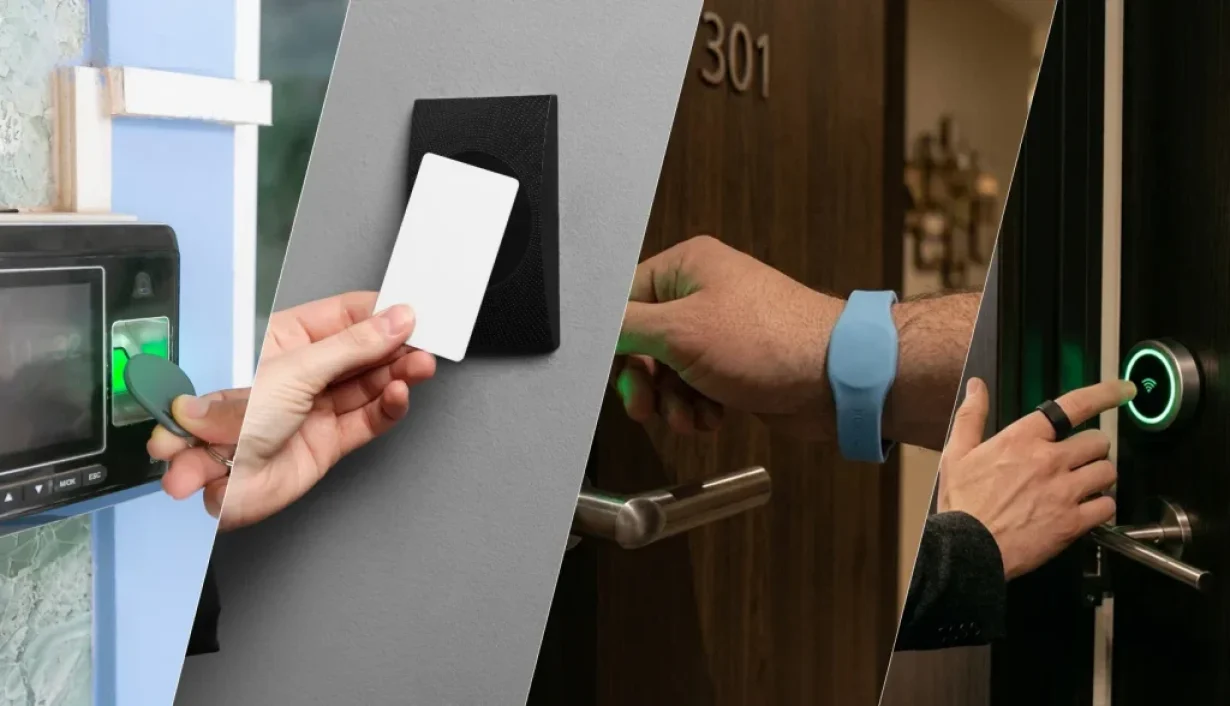

Modern RFID access control systems rely on more than just readers and software—the credential users carry every day is equally important. Whether you’re securing an office, managing a residential building, operating a fitness center, or deploying a smart access solution, choosing the right credential directly affects convenience, durability, security, and user experience.
In this guide, we’ll compare the four most common RFID access control credentials—RFID cards, key fobs, wristbands, and NFC rings—to help you determine which option best fits your application.
1. What Are RFID Access Control Credentials?

An RFID access control credential is the item a user presents to an RFID reader to verify their identity and gain access to a secured area. While readers, controllers, and management software form the infrastructure of an access control system, the credential is the part users interact with every day.
Each credential contains an RFID or NFC chip that stores a unique identifier or encrypted data. When it is brought within the reader’s operating range, the reader transmits the credential’s information to the access control system, which then determines whether access should be granted.
Unlike traditional mechanical keys, RFID credentials offer several advantages:
- Faster authentication with contactless operation.
- Improved security through unique IDs or encrypted chips.
- Easy credential management, allowing lost credentials to be disabled without changing physical locks.
- Support for large-scale deployments, where thousands of users can be managed from a centralized platform.
2. Why Choosing the Right RFID Access Control Credential Matters
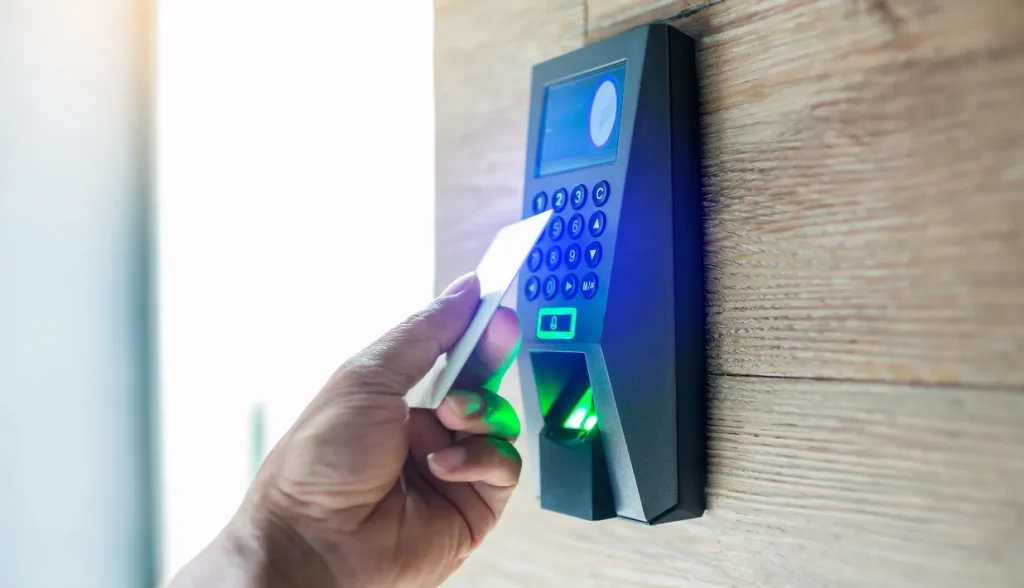
At first glance, all RFID credentials appear to perform the same function—they identify authorized users and grant access. However, selecting the wrong credential can lead to unnecessary replacement costs, poor user experience, and even security risks. When planning an RFID access control system, it’s important to consider how and where the credentials will be used rather than simply choosing the lowest-cost option.
2.1 User Convenience
The credential should match users’ daily habits. For example, office employees often prefer RFID cards that fit easily into a wallet or ID badge holder. Residents of apartment buildings may find key fobs more convenient because they can remain attached to their keys. In fitness centers or water parks, silicone wristbands allow users to unlock doors or lockers without carrying anything in their hands. Meanwhile, NFC rings provide a seamless, hands-free experience for smart homes and modern workplaces.
2.2 Durability and Environment
Different environments place different demands on RFID credentials.
If the credential will be exposed to water, dust, chemicals, or frequent impacts, durability becomes a major consideration. For example:
- RFID wristbands are designed to withstand sweat, rain, and repeated exposure to water.
- ABS key fobs are resistant to everyday wear and accidental drops.
- Standard PVC RFID cards work well in office environments but may crack or bend if subjected to heavy use.
- NFC rings are typically made from ceramic or epoxy materials that resist scratches and moisture.
2.3 Security Requirements
Not every access control application requires the same level of security. Basic systems may only need a unique card ID, while government buildings, hospitals, financial institutions, and data centers often require encrypted credentials such as MIFARE DESFire or other high-security RFID technologies.
Before choosing a credential, verify that it supports the chip type and security protocol required by your access control system. The physical form factor may vary, but security ultimately depends on the RFID technology inside the credential.
2.4 Branding and Customization
RFID credentials also represent your organization’s brand. Many businesses customize credentials with company logos, employee photos, serial numbers, QR codes, or corporate colors to reinforce brand identity while simplifying user management.
RFID cards typically offer the largest printable surface, making them ideal for full-color branding. Wristbands can be customized with logos and colors for events or membership programs, while key fobs are often laser engraved or pad printed with company information.
2.5 Total Cost of Ownership
The purchase price is only one part of the overall investment. Organizations should also consider:
- Expected service life
- Replacement frequency
- User convenience
- Administrative efficiency
- Customization requirements
- Compatibility with existing RFID access control systems
A credential that costs slightly more initially may deliver lower lifetime costs by lasting longer and reducing replacements or support requests.
3. Comparison of Four Common RFID Access Control Credentials
Although all RFID credentials perform the same basic function, each is designed for different users and environments. Understanding their strengths and limitations can help you choose the most practical solution for your RFID access control system.
3.1 RFID Cards
RFID cards are the most widely used credential for RFID access control systems. Similar in size to a standard credit card, they contain an embedded RFID or NFC chip and antenna that communicate wirelessly with compatible readers.
Because of their familiar form factor, RFID cards are commonly issued as employee ID badges, hotel key cards, student IDs, visitor passes, and membership cards. They are compatible with a wide range of chip technologies, including LF, HF, NFC, and UHF, making them suitable for everything from basic door entry to highly secure enterprise access control.
Advantages
- Large printable surface for company logos, employee photos, barcodes, and QR codes.
- Supports a wide variety of RFID chips and security protocols.
- Cost-effective for large-scale deployments.
- Available in different materials, including PVC, PET and even wood for premium branding.
Limitations
- Less suitable for wet or physically demanding environments.
For organizations seeking a versatile and professional credential, RFID cards remain the industry standard thanks to their excellent balance of affordability, security, and customization options.
3.2 RFID Key Fobs

RFID key fobs provide the same functionality as RFID cards but in a smaller, more portable format (you can learn how an RFID key fob works in our simple guide). Designed to attach to keychains, they are especially popular in residential and commercial environments where users are more likely to carry keys than wallets or ID holders.
Typically made from durable ABS plastic or epoxy materials, RFID key fobs are built to withstand daily handling, accidental drops, and exposure to outdoor conditions.
Advantages
- Compact and lightweight for everyday carrying.
- Durable construction suitable for frequent use.
- Water-resistant and impact-resistant.
- Available in various colors and custom branding options.
Limitations
- Smaller surface area limits the amount of printed information.
- Not suitable for displaying employee photos or detailed identification.
- Fewer customization options compared with RFID cards.
For applications where portability and durability are top priorities, RFID key fobs offer a practical and cost-effective solution.
3.3 RFID Wristbands
RFID wristbands are wearable credentials designed for applications where users need convenient, hands-free access. Instead of carrying a card or key fob, users simply wear the wristband and present it to an RFID reader.
Depending on the application, RFID wristbands can be made from silicone, PVC, woven fabric, or disposable materials. They are available with LF, HF, NFC, or UHF chips, allowing them to support a wide range of RFID access control systems.
Their waterproof, durable construction makes them particularly well suited for environments where traditional cards are easily damaged or inconvenient to carry.
Advantages
- Hands-free operation for greater user convenience.
- Waterproof, sweat-resistant, and suitable for outdoor use.
- Comfortable for long-term wear.
Limitations
- Reusable silicone wristbands generally cost more than standard RFID cards.
- Disposable wristbands have a limited service life.
For environments that require durability, hygiene, or hands-free operation, RFID wristbands are often the most practical credential available.
3.4 NFC Rings
NFC rings represent a newer generation of wearable credentials. Unlike cards or wristbands, an NFC ring is worn like ordinary jewelry, allowing users to unlock doors with a simple hand gesture.
Most NFC rings operate at 13.56 MHz and comply with ISO/IEC 14443 standard, depending on the chip used. They typically incorporate NFC chips such as NTAG®, MIFARE®, or other compatible technologies, making them suitable for many modern RFID access control systems.
Although NFC rings currently account for a smaller share of the market than cards or key fobs, they are becoming increasingly popular in smart offices, coworking spaces, and residential smart access applications where convenience and innovation are highly valued.
Advantages
- Stylish, wearable design with hands-free access.
- Waterproof and highly resistant to everyday wear.
- No need to carry a wallet, badge, or keys.
- Can also support selected NFC applications, such as digital business cards or smartphone automation, depending on the chip and system compatibility.
Limitations
- Higher cost than traditional RFID credentials.
- Limited branding and customization options.
- Not all access control systems support every NFC chip type, so compatibility should be verified before deployment.
While NFC rings are unlikely to replace traditional RFID cards in large-scale enterprise deployments, they provide an innovative alternative for organizations looking to deliver a premium, modern user experience.
4. How to Choose the Right RFID Access Control Credential

After comparing the available options, the next step is determining which credential best fits your organization’s needs. Rather than focusing on the product itself, start by evaluating how your RFID access control system will be used.
4.1 Consider Your Application
Different industries have different priorities, so there is no one-size-fits-all solution.
- Choose RFID cards if you need professional-looking employee IDs, hotel key cards, student IDs, or membership cards with plenty of space for branding and identification.
- Choose RFID key fobs when users are more likely to carry keys than wallets. They are an excellent option for apartment buildings, gated communities, parking facilities, and self-storage units.
- Choose RFID wristbands if users need hands-free access or will be exposed to water, sweat, or outdoor environments.
- Choose NFC rings if convenience and user experience are your highest priorities. They are well suited for smart homes, coworking spaces, executive offices, and technology-focused organizations.
4.2 Evaluate the Operating Environment
The environment plays a major role in determining which credential will deliver the best long-term performance.
- For indoor office environments, standard RFID cards usually provide the most economical solution.
- In outdoor or industrial settings where credentials may be dropped or exposed to rain, durable ABS key fobs generally offer better resistance to wear.
- If users frequently come into contact with water or need to keep both hands free, waterproof RFID wristbands are often the preferred choice.
Organizations should also consider factors such as temperature, humidity, dust, chemicals, and the likelihood of physical impacts when selecting credential materials.
5. Conclusion
Choosing the right RFID access control credential is about more than appearance—it’s about selecting the option that best fits your users, operating environment, security requirements, and long-term budget.
Whether you need the portability of RFID key fobs, the convenience of RFID wristbands, or the modern appeal of NFC rings, RFIDTag can help you choose the right solution for your business.





 EN
 ES
 JA