


The livestock industry plays a crucial role in global food production, but traditional farm management methods are often inefficient and prone to mistakes. RFID technology tackles these issues by allowing farmers to accurately track, monitor, and manage their livestock. With RFID livestock tags, producers gain real-time data on animal identity, location, health, and movement, leading to smarter decisions, increased productivity, and better animal welfare.
This blog dives into how RFID is revolutionizing farm management and boosting efficiency across the industry.

Understanding RFID Technology
Radio Frequency Identification (RFID) technology is a system that uses radio waves to transfer data between a reader and an RFID tag. These tags are small electronic devices designed to store and transmit information. They can be attached to a variety of items, such as products, assets, or even animals. When an RFID reader sends out a signal, the tag responds with its stored data, enabling fast and efficient identification and tracking.

What are RFID Livestock Tags?
RFID livestock tags are small electronic devices typically attached to animals to identify them individually and monitor their activities.
Also known as RFID chips, they use radio waves to send animal data from the tag to a reader, which then relays it to an RFID software system. Their primary use is in managing livestock.
Types of RFID Livestock Tags
RFID livestock tags come in a variety of types, each with unique features and uses. They are generally categorized into low-frequency, high-frequency, and ultra-high-frequency tags. These tags use one of these three frequencies to communicate via radio waves.
Almost all RFID tags available on the market operate as either active, passive, or semi-passive systems.
Active RFID Livestock Tags
These RFID tags are essentially self-powered, as they come with their built-in power source. This enables them to actively transmit signals from the microchip to RFID readers.
Thanks to this unique feature, active RFID tags offer an extended read range, making them ideal for applications requiring real-time monitoring. They’re the most reliable choice for dynamic environments like large grazing areas, where tracking and monitoring free-range animals is critical.
Passive RFID Livestock Tags
Unlike active tags, passive RFID ear tags don’t have an internal power source. Instead, they rely on the energy generated by the RFID reader to function. In other words, they only activate when they’re within the reader’s transmission field; otherwise, they remain inactive.
That said, passive ear tags are still a key component of tracking and identification systems. They’re durable, cost-efficient, and versatile enough for various applications like livestock inventory management, record keeping, and routine animal health monitoring.
Semi-passive RFID Livestock Tags
This type of RFID bridges the gap between passive and active systems. It draws power externally but stores data for later transmission without needing to recharge from the same source.
Semi-passive tags also outlast their passive counterparts, with a lifespan of up to ten years in livestock management applications.
Compared to passive tags, these tags offer a greater reading range and can operate efficiently without the full power demands of active tags.
Low-Frequency RFID Livestock Tags
LF livestock tags are a popular type of RFID that operates at a low frequency of 125 kHz.
They have long lifespans, though their durability depends on the level of wear and tear from various applications. However, these tags have a short read range, making them suitable for identifying individual animals. Additionally, they store limited information that can only be accessed one tag at a time.
LF RFID ear tags for sheep and cattle are particularly useful for tracing an animal’s origin when it arrives at the market. This means that in the event of contamination, it’s easy to pinpoint the exact batch of meat using the tag.
High-Frequency Livestock Tags
HF RFID tags operate at higher frequencies (typically 13.56 MHz) and deliver faster data transfer speeds. They’re highly effective for animal identification and tracking, especially in situations where a moderate read range is sufficient.
UHF Livestock Tags
UHF livestock tags have the longest read range and operate at frequencies between 860 MHz and 960 MHz. Thanks to their extended range and ability to transfer data instantly, these tags are ideal for tracking livestock across large areas. They’re also great for storing detailed information about individual animals since they can hold more data compared to other types of tags.
RFID Livestock Tags vs. Traditional Animal Tags
Both RFID tags and traditional ear tags are used to identify and track animals. However, it’s important to weigh their differences carefully before deciding which one to use for livestock management.
Efficiency
Compared to traditional animal tags, RFID technology takes animal tracking to the next level by using radio waves for data storage and retrieval. This eliminates the need for manual scanning or hands-on human involvement, making the process faster, more efficient, and fully automated.
Durability
RFID livestock tags are both reliable and long-lasting because they’re made with tougher materials. Compared to traditional animal tags, they hold up much better in extreme weather conditions.
Accuracy
Unlike traditional ear tags that require manual tagging, RFID technology allows for the simultaneous printing of multiple tags with pinpoint accuracy in a fraction of the time. This system operates without human intervention, delivering reliable data and eliminating the risk of errors or misinformation commonly associated with manual processes.
Operation Cost
Traditional livestock management methods come with a major downside—they demand significant time and money to stay cost-effective. RFID technology simplifies animal monitoring, making the process faster and more economical. By cutting down on labor and time required for tracking, RFID streamlines operations. Plus, its durable tags last longer, reducing replacement costs and offering a more budget-friendly alternative to other options.
Data Security
Unlike traditional tags that can easily get lost or damaged, RFID livestock tags securely store large amounts of data in digital form and protect against unauthorized access or input errors.
How RFID Revolutionizes Farm Management?
Compared to traditional animal tags, RFID livestock tags provide a more efficient solution for managing farms.
Improve Health Management
RFID tags allow farmers to keep track of the health of individual cattle or sheep, making it easier to spot signs of illness. These smart devices store key medical records, like vaccination history, and can even monitor real-time body temperature. By using this technology, farmers can quickly catch health issues and work with vets for timely treatment.

Enable Identification and Tracking
RFID livestock tags provide a unique ID for each animal, making it easy to accurately track their movements, locations, and ownership. This helps deter theft, ensures precise record-keeping, and streamlines the sorting and grouping of animals.

Monitor Feeding and Breeding Program
RFID technology allows farmers to track feeding schedules, monitor nutrient intake, and efficiently manage breeding cycles. With real-time data at their fingertips, they can fine-tune feeding plans, improve reproductive outcomes, and make smarter decisions to maximize overall livestock productivity.

Keep Supply Chain Transparency
RFID technology allows for complete tracking of an animal’s lifecycle, from birth to processing. This level of transparency is crucial for ensuring food safety, complying with regulatory standards, and addressing consumer concerns about animal welfare.
Conclusion
In today’s highly competitive agricultural industry, RFID technology plays a crucial role in livestock management. It streamlines data collection, reduces human error, and supports real-time decision-making, enabling farmers to run more efficient operations and provide better care for their animals.
With the growing global demand for food, implementing RFID ensures higher efficiency, increased productivity, and quicker adaptability to market needs. This cutting-edge innovation is essential for creating a sustainable future with secure food supplies.
FAQs
Will my existing system be compatible with RFID livestock tags?
The compatibility of your current system with RFID livestock tags hinges on three key factors: frequency alignment (like LF, HF, or UHF), compliance with protocol standards (such as ISO 11784/11785), and seamless software integration.
How long will an RFID livestock tag last?
The lifespan of RFID livestock tags largely depends on their type and the environmental conditions they’re exposed to. Passive RFID tags can last up to 20 years or even longer. Active RFID tags, on the other hand, have batteries that typically last 3 to 5 years, with factors like battery lifespan, usage frequency, and extreme temperatures affecting their longevity. Manufacturers often design passive tags for durability.
What are the key factors to consider when choosing an RFID livestock tag?
When choosing an RFID livestock tag, keep these priorities in mind:
- Frequency: Low-frequency tags are ideal for animal tracking.
- Durability: Select tags that can withstand tough conditions like humidity, dirt, and ammonia, and are designed to stay securely attached over the long term to prevent loss.
- Standards Compliance: Make sure the tags meet global compatibility standards and regulatory requirements.
- Read Range & Speed: Find a balance between read distance (passive vs. active tags) and anti-collision performance.
- Data Requirements: Choose tags with enough memory to store health records, breeding history, or traceability information.
- Manufacturer Reliability: Work with certified suppliers who offer quality assurance and technical support, like RFIDTag.com.
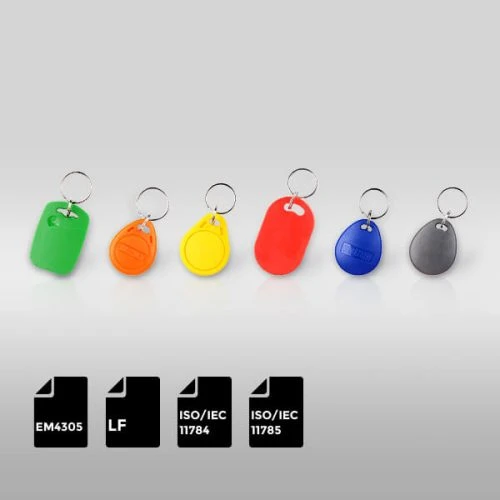
ABS RFID KEY-FOB Tag EM4305
The ABS RFID Key-Fob Tag integrates the EM4305 chip and features a compact, durable ABS housing. Designed for LF (125 kHz) applications, it is ideal for access control, employee time tracking, asset management, loyalty systems, and personal or pet identification. This portable and cost-effective tag offers reliable performance in diverse environments.



 EN
 ES
 JA