


In today’s RFID reader market, prices vary dramatically—from basic models costing just a few dozen dollars to advanced units priced in the thousands. This wide range in RFID tag reader price is driven by several key cost factors, including frequency type, read range, and feature set. For businesses and procurement professionals, understanding these factors is essential to making informed purchasing decisions that balance budget with performance. In this article, we’ll break down the major elements that influence pricing across the RFID reader market and help you identify the best solution for your specific needs.
How Frequency Type Affects RFID Tag Reader Price
The price of an RFID tag reader is largely influenced by the frequency type it uses. Different RFID frequency bands come with varying capabilities in terms of read range, data transmission speed, resistance to interference, and typical use cases. These differences translate directly into cost variations among devices.
1. Low Frequency (LF – 125kHz or 134.2kHz)
- Pricing: LF readers are generally the most affordable option among the three frequency categories, making them ideal for budget-sensitive projects.
- Read Capabilities: Short read range (typically under 10 cm) and slower data transmission speeds.
- Common Applications: Access control, animal identification (e.g., pets or livestock), and certain industrial automation systems.
- Advantages: Strong penetration through materials like water, the human body, and wood; better performance around metal.
- Limitations: Limited data transfer speed and not suitable for complex or high-volume data exchanges.
- Typical Price Range: Approximately $10–30 USD per unit, depending on interface type and features.
2. High Frequency (HF – 13.56MHz)
- Pricing: Moderately priced and one of the most commonly used frequencies in the market.
- Read Capabilities: Typical read range from a few centimeters up to about 1.5 meters, with faster data transmission than LF.
- Common Applications: Transit cards, building access systems, library checkout systems, student ID cards, and NFC-enabled mobile payments.
- Advantages: Globally standardized (e.g., ISO/IEC 14443, ISO/IEC 15693), good interoperability, and support for NFC functions.
- Limitations: More sensitive to metal and liquids, which may require specialized antennas or design to minimize interference.
- Typical Price Range: Approximately $25–80 USD per unit. Feature-rich models may cost more.
3. Ultra High Frequency (UHF – 860 to 960MHz)
- Pricing: UHF readers tend to be more expensive, though entry-level models have become more affordable as adoption increases.
- Read Capabilities: Read range can extend to over 10 meters or more and supports multi-tag reading (anti-collision).
- Common Applications: Warehouse logistics, supply chain tracking, vehicle access, smart retail, and airport baggage handling.
- Advantages: Long-range reading, fast identification, and the ability to scan multiple tags at once—ideal for high-volume or wide-area data collection.
- Limitations: More sensitive to interference from metals and liquids; may require special tags or shielding. System setup often requires professional planning.
- Typical Price Range: Approximately $50–200 USD per unit, depending on antenna count, power output, and communication protocols supported.
Summary and Selection Advice
As a general rule, the higher the frequency, the longer the read range and the more advanced the reader’s capabilities—and the higher the price. Therefore, when selecting an RFID tag reader, it’s crucial to balance performance needs with budget constraints. Choosing the right frequency band for your specific application can help avoid unnecessary costs or underperformance in the field.
How Features and Interfaces Affect RFID Tag Reader Price
The price of an RFID tag reader isn’t just determined by its frequency and read range—its communication interfaces, built-in features, and environmental durability also play a significant role. Generally, the more advanced the features and the more robust the construction, the higher the cost.
1. Communication Interface Types and Cost Impact
RFID readers connect to control systems or cloud platforms via various communication interfaces, and each type affects pricing differently.
Wiegand / RS232 (Legacy Interfaces)
- Characteristics: Simple communication protocols, easy wiring, commonly used in traditional access control systems.
- Advantages: Low hardware cost and easy installation and maintenance.
- Limitations: Short communication distance, slower data transfer speeds, and no support for remote configuration or networked management.
- Pricing Impact: Readers using these interfaces tend to be on the lower end of the price spectrum—ideal for small-scale or budget-conscious projects.
RS485 / TCP-IP / Wi-Fi (Modern Interfaces)
- Characteristics: Support for long-distance, high-speed communication, and remote management via networking.
- Advantages: Centralized control, easy integration across multiple devices—ideal for smart buildings, enterprise campuses, and industrial automation.
- Limitations: Requires a more stable network environment and professional installation.
- Pricing Impact: Devices with these interfaces are more expensive due to the added communication modules and configuration options.
2. Additional Functional Capabilities
Modern RFID readers are evolving beyond basic tag scanning, increasingly integrating advanced technologies for broader functionality.
Multi-Protocol and Multi-Tag Support
- Readers that support NFC, ISO/IEC multi-standard tags, or both offer greater compatibility and flexibility.
- These are well-suited for applications like schools, offices, and public transport, but typically come at a higher cost.
Integration with Other Technologies
- Support for Bluetooth, 4G/5G, cloud platforms, or mobile app access adds convenience and scalability.
- Advanced models may include biometric authentication features like facial recognition, fingerprint scanning, or even temperature sensing.
- The more integrated the system, the higher the price—but these enhancements improve user experience and system security significantly.
3. Enclosure and Environmental Durability
In industrial or outdoor environments—where water, dust, extreme temperatures, or explosive hazards are present—RFID readers must be built to industrial-grade standards:
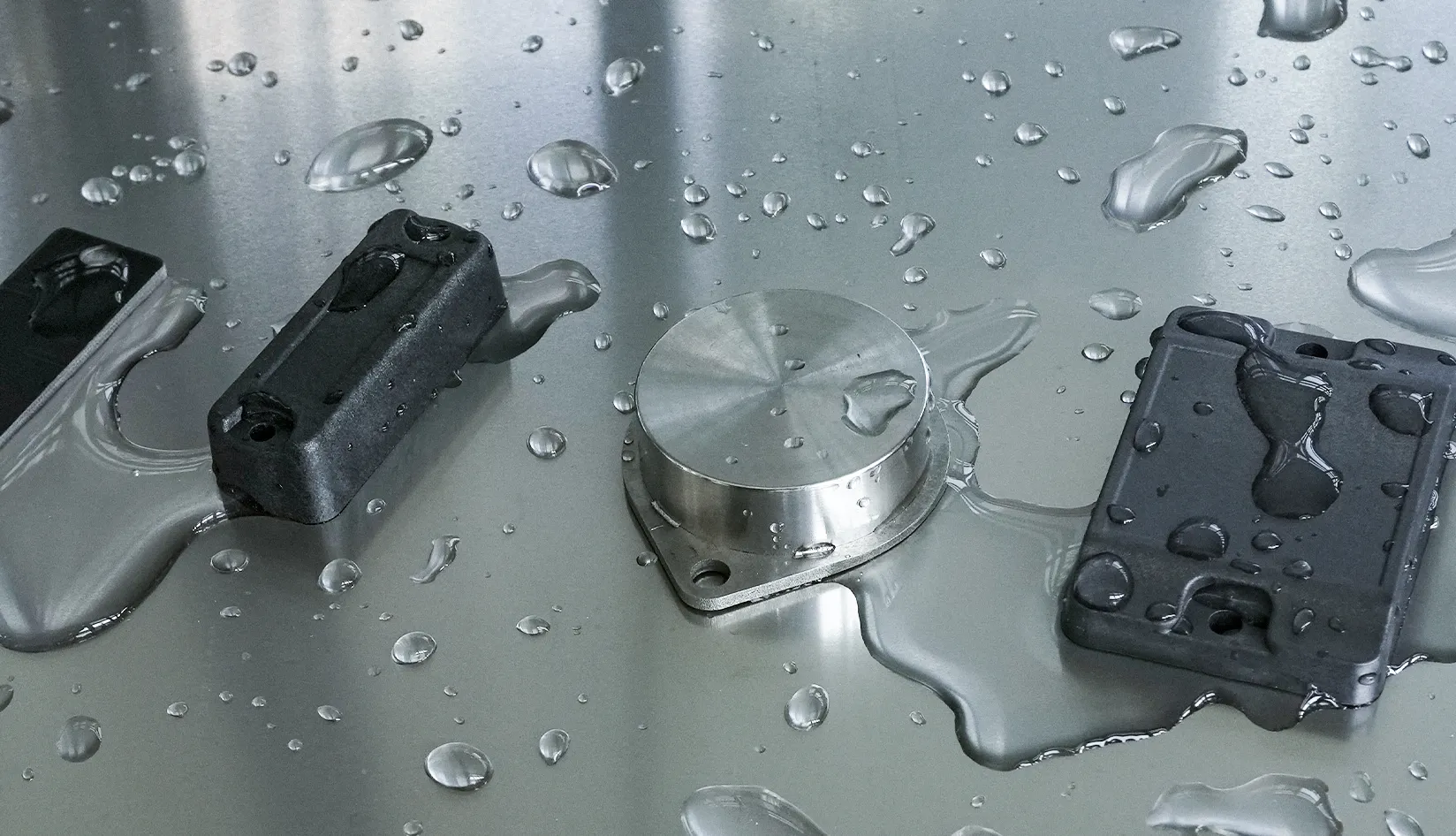
- Waterproof and Dustproof: IP65 or IP67-rated housings make devices suitable for outdoor use, parking systems, and factories.
- Explosion-Proof or Temperature Resistant: Necessary for oil & gas, energy, and mining sectors.
- UV-Resistant and Corrosion-Proof Materials: Ideal for long-term outdoor or chemical exposure.
These industrial RFID readers are typically 2 to 3 times more expensive than standard models and require more specialized manufacturing.
Summary
The pricing gap among RFID readers based on features and interface types can be substantial:
- Basic models with Wiegand interface and single-frequency, for indoor use: around $15–50.
- Mid-range models with remote communication and multi-protocol support: typically $80–200.
- High-end industrial or biometric-enabled readers with cloud connectivity: often exceed $300+.
To avoid underperformance or overspending, it’s essential to match the reader’s features and durability with your actual application needs.
How Application Scenarios and Purchase Volume Affect RFID Reader Pricing
Beyond technical specifications, the price of an RFID tag reader is also heavily influenced by where and how it will be used, as well as the scale of procurement. Different industries demand specific features and configurations, and bulk purchases often lead to significant cost advantages.
1. Single-Unit vs. Bulk Purchase: Volume Drives Unit Cost
Single-Unit Orders (Small-Scale or Pilot Projects)
- Ideal for developers, small businesses, or trial deployments—usually 1 to 10 units.
- Pricing: Charged at full retail price with little to no discount.
- Recommendation: Opt for plug-and-play models with reliable support and proven performance.
Bulk Orders (RFID Bulk Pricing)
- Common in enterprise-wide rollouts, government bids, systems integrators, or OEM partnerships.
- Pricing Advantages:
- Typically receive 5%–30% in volume discounts.
- May include custom firmware or hardware configurations.
- Direct-from-manufacturer or branded channels offer greater pricing flexibility.
- Use Cases: Smart campuses, access control for office buildings, factory-wide deployments, retail chains.
2. Industry Applications Affect Selection and Cost
Warehouse & Logistics (RFID Reader for Warehouse)
- Requires long read ranges, anti-collision support, and high reliability in harsh conditions.
- Often uses UHF readers with external antennas or handheld terminals.
- Needs to be dustproof, rugged, and fast.
- Price Range: $120–450 depending on performance and setup.
Smart Campus & Education (RFID for School Access)
- One-card systems combine access control, library checkout, student tracking, and payments.
- Typically uses 13.56 MHz HF readers, often with NFC support.
- Cost-effective bulk deployments across dormitories, libraries, and classrooms.
- Price Range: $25–100, with optional Bluetooth/NFC modules.
Industrial Automation & Manufacturing
- Requires IP65+ protection, anti-metal interference, and robust build quality.
- Often supports RS485, Modbus, or TCP/IP industrial protocols.
- Higher cost due to enhanced durability and industrial certification.
Medical & Healthcare Facilities
- Used for secure staff access, asset tracking, medication verification, and patient data management.
- Must comply with medical regulations and prioritize data security.
- May be handheld or integrated into networked access control systems.
- Price Range: $50–180 depending on integration and safety features.
Summary
RFID reader pricing is shaped not just by hardware specs, but also by how and where it’s used—and how many units are ordered:
- Application complexity drives the need for specialized features and durable designs;
- Bulk orders significantly reduce per-unit costs, especially in enterprise deployments;
- Businesses and system integrators should align reader features and volume strategy with their specific industry use cases to maximize ROI.
Conclusion: How to Choose the Right RFID Tag Reader
When selecting an RFID tag reader, it’s essential to consider the frequency type, read range, and specific feature requirements to ensure a perfect match for your application. Focus on the best value rather than blindly chasing the highest or lowest price to maximize your return on investment. We recommend consulting with professional manufacturers or system integrators to customize the optimal solution for your needs, enabling an efficient and secure RFID deployment.
FAQs
What are the main security risks associated with RFID tag readers and how can they be mitigated?
Common security risks include eavesdropping, cloning, and unauthorized access. These can be mitigated by using encryption protocols, secure authentication methods, and shielding techniques to prevent signal interception. Additionally, integrating multi-factor authentication (such as biometrics) enhances overall system security.
How does environmental interference affect RFID reader performance and what solutions exist?
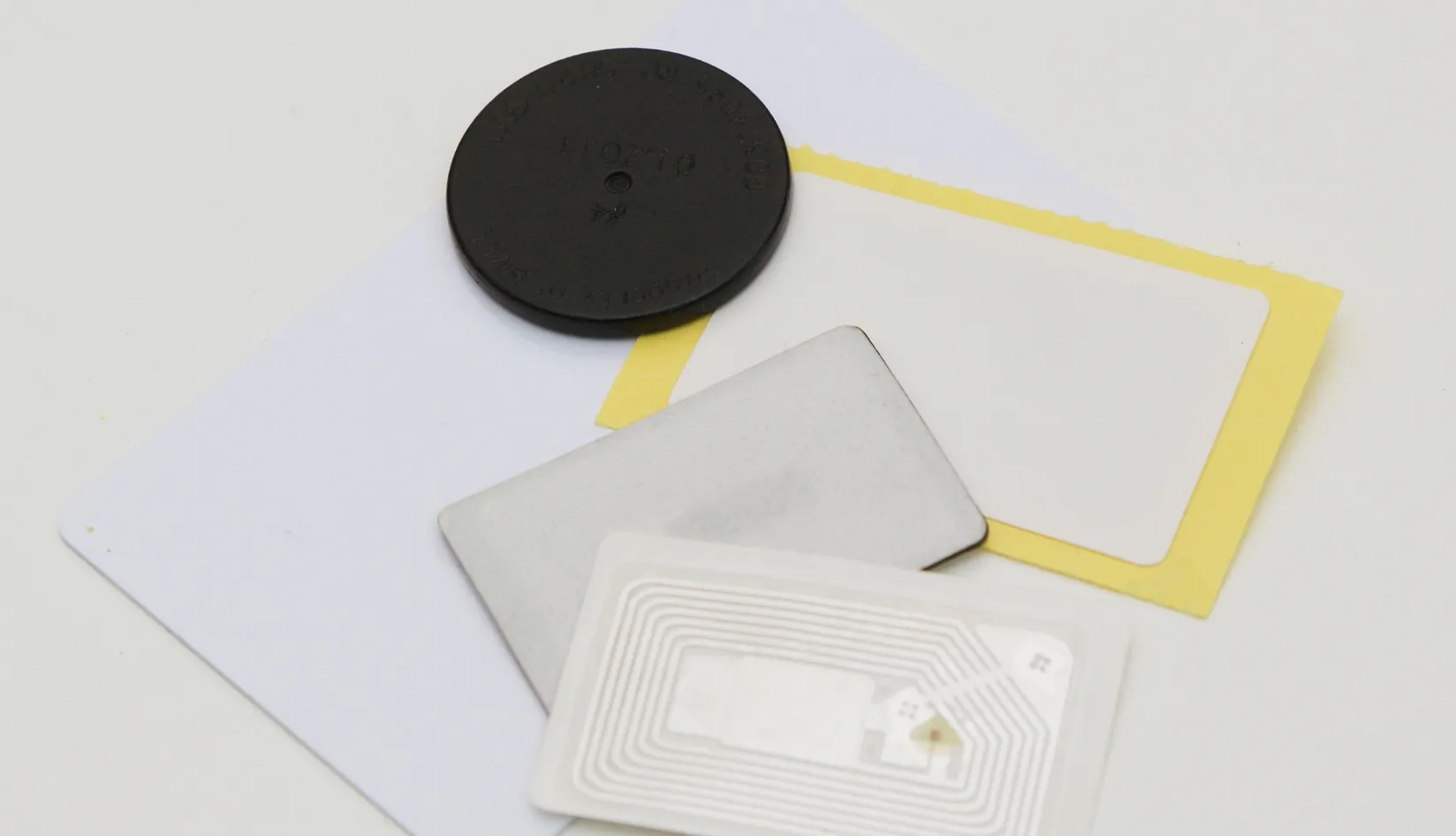
Environmental factors like metal surfaces, liquids, and electromagnetic interference can degrade RFID performance by causing signal reflection or absorption. Solutions include using specially designed anti-metal tags, placing readers strategically, and employing frequency bands less sensitive to interference (e.g., UHF with proper shielding).
Can RFID tag readers be integrated with existing security and building management systems?
Yes, modern RFID readers often support multiple communication protocols (like Wiegand, TCP/IP, RS485) that allow seamless integration with access control panels, CCTV, alarm systems, and smart building platforms, enabling centralized management and enhanced operational efficiency.
Recommended Products
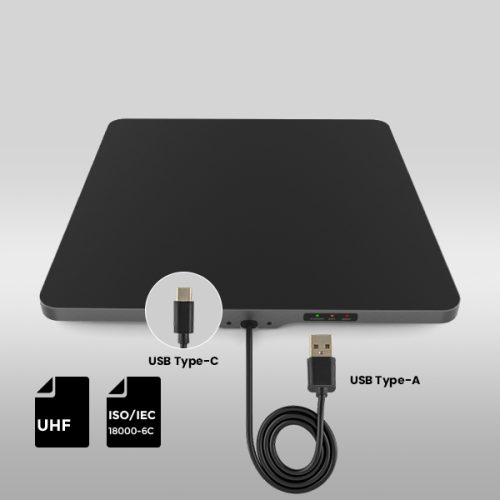
UHF Desktop RFID Reader / Writer AZD-R1
UHF desktop RFID Reader AZD-R1 is a compact, reliable solution designed for efficient asset tracking, inventory management, and data processing in office, retail, and logistics scenarios. This UHF desktop RFID Reader supports Windows, Android, and iOS, combining Bluetooth and USB Type-C connectivity for flexible deployment. With a short-range read distance up to 50 cm and a high-speed anti-collision algorithm, it ensures accurate multi-tag reading without interference, making it ideal for smart checkouts, warehouse shelves, identity verification, and more.


 EN
EN  ES
ES  JA
JA