

RFID Data Collection: How Automated Tracking Transforms Inventory and Asset Management
In modern supply chains, manufacturing environments, and large-scale asset-intensive operations, data accuracy is no longer optional—it is foundational. Yet many organizations still rely on manual scanning, barcode systems, or fragmented tracking methods that introduce delays, errors, and blind spots. RFID data collection changes this paradigm. By enabling automatic, real-time identification and capture of physical assets without line-of-sight scanning, RFID transforms how organizations collect, process, and act on operational data.
1. What Is RFID Data Collection?
At its core, RFID data collection refers to the process of automatically identifying and capturing data from tags attached to objects using radio frequency identification technology. Unlike traditional barcodes, which require a direct line of sight and manual intervention, RFID systems can read multiple tags simultaneously from a distance.
An effective RFID system typically consists of three primary components:
- RFID Tags: These contain electronically stored information and are attached to assets or inventory.
- RFID Readers: Devices that emit radio waves and receive signals back from the tags.
- Middleware and Software: Systems that process the raw data and integrate it into Enterprise Resource Planning (ERP) or Warehouse Management Systems (WMS).

This automated flow of information ensures that data is captured in real-time, eliminating the latency and human error associated with manual data entry. For international businesses, this means a “single source of truth” that spans across borders and time zones.
2. How RFID Data Collection Works
RFID operates through electromagnetic communication between a reader and a tag.
The process typically follows these steps:
- The RFID reader emits a radio frequency signal.
- Tags within range receive the signal and respond with stored data.
- The reader captures the returned signal.
- Middleware processes and filters duplicate or irrelevant reads.
- Cleaned data is sent to enterprise systems for analysis or action.
This entire cycle occurs in milliseconds and can process multiple tags simultaneously—something barcode systems cannot achieve.
3. From Manual to Automated: The Great Transformation
The shift from manual tracking to automated RFID data collection represents a paradigm shift in how companies perceive their physical footprint. Manual inventory counts are notoriously labor-intensive, often taking days to complete and yielding accuracy rates as low as 60-70%.

In contrast, automated tracking transforms these operations by:
- Removing Human Error: Manual scanning is prone to fatigue and oversight. RFID captures data with near-perfect accuracy without human touch.
- Accelerating Throughput: Goods can be scanned as they move through portals at high speeds, significantly reducing the time spent at receiving and shipping docks.
- Enhancing Granularity: While barcodes might identify a product type, RFID can identify unique individual items, providing a “digital birth certificate” for every asset.
4. Transforming Asset Management with RFID
While inventory management focuses on goods for sale, asset management involves tracking the tools, equipment, and infrastructure that keep a business running. RFID data collection is equally revolutionary in this space.
- Fixed Asset Tracking: From IT equipment in a London office to heavy machinery in a German factory, RFID allows for instant auditing of high-value assets.
- Maintenance and Compliance: Tags can store maintenance history. When a technician scans a piece of equipment, they immediately see its service record, ensuring compliance with safety regulations.
5. Key Benefits in Inventory Management

Inventory is often the largest asset—and the largest liability—on a company’s balance sheet. Optimizing its management through RFID data collection offers several transformative benefits:
5.1 Real-Time Inventory Visibility
Traditional systems provide a “snapshot” of inventory that is often outdated by the time it is reviewed. RFID provides a live stream of data. Whether an item is in the warehouse, on a delivery truck, or on a retail shelf, its location is known instantly.
5.2 Drastic Reduction in Out-of-Stock Scenarios
In the retail sector, out-of-stock items lead to lost sales and diminished customer loyalty. Automated tracking alerts managers the moment stock levels dip below a certain threshold, enabling proactive replenishment.
5.3 Improved Order Accuracy
By using RFID portals at shipping bays, companies can automatically verify that the correct items are being loaded onto the correct trucks. This reduces the costly “reverse logistics” associated with shipping errors.
5.4 Optimized Space Utilization
With precise data on item locations, warehouse managers can optimize floor plans, reduce “dead zones”, and implement more efficient picking routes, ultimately lowering overhead costs.
6. Real-World Use Cases
The versatility of RFID data collection allows it to solve unique challenges across various sectors in the market.
6.1 Retail Supply Chains & Omnichannel Logistics
Global retail pioneers like Zara have institutionalized RFID data collection across their entire tracking infrastructure. By encoding unique identifiers at the manufacturing source, they achieve absolute inventory synchronization from central distribution centers to individual retail hubs.
This edge-to-cloud visibility allows enterprise networks to complete full-store inventory cycle counts in hours rather than days , achieving up to 99% inventory accuracy and ensuring that complex omni-channel orders (such as Buy Online, Pick Up In-Store) are fulfilled without stockout friction.
6.2 Manufacturing and Industry 4.0
In modern Smart Factory environments—such as automotive assembly lines—RFID telemetry is critical for Work-in-Process (WIP) tracking. Components are fitted with ruggedized, heat-resistant RFID tags that communicate with localized antennas at each robotic workstation.
This real-time data collection eliminates manual logging , ensuring that the exact specifications for custom builds are validated automatically as parts move down the high-speed line. The result is a highly adaptive, error-free Just-in-Time (JIT) manufacturing workflow.
6.3 Healthcare and Pharmaceuticals

Hospitals use RFID to track mobile medical equipment like ventilators and pumps, ensuring they are available for patient care. In the pharmaceutical supply chain, RFID helps combat counterfeit drugs by providing a secure, traceable history from the manufacturer to the pharmacy.
6.4 Logistics and Transportation
Major logistical hubs utilize automated RFID reader portals to streamline the check-in and check-out tracking of intermodal shipping containers and trailers. By automatically capturing asset data as vehicles pass through terminal gates at speed , facilities eliminate manual gate logs and heavily reduce gate dwell times. This automated data entry accelerates supply chain velocity, lowers labor overhead, and provides international logistics partners with accurate, real-time cargo ETA predictions.
7. Navigating Global Standards and Regulations
For companies, understanding the regulatory landscape is essential for successful RFID data collection implementation.
7.1 Frequency Allocations: FCC vs. ETSI
RFID systems operate on different frequencies depending on the region.
- North America (FCC): Typically operates in the 902-928 MHz range.
- Europe (ETSI):Traditionally operated in the 865-868 MHz range, with newer “Upper Band” allocations at 915-921 MHz to better align with global standards.
Using “Global” tags that can function across these frequencies is a common strategy for international logistics.
7.2 Data Privacy and GDPR
In Europe, the General Data Protection Regulation (GDPR) places strict requirements on how data is handled. While RFID tags usually track objects rather than people, if a tag can be linked to an individual (e.g., a loyalty card or a high-end luxury item), businesses must ensure they have “privacy by design” in their RFID data collection strategy.
8. Best Practices for Implementing RFID Data Collection
Implementing an automated tracking system is a journey, not a single event. To maximize ROI, businesses should follow these steps:
- Conduct a Site Survey: Radio waves can be affected by metal and liquids. A professional site survey ensures that readers and antennas are placed for optimal performance.
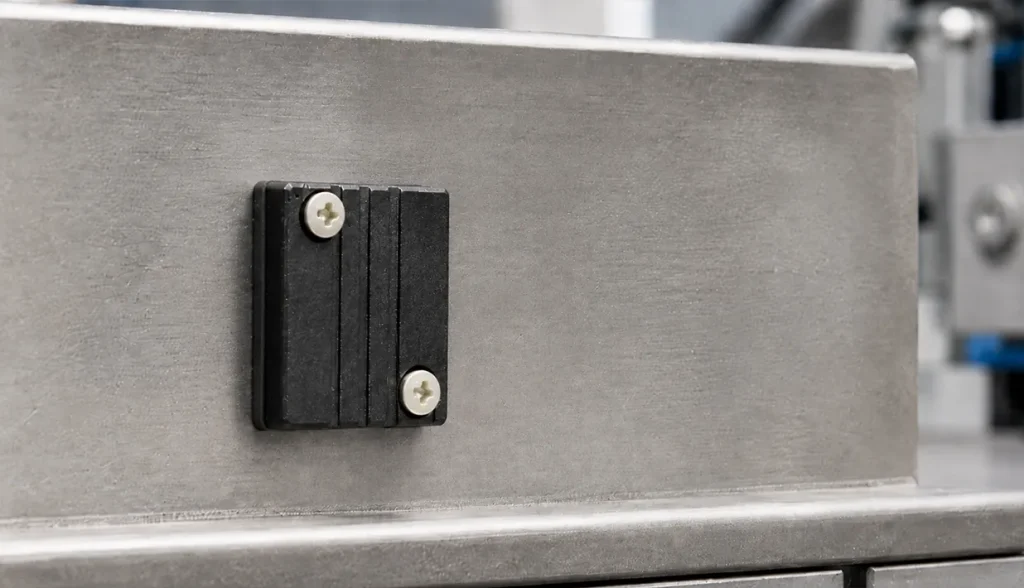
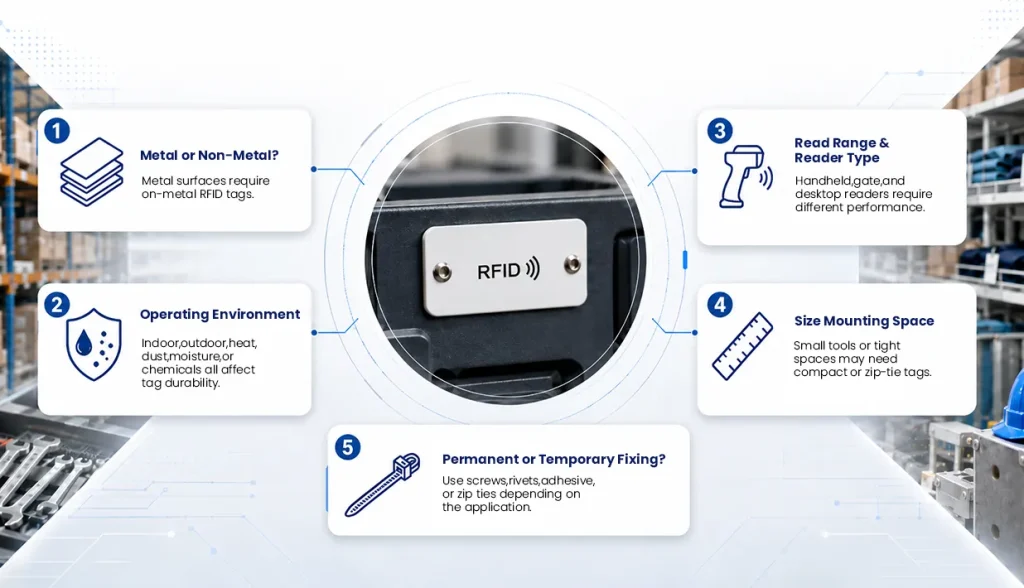
- Choose the Right Tag: Not all tags are created equal. Some are designed for harsh industrial environments, while others are optimized for high-volume retail.
- Integrate with Existing Systems: The true value of RFID data collection is realized when the data flows seamlessly into your ERP or WMS, enabling data-driven decision-making.
9. The Future: AI, IoT, and Beyond
The evolution of RFID data collection is increasingly intersecting with other cutting-edge technologies. We are moving toward an era of “Ambient Intelligence,” where the environment itself is aware of the assets within it.
- AI-Driven Analytics: By applying machine learning to RFID data, companies can predict demand patterns and identify supply chain bottlenecks before they occur.
- Integration with IoT: RFID is often the “first mile” of the Internet of Things (IoT). When combined with sensors that track temperature or humidity, RFID provides a comprehensive view of an asset’s condition and location.
10. Conclusion
RFID data collection represents a major shift in how organizations capture and utilize operational data. By eliminating manual scanning and enabling real-time visibility, RFID transforms inventory management and asset tracking into automated, data-driven processes.
If you are exploring RFID-based tracking, selecting the right RFID tags and system architecture is critical to long-term performance and scalability. RFIDTag provides industrial-grade RFID tags designed for reliable data collection across inventory and asset management applications.
Recommended Product

NXP UCODE® 8 ABS and Nylon RFID Cable Tie Tag
The NXP UCODE® 8 ABS and Nylon RFID Cable Tie Tag combines robust ABS and nylon materials with reliable RFID technology, ensuring stable performance in demanding industrial or commercial environments. Perfect for bundling cables while enabling precise tracking of valuable assets and inventory, this tag delivers durable security with easy integration into existing RFID systems.

Concrete Alien Higgs® 9 PPS RFID Tag | 46.5×31.5 mm
The Alien Higgs® 9 Concrete RFID Tag uses durable PPS housing for outstanding heat, impact and corrosion resistance. Ideal for embedding into concrete structures, this UHF tag provides long-range performance and ensures accurate tracking in demanding construction and civil engineering projects.

Integrated UHF RFID Reader | Powered by Impinj®E710
This integrated UHF RFID reader features a high-gain antenna and compact design, built on the Impinj® E710 platform. It supports multiple interfaces including RS-232, RJ45, and GPIO, making it a flexible choice for logistics, document control, and production line monitoring. With its stable RF performance and plug-and-play integration, this integrated UHF RFID reader is ideal for fixed installations in industrial or library environments.

















 EN
 ES
 JA