


Imagine having $4 billion worth of unsold clothes sitting in warehouses globally. In 2018, fashion giant H&M faced exactly this nightmare—a massive inventory pileup that threatened its retail dominance. To survive, the retailer had to pivot fast. The cornerstone of their recovery strategy? The H&M RFID tag system.
In this article, we will break down exactly how they leveraged smart tracking to eliminate stockouts, slash inventory errors, and build a highly scalable apparel supply chain that every modern clothing brand can learn from.
Why Barcodes Failed H&M: The Switch to RFID Technology
Before the turnaround, H&M relied heavily on traditional barcodes. While cost-effective at first glance, barcodes require a direct line-of-sight and manual, one-by-one scanning. For a global brand shifting billions of garments a year, this manual process became a massive bottleneck, leading to the $4B inventory blindness.
The H&M RFID tag system changed the game by utilizing Ultra-High Frequency (UHF) EPC Global Gen2 technology. This allows store associates and warehouse scanners to read hundreds of items simultaneously from several meters away—even if the garments are packed tightly in shipping boxes.
To understand why leading apparel brands are phasing out traditional tracking, here is a direct comparison of how these two technologies perform in a live retail environment:
| Feature | Traditional Barcode | Retail UHF RFID Tag |
| Line-of-Sight | Required. Every tag must face the laser scanner directly. | Not Required. Can read tags through boxes, fabric, or hangers. |
| Scanning Speed | Slow. One item at a time (approx. 2–3 seconds per item). | Instant. Bulk scanning of up to 200+ tags per second. |
| Inventory Accuracy | Hovering around 65–70% due to human error and missed scans. | Boosted to 95–99% with automated real-time tracking. |
| Data Capability | Read-only. Identifies the product category, not the specific piece. | Read/Write. Tracks a unique Electronic Product Code (EPC) for every single garment. |
| Labor Cost | High. Requires hours of manual labor for weekly stock counts. | Low. Reduces cycle-counting time by up to 90%. |
Understanding RFID Technology
RFID is a powerful technology that uses radio waves to automatically identify and track items. In the retail sector, this innovation is revolutionizing how businesses manage their inventory and operations.
Unlike traditional barcode systems that require a direct line of sight to scan, RFID tags can be read quickly and efficiently, even when items are not perfectly aligned or visible.

How H&M Leverages RFID Tags in Its Retail Stores?
H&M, a global fashion leader, has strategically integrated RFID technology into its retail operations to gain a competitive edge.
Confronted with a $4 billion inventory surplus and a 61% decline in profits in early 2018, H&M adopted RFID technology and GS1 standards as part of its recovery and digital transformation plan. By implementing RFID in 1,800 stores across 12 countries in 2018, H&M enhanced stock accuracy, allowing for more frequent and accurate inventory counts. This transition led to a decrease in end-of-season markdowns and an increase in full-price sales.
How H&M deploys RFID Across the Supply Chain
H&M did not just slap smart labels on clothes at the storefront; they re-engineered their entire lifecycle tracking. Here are the three pillars of the H&M RFID tag implementation:
Source Tagging at the Manufacturing Plant
Instead of labeling garments upon arrival at retail stores, H&M enforces source tagging—embedding RFID tags directly at the garment factories. This ensures 100% visibility from the moment a piece of clothing leaves the production line. When shipping cartons arrive at distribution centers, automated RFID tunnels scan entire pallets in seconds without opening a single box.
Maximizing In-Store Stock Availability
The most direct impact of the H&M RFID tag system is on the sales floor. In traditional retail, item-level stock inaccuracy hovers around 35%, meaning a customer might leave because they can’t find a Size M shirt, even though it’s buried somewhere in the backroom. H&M staff use handheld RFID readers to complete full-store inventory counts in minutes rather than hours. This ensures that the retail floor is always replenished, maximizing sales opportunities.
Benefits that RFID Tags Bring to H&M Retail Business
By incorporating RFID technology into its fundamental operations, the company established a foundation for more flexible, data-informed retailing. Below are the main advantages that RFID has provided to H&M’s retail sector.
Enhance Inventory Management
Traditional inventory methods often involve manual counting, which is not only time-consuming but also prone to human error. With RFID, H&M can achieve near real-time inventory accuracy. This level of precision allows them to know exactly what products are in stock, where they are located, and in what quantities, colors, and sizes.
This granular visibility is crucial for optimizing stock levels, reducing instances of overstocking or understocking, and minimizing the need for costly emergency shipments. Furthermore, the speed at which RFID enables inventory counts—transforming hours into minutes—frees up valuable staff time. Employees can then dedicate more attention to customer service and other value-added activities, rather than being bogged down by tedious stock checks.
Improve Customer Shopping Experience and Satisfaction
H&M has implemented intelligent fitting rooms in its retail locations. Shoppers can swiftly access comprehensive details about the items they are trying on, including size, color, material, and more, through RFID technology. Furthermore, H&M utilizes RFID technology to gather data on customers’ shopping habits and preferences, enabling the provision of tailored recommendations and services.
For instance, when a shopper tries on a specific garment, the system can suggest additional complementary clothing or accessories based on their past data and current preferences, enhancing the overall shopping experience and customer satisfaction.

Prevent Product Theft through Alarm
Beyond inventory and customer experience, RFID technology offers a robust solution for loss prevention, particularly in preventing product theft. Each RFID-tagged item acts as a unique identifier, making it significantly harder for unauthorized removal from the store.
RFID tags can be configured to trigger an alarm if they are taken from the store without being correctly deactivated. This feature can discourage potential thieves and assist store staff in recognizing and capturing shoplifters.
Increased Overall Sales
The cumulative effect of enhanced inventory management, improved customer experience, and reduced theft directly translates into better brand reputation and increased overall sales.
With accurate stock visibility, H&M can minimize lost sales due to out-of-stock situations, ensuring that popular items are always available on the shelves. The ability to quickly locate specific products for customers, whether in the backroom or on the sales floor, also prevents missed sales opportunities.
By creating a seamless and satisfying journey, RFID helps convert browsing into buying. The reduction in shrinkage due to theft also directly contributes to higher revenue.
What can Other Fashion Retailers Learn from H&M RFID Tags?
H&M’s successful integration of RFID technology offers invaluable lessons for other fashion retailers looking to modernize their operations and enhance competitiveness.
The primary takeaway is the undeniable power of precise inventory visibility. By achieving near-perfect stock accuracy, retailers can significantly reduce lost sales, optimize inventory levels, and improve overall operational efficiency. This precision allows for better planning, reduced waste, and a more agile response to market demands.
Another crucial lesson is the transformative potential of RFID in elevating the customer experience. Beyond mere stock tracking, RFID can enable innovative in-store features that engage customers and personalize their shopping journey. Retailers should explore how RFID can facilitate interactive fitting rooms, faster checkouts, and more accurate online-to-offline inventory synchronization.
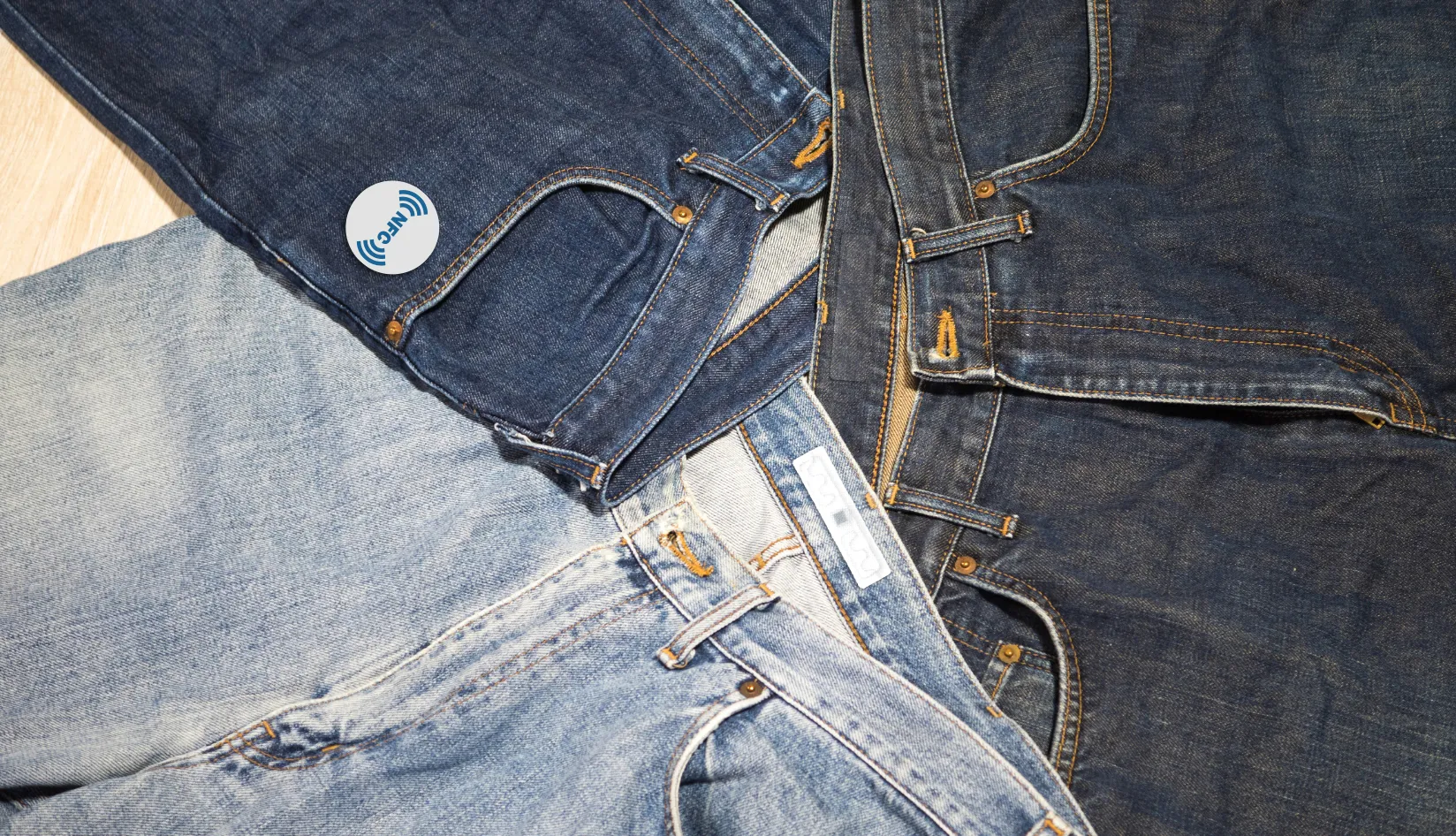
Furthermore, an increasing number of apparel brands are utilizing NFC to enhance customer experience and strengthen brand trust. To explore how this works, check out this deep dive into NFC clothing tags as a game-changing tech for apparel brands.
Conclusion
The technology that rescued H&M is completely accessible to your business today. Implementing an RFID infrastructure does not require a conglomerate’s budget—it requires the right strategic partner. RFIDTag provides reliable RFID tags, customized solutions, and manufacturing expertise to help businesses build smarter, more visible, and more efficient supply chains. Contact us today to discuss how RFID can support your operational goals.
FAQs
Is RFID expensive to implement for smaller retailers?
Although the upfront expense of implementing RFID can be significant, it is increasingly becoming accessible for smaller retailers, particularly due to the declining prices of tags and the emergence of more budget-friendly options. Smaller retailers have the opportunity to adopt RFID gradually, beginning with a pilot program that can alleviate the initial financial burden and evaluate the technology’s performance before a comprehensive deployment.
Is customer privacy affected by RFID tags in clothing?
RFID tags in clothing pose minimal risk to customer privacy, as most are passive and only transmit basic product information when activated by a reader. They do not store personal data or track customers’ post-purchase behavior. To further protect privacy, many retailers, like H&M, deactivate or remove these tags at checkout or use easily discardable labels. When used transparently, RFID technology can improve retail operations without compromising customer privacy.
Can RFID be integrated with existing POS or ERP systems?
Yes, RFID technology can be effectively integrated with existing Point of Sale (POS) and Enterprise Resource Planning (ERP) systems. While integration may require some custom development and IT support to ensure compatibility and smooth data exchange, many RFID solution providers offer robust integration capabilities and APIs to facilitate this process.

NXP UCODE® 8 ABS UHF RFID EAS Smart Security Tag
The NXP UCODE® 8 UHF RFID EAS Smart Security Tag is a rugged, reusable hard tag that combines UHF RFID and EAS technology for efficient inventory tracking and theft prevention. Built with durable plastic housing and powered by NXP UCODE® 8, it offers a cost-effective solution for retail apparel management. Easily removed with a magnetic detacher, this dual-function tag enhances supply chain visibility while reducing shrinkage and out-of-stocks.

Impinj® Monza® R6-P ABS UHF RFID EAS Smart Security Tag
The Impinj® Monza® R6-P UHF RFID Pin Tag is a compact and durable tag designed for apparel security and inventory tracking. Operating at 860–960 MHz and compliant with EPC Global Gen2v2 and ISO/IEC 18000-6C protocols, it features 128 bits of EPC memory and 64 bits of user memory. Made of ABS with an IP54 rating, this Ø34×5 mm tag weighs only 2.7g and uses a pin buckle design for easy attachment to garments in retail environments.



 EN
 ES
 JA