


Have you ever noticed a tiny, rectangular bump inside your Lululemon tag and wondered if it’s a tracking device? Behind Lululemon’s success, beyond exceptional design and marketing strategies, lies a critical technology playing an indispensable role—radio frequency identification (RFID) technology. This technology not only helps Lululemon optimise operational efficiency but also significantly enhances the customer shopping experience. This article will delve into the specific applications of RFID in Lululemon clothing tags and explore how they are propelling the entire apparel retail industry toward a smarter, more efficient future.
1. What is RFID technology?

RFID is a contactless automatic identification technology. It automatically identifies target objects and acquires relevant data via radio frequency signals without manual intervention. A complete RFID system typically consists of the following core components:
- RFID tags: Microchips and antennas attached to items for storing and transmitting data. In Lululemon’s case, these tags are cleverly integrated into clothing hangtags or sewn-in labels.
- RFID Reader: A device for reading and writing tag information, available in handheld or fixed configurations.
- RFID Antenna: Responsible for transmitting radio frequency signals between tags and readers.
- Data Processing System: Receives data transmitted by readers for processing, storage, and management.
Compared to traditional barcode technology, RFID offers significant advantages. Barcodes require optical scanners to scan each item individually and must be aligned, whereas RFID tags enable contactless, non-line-of-sight batch reading, greatly enhancing identification efficiency and accuracy. Each RFID tag possesses a unique Electronic Product Code (EPC), enabling precise identification and tracking of every individual item.
2. Why Did Lululemon Embrace RFID?
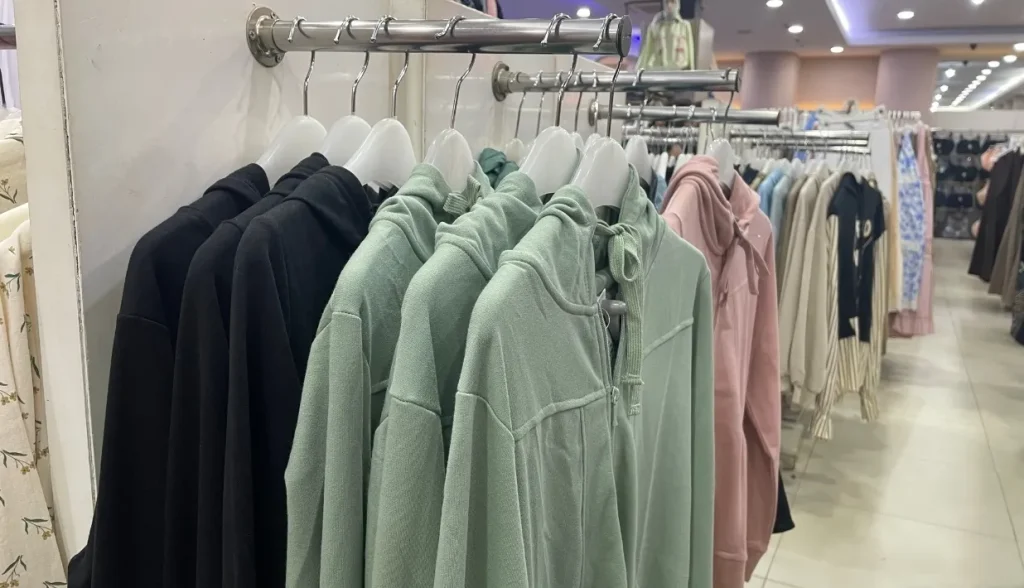
Lululemon’s decision to adopt RFID technology was not coincidental, but rather a strategic move to address numerous challenges arising from its rapid expansion and further enhance its core competitiveness. Key reasons include:
- Inventory Accuracy Challenges: As Lululemon’s product sales grew rapidly, particularly for popular items, inventory management in stores and warehouses became increasingly complex. Traditional inventory counting methods are time-consuming, labor-intensive, and prone to errors, leading to discrepancies between inventory data and actual stock levels, which impedes replenishment efficiency.
- Enhancing Customer Experience: Lululemon places significant emphasis on customer satisfaction. When shoppers encounter out-of-stock items while searching for specific sizes or colors in-store, they experience disappointment—a scenario the brand refers to as a “disappointer.” RFID technology enables real-time inventory visibility, reducing stockouts and ensuring customers consistently find desired products.
- Omnichannel Retail Strategy: In the digital age, omnichannel retail has become mainstream. Lululemon is committed to providing customers with a seamless shopping experience, whether browsing online, trying on in-store, or purchasing online with in-store pickup (BOPIS). RFID technology is key to enabling this strategy by ensuring online inventory displays match actual store stock, supporting various convenient shopping models.
- Operational Efficiency Optimization: RFID enables rapid, accurate inventory counts, reducing the time and labor required for manual audits. This not only lowers operational costs but also frees store staff to focus more on customer interactions and sales support. Additionally, real-time inventory data effectively minimizes SKU (Stock Keeping Unit) “decay” (i.e., products sitting idle too long or becoming lost), accelerating merchandise turnover.
3. How to Identify RFID Clothing Tags in Lululemon Apparel
If you’re curious whether your garment contains RFID, look for:
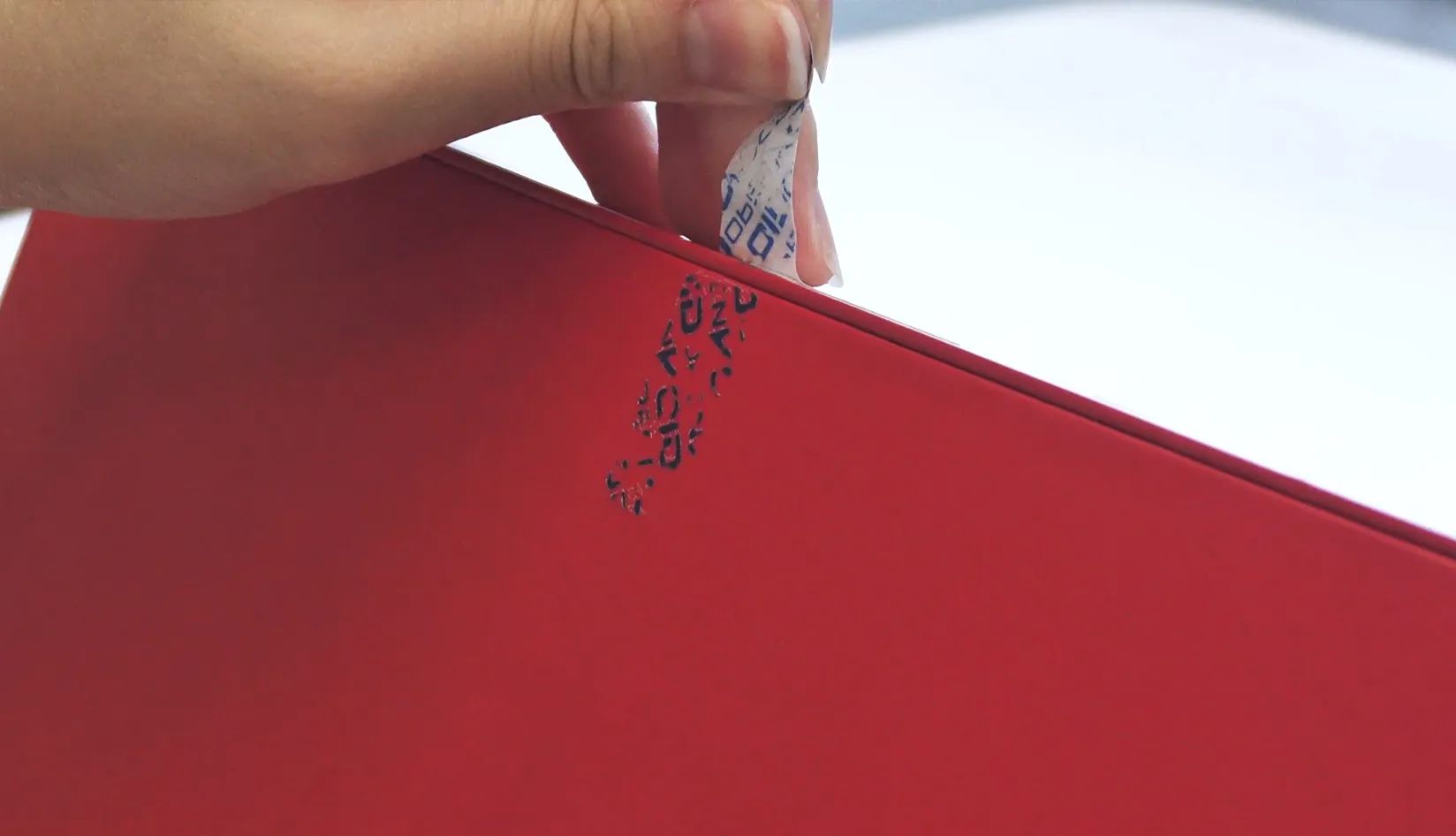
- A slightly thicker paper or fabric tag
- A thin rectangular inlay inside the label
- No visible chip — it’s laminated within the tag
- Placement near the price tag or care label
You usually won’t feel the chip unless you bend the tag carefully.
4. Specific Applications of RFID at Lululemon
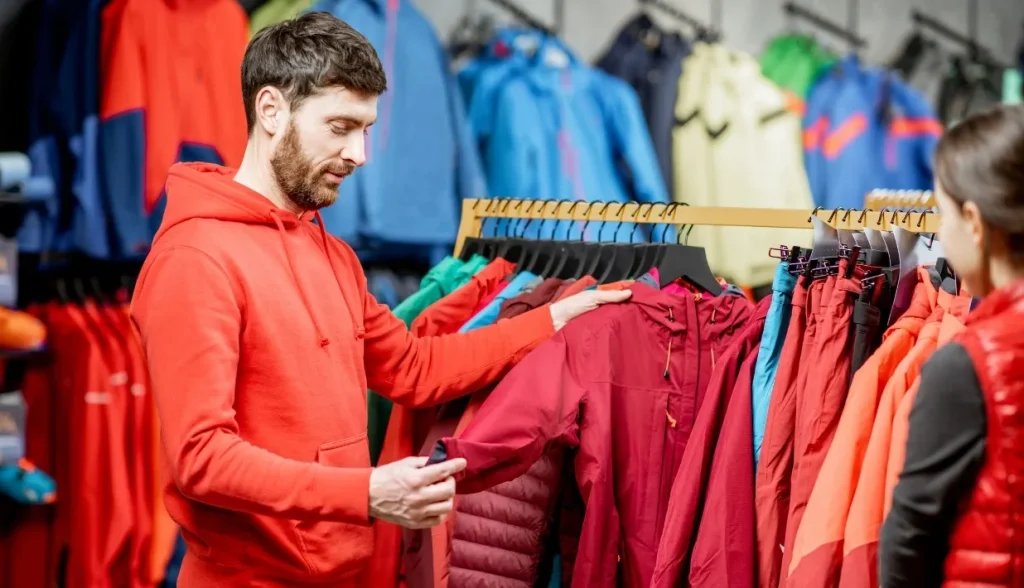
Lululemon has partnered with Nedap, a global leader in RFID solutions, to deploy the Nedap iD Cloud solution. This technology is being progressively rolled out across more than 600 Lululemon stores worldwide, aiming to optimize product supply and enhance the omnichannel customer experience.
- Real-time inventory data: Through Nedap iD Cloud, Lululemon gains access to real-time, accurate data on both in-store and online inventory. This means every RFID-tagged item can be precisely tracked from inventory receipt to sale. Store associates use handheld RFID readers to conduct rapid inventory counts without scanning individual items, significantly boosting efficiency. According to Nedap, RFID technology can elevate inventory accuracy to over 98%.
- Global Deployment: Lululemon began rolling out iD Cloud in North American stores in August 2022, completing the rollout by September. The system expanded to Europe, the Middle East, Africa, and Asia-Pacific in early 2023, optimizing inventory management worldwide. This global deployment ensures customers enjoy a consistent and efficient shopping experience regardless of location.
- Employee Empowerment: RFID technology enables store associates to interact with customers more confidently. When asked about an item’s availability, associates can instantly retrieve accurate information through the system and even inform customers about stock at nearby locations. This allows associates to spend more time providing personalized service and recommendations rather than searching for items in the backroom.
- Omnichannel Experience: RFID technology significantly enhances Lululemon’s digital experience. It provides accurate, real-time inventory visibility for the online store and supports critical fulfillment services like Buy Online, Pick Up In Store (BOPIS). Customers can check online for in-store availability and choose to pick up their order at the store, greatly improving shopping convenience.
5. The Transformation RFID Brings to the Apparel Industry

Lululemon’s success story epitomizes the widespread adoption of RFID technology in the apparel industry. This technology is fundamentally transforming every aspect of apparel retail:
- Inventory Management: RFID technology significantly boosts inventory accuracy from the traditional 65%-75% range to 98%-99%. This enables retailers to gain precise visibility into their stock levels, reducing stockouts or overstock issues caused by inaccurate inventory.
- Sales Growth: By ensuring product availability and optimizing merchandise displays, RFID helps minimize sales losses. Studies indicate retailers adopting RFID can achieve a 4% increase in revenue.
- Operational Efficiency: RFID automates inventory counting processes, reducing inventory time by 95% and significantly saving labor costs and time. Employees are freed from tedious counting tasks to focus on higher-value sales and service.
- Anti-Counterfeiting & Traceability: The uniqueness of each RFID tag enables full traceability of goods from production to sale. This not only combats counterfeit products but also enhances consumer trust in brands and facilitates recall management.
- Consumer Experience: Beyond BOPIS, RFID supports innovative services like smart fitting rooms and self-checkout, delivering more convenient, personalized, and immersive shopping experiences.
NFC is a subset of RFID technology. If your brand wants to drive consumer interaction, it’s worth looking into NFC technology for apparel brands.
6. Comparison of RFID Technology Advantages
To gain a clearer understanding of the transformation brought by RFID technology, we can compare it with traditional barcode technology:
| Characteristics | Traditional Barcodes | RFID Technology |
| Reading Method | Individual scanning, requires optical alignment, and visible tags | Contactless, supports batch reading, no alignment needed, penetrates non-metallic materials |
| Reading Speed | Slow, reliant on manual operation | Fast, capable of simultaneously reading hundreds of tags |
| Accuracy | Lower (typically 65%-75%), susceptible to damage or obstruction | High (up to 98%-99%), resistant to damage or obstruction |
| Visibility | Requires manual inspection or system updates | Real-time visibility, data updates instantly |
| Data Capacity | Limited, typically contains only product identification codes | Large, stores additional product information such as production date, batch number, serial number, etc. |
| Cost | Low tag cost, but higher labor and management expenses | Slightly higher tag cost than barcodes, but significantly improved operational efficiency reduces total costs over time |
| Application Scenarios | Point-of-sale scanning, basic inventory management | Full supply chain management, real-time inventory tracking, anti-counterfeiting, smart retail experiences |
7. Privacy and Safety of RFID Tags
While the benefits for retailers are clear, many consumers wonder: “Can this chip track my movement after I leave the store?” The short answer is no.
It is important to distinguish between RFID and GPS. Unlike GPS, the RFID chips used in Lululemon tags are passive. They do not have a power source and can only be read from a short distance (typically a few meters) by a specific RFID reader.
- No Personal Data: The chip contains a unique product identifier (EPC), not your credit card info or identity.
- Easy Removal: Once you purchase your item, the RFID functionality is limited to returns and inventory. If you are concerned, simply removing the hangtag or cutting the care label (where the chip is embedded) completely disables the technology.
- Data Privacy: Lululemon and its partners like Nedap adhere to strict data protection regulations to ensure that the technology is used solely for inventory accuracy and enhancing your shopping experience.
8. Conclusion
By embracing RFID technology, Lululemon not only addressed its pain points in inventory management and operational efficiency but also successfully enhanced the customer experience, solidifying its leadership position in the activewear market. This tiny chip is driving the apparel retail industry toward smarter, more efficient, and more consumer-centric operations with its powerful capabilities.
RFIDTag is committed to delivering industry-leading quality products, supporting custom logos and shapes, and offering eco-friendly materials as an option. We look forward to collaborating with partners across North America, Europe, Australia, and beyond to explore the limitless potential of RFID technology across diverse industries, helping your business achieve digital transformation and sustained growth.
FAQs
1. What frequency do lululemon clothing tags use?
Typically UHF RFID, designed for inventory scanning in retail stores.
2. Do lululemon RFID clothing tags stay active after purchase?
They remain functional but cannot be read without RFID readers nearby.
3. Do lululemon clothing tags store personal information?
No. Only a product identification number is stored.
4. Can I disable the RFID tag?
Removing or destroying the tag disables it completely.
5. Why don’t customers notice RFID in clothing tags?
Because the chip is extremely thin and embedded within the label material.
Recommended Products

NXP UCODE® 9 Textile RFID Laundry Tag
The UHF RFID Laundry Tag Textile NXP UCODE® 9 is engineered for harsh industrial wash environments. It surpasses 200 washes, undergoes full memory write tests, and ensures stable, reusable textile tracking. Ideal for hospitals, hotels, linen rental, and commercial laundry services.

NXP UCODE® 7m PPS RFID Laundry Tag
The NXP UCODE® 7m PPS RFID Laundry Tag offers excellent durability and stable read performance across more than 200 industrial wash cycles. Its robust PPS shell withstands high temperatures and moisture, while laser serialization ensures precise asset tracking. Ideal for industrial laundry, uniform control, and medical garment management, this tag supports efficient, reliable textile tracking in demanding environments.


 EN
 ES
 JA