


RFID tag prices remain highly flexible, typically ranging from $0.05 to $50 per tag, depending on the type, frequency, and purchase volume. Whether you’re tracking retail inventory, managing warehouse logistics, or identifying medical equipment, there’s an RFID solution to match your budget and operational needs.
The key factors that influence RFID tag pricing include:
- Tag type (passive, active, or semi-passive)
- Operating frequency (LF, HF, or UHF)
- Order volume (the larger the quantity, the lower the unit price)
Understanding what drives RFID tag costs can help businesses strike the right balance between efficiency and affordability.
RFID Tag Price Comparison by Type
RFID tags come in several types, each designed for specific use cases and offering different levels of functionality. Here’s a breakdown of pricing based on tag type:
Passive RFID Tags
- Price Range: $0.05 – $0.50 per tag
- Overview: Passive RFID tags are the most commonly used and budget-friendly option. They don’t contain a battery and rely on the reader’s radio waves for power.
- Use Cases:
- Retail inventory tracking
- Access control systems
- Library book management
- Supply chain and logistics
These tags are ideal for large-scale deployments where cost efficiency is a top priority.
Active RFID Tags
- Price Range: $10 – $50 per tag
- Overview: Active RFID tags are equipped with their own battery, allowing for a much greater read range (up to 100 meters or more) and often real-time tracking.
- Use Cases:
- Tracking high-value assets (e.g., IT equipment, medical devices)
- Vehicle and fleet management
- Personnel location tracking in large facilities
Active tags are suitable for environments where long-range or continuous monitoring is required.
Semi-Passive (Battery-Assisted Passive) RFID Tags
- Price Range: Typically $1 – $10 per tag
- Overview: Also known as battery-assisted passive (BAP) tags, these combine features of both passive and active tags. They use a battery to power the chip but rely on an RFID reader to initiate communication.
- Use Cases:
- Cold chain monitoring (temperature and humidity)
- Environmental sensing
- Healthcare and pharmaceutical logistics

Semi-passive tags are a middle-ground solution, offering better performance than passive tags at a more affordable price point than active tags.
RFID Tag Price Differences by Frequency
RFID tags operate at different frequency ranges, each with distinct characteristics, performance levels, and cost implications. Choosing the right frequency is crucial for achieving optimal read distance, speed, and reliability.
Low Frequency (LF) RFID – 125 kHz
- Typical Price Range: $0.10 – $1.00 per tag
- Key Characteristics:
- Short read range: typically up to 10 cm (4 inches)
- Slower data transfer rates
- Strong performance around water or metal environments
- Common Use Cases:
- Animal identification (e.g., pet microchips, livestock tracking)
- Access control systems (e.g., hotel key cards)
- Industrial automation

LF tags are relatively inexpensive and durable, but limited in range and speed, making them ideal for close-range identification tasks.
High Frequency (HF) RFID – 13.56 MHz
- Typical Price Range: $0.20 – $2.00 per tag
- Key Characteristics:
- Read range: 10 cm to 1 meter (4 inches to 3 feet)
- Moderate data transfer speed
- Globally accepted frequency (ISO/IEC 14443 & ISO/IEC 15693 standards)
- Common Use Cases:
- Contactless payment (NFC-enabled cards and smartphones)
- Public transportation cards (e.g., metro, bus)
- Library systems and asset tracking
HF RFID tags are a versatile mid-range option suitable for secure and semi-dynamic environments.
Ultra-High Frequency (UHF) RFID – 860–960 MHz
- Typical Price Range: $0.10 – $5.00+ per tag (depending on quality, chip type, and material)
- Key Characteristics:
- Long read range: up to 12 meters (40 feet) or more
- High data transfer speed
- Sensitive to interference from water or metal unless specifically engineered
- Common Use Cases:
- Logistics and supply chain management
- Warehouse inventory control
- Retail item-level tracking
- Vehicle identification (e.g., toll systems, parking access)
UHF RFID tags offer excellent range and efficiency for large-scale tracking, but their price can vary significantly based on performance requirements, inlay design, and environmental durability.
RFID Tag Price Variations by Volume and Industry Use
RFID tag pricing doesn’t follow a one-size-fits-all model. Beyond tag type and frequency, two major factors—purchase volume and industry-specific requirements—can significantly affect unit costs.
Purchase Volume: Small Orders vs. Bulk Buying
Small Volume Orders (hundreds or less):
- Unit prices tend to be higher due to production, handling, and logistics overhead.
- Average cost per passive tag might range from $0.30 – $0.80 depending on specs.
Bulk Orders (thousands to millions):
- Substantial price drops as economies of scale come into play.
- Passive RFID tags in large volumes may cost as low as $0.05 – $0.15 each.
- Negotiated contracts with manufacturers or authorized resellers can further reduce pricing.
Tip: For enterprise projects, always request tiered pricing and inquire about volume-based discounts or bundled services (e.g., encoding, printing).
Industry-Specific Pricing Examples
RFID adoption spans many sectors, and the technical requirements of each industry often dictate the price point.
Retail
- Cost Range: $0.05 – $0.20 per tag (for passive UHF labels)
- Needs: Low-cost, disposable, scannable in bulk
- Use Cases: Item-level inventory management, loss prevention, POS integration
- Pricing Note: Tags are deployed in high volumes, so cost per tag is extremely sensitive.
Manufacturing & Industrial
- Cost Range: $1.00 – $10.00 per tag
- Needs: Durable, high-temperature resistant, possibly metal-mountable
- Use Cases: Equipment tracking, tool calibration logs, WIP (work-in-process) tracking
- Pricing Note: Tags are more rugged, made with specialized materials, and often custom-encoded.
Healthcare & Medical
- Cost Range: $5.00 – $50.00+ per tag (often active or semi-passive)
- Needs: Precision, sterilization compatibility, real-time tracking
- Use Cases: Medical device management, patient tracking, cold chain monitoring for vaccines
- Pricing Note: Higher cost justified by regulatory compliance and safety requirements.
In addition to standard variables, pricing is heavily influenced by the tag’s internal chip, production craftsmanship, and specific customization needs. If you want to explore these hidden technical factors in detail, our guide on Why Are RFID Tag Prices So Different? offers a transparent look at what really goes into your quote.
How to Choose the Most Cost-Effective RFID Tag

Finding the best RFID tag isn’t just about picking the cheapest option—it’s about selecting a tag that delivers the right performance for your specific application at the lowest total cost of ownership. Here’s how to ensure you’re making a smart, cost-effective choice:
Match Tag Type and Frequency to Your Use Case and Budget
Before buying, clearly define your operational needs and constraints:
- Short-range access control? → Passive HF or LF tags are likely sufficient.
- Item-level tracking in retail or logistics? → Passive UHF tags offer the best value at scale.
- Real-time asset monitoring across large facilities? → Consider active or semi-passive tags.
- Exposure to heat, metal, or liquids? → Look for tags designed for harsh environments.
Pro Tip: Avoid over-engineering. Using an active tag where a passive one would work wastes budget and adds unnecessary complexity.
Key Criteria for Selecting a Reliable RFID Supplier
Choosing the right supplier can have a major impact on both price and long-term value. Here are essential factors to consider:
Product Range & Customization
- Offers tags in multiple formats (labels, hard tags, on-metal, etc.)
- Can customize frequency, size, and encoding to match your application
Pricing Transparency & Volume Discounts
- Clearly structured bulk pricing tiers
- Willingness to provide samples or pilot batches
Quality Assurance & Certifications
- ISO 9001, EPCglobal, or GS1 compliance
- Proven testing processes for durability, read range, and reliability
Support & Integration Expertise
- Can advise on tag-reader compatibility
- Offers guidance on software integration if needed
These are the standards RFIDTag follows to ensure reliable, cost-effective RFID solutions for customers worldwide.
Use RFID Cost Estimation Tools
To accurately forecast your budget and avoid hidden costs, consider using RFID pricing calculators or quote tools. These tools help estimate:
- Per-tag costs by volume
- Total hardware + software investment
- Potential ROI through labor savings or shrinkage reduction
Purchasing RFID tags is only the first step. To get your system up and running, you will also need compatible readers, which vary widely in cost depending on whether they are fixed, handheld, or industrial-grade. To help you budget for this critical hardware, refer to our companion guide on RFID tag reader prices.
Conclusion & RFID Tag Buying Tips
RFID tag pricing is shaped by multiple key factors—tag type, frequency, volume, and industry-specific requirements. From ultra-low-cost passive tags for retail to high-performance active tags for critical asset tracking, there’s no one-size-fits-all solution.
To make the smartest purchasing decisions this year:
- Focus on custom-fit solutions—not just low prices
- Work with suppliers who offer integration support and long-term value
- Plan for scalability by considering total cost of ownership across your operation
With the right strategy and vendor, RFID technology can deliver strong ROI and streamline your business well into the future.
FAQs
What’s the lifespan of an RFID tag and does it affect the cost?
The lifespan of an RFID tag varies by type. Passive tags typically last 5–10 years, as they have no battery, while active and semi-passive tags with internal power sources may last 2–5 years, depending on battery life and usage conditions. Longer lifespan tags often come at a higher initial cost, but may be more economical over time if reuse is possible.
Can RFID tags be reused or recycled to reduce cost?
Yes, many RFID tags—especially hard tags used in manufacturing or logistics—are designed for reuse. Reusability depends on the material, adhesive type, and environmental exposure. Some suppliers also offer RFID recycling programs, allowing businesses to reduce both cost and waste.
How do I test RFID tags before a full deployment?
Before scaling, businesses should run a pilot test with sample tags across real use conditions (e.g., distance, surface materials, environmental factors). Reputable suppliers will often provide free or discounted sample kits, and some even offer consulting services to evaluate compatibility with your readers and systems.
Recommended Products
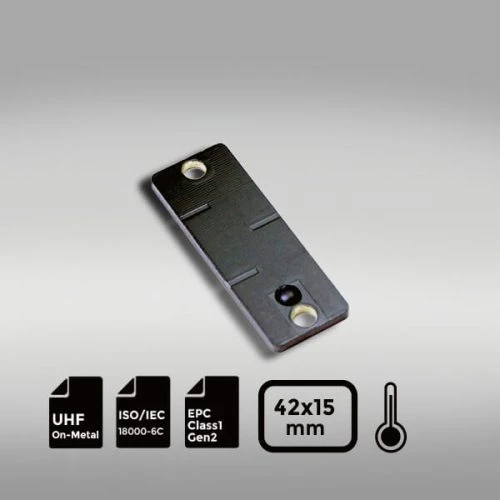
Heat Resistant Alien Higgs® 4 Heat Resistant Material UHF On-Metal Tag | 42x15mm
The heat resistant UHF on-metal tag features a robust construction with heat-resistant materials and IP68 rating for dependable use in harsh conditions. Powered by the Alien Higgs® 4 chip, it supports asset tracking, inventory management, and supply chain optimization across various industries.
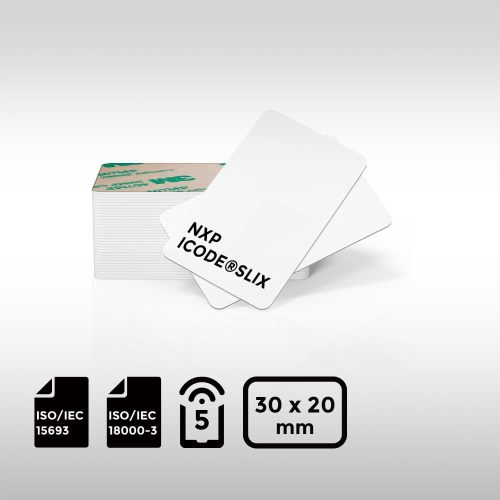
HF RFID PET Tag with Adhesive NXP ICODE® SLIX
The NXP ICODE® SLIX HF RFID PET Tag with Adhesive operates at 13.56 MHz and supports ISO/IEC 15693, ISO/IEC 18000-3, and NFC Forum Type 5 protocols. It features 128 bytes of EEPROM, including 112 bytes of user memory, and is made from durable PET material with 3M adhesive. This white card has a matte finish and a laminated overlay, measuring 30×20×0.73 mm. Its design makes it ideal for asset tracking, labeling, and NFC applications.
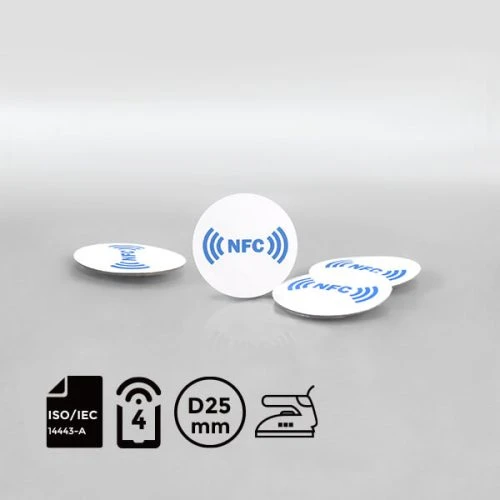
Heat Press Interactive NFC Garment Badge | NTAG® 424 DNA
The Heat Press NFC Garment Badge represents the future of wearable technology. This compact badge, with a diameter of 25 mm, is made from durable silicon, ensuring resilience against everyday use. At its core, it houses a state-of-the-art NXP NTAG® 424 DNA NFC chip, enabling seamless interaction between your clothing and your smartphone. To access exclusive digital content, authenticate your garment, or dive into immersive brand experiences.




 EN
EN  ES
ES  JA
JA